
Anonymity in modern online communities matters because it allows people to express themselves freely. It protects privacy and encourages honest dialogue, especially on sensitive topics. However, it also introduces risks like cyberbullying. This article dives into why anonymity matters in modern online communities, highlighting its benefits and challenges.
Key Takeaways
- Anonymity in online communities empowers marginalized voices but can lead to harmful behaviors like trolling and cyberbullying.
- While anonymity fosters self-expression and emotional support, it complicates trust-building and can result in superficial interactions.
- Balancing user anonymity with accountability is crucial to curb negative online behavior while preserving the benefits of privacy and safe expression.
Introduction to Online Anonymity
In today’s digital age, online anonymity has become a defining feature of how we interact and communicate across the internet. The ability for internet users to remain anonymous while participating in online communities and social media platforms has transformed the online world, offering both opportunities and challenges. Anonymous online environments empower individuals to express their thoughts, share experiences, and connect with others without the fear of being judged or facing real-world repercussions.
However, the same qualities that make online anonymity appealing can also open the door to online abuse, hate speech, and the spread of harmful content. As more of our social interaction shifts to digital spaces, the question of how anonymity shapes online behavior and the dynamics within online communities becomes increasingly important. Understanding the implications of online anonymity is essential for creating safe, inclusive, and vibrant online environments where users can participate freely while minimizing the risks of abuse and harm.
The Concept of Anonymity Online
Anonymity online refers to the state in which a person’s real identity is concealed during digital interactions. This can be achieved through the use of pseudonyms, anonymous accounts, or other privacy measures that shield personal identity from other users. One key difference between online and offline communication is that, online, individuals can choose how much of their identity to reveal, if any at all.
Previous research has shown that online anonymity can have a profound impact on online behavior. For some, it provides a sense of security that encourages open communication, emotional support, and the formation of meaningful relationships within online communities. For others, the lack of accountability can lead to antisocial behaviors, such as trolling, harassment, or the spread of harmful content. The challenge lies in understanding how anonymity can be harnessed to protect users and foster positive interactions, while minimizing the potential for harm.
By exploring the concept of anonymity online, we gain valuable insights into the ways identity, communication, and community dynamics are shaped in digital spaces. This understanding is crucial for developing strategies that promote healthy, supportive, and safe online communities.
Online Identity and Digital Identity
In the online world, identity takes on new forms and meanings. Online identity is the digital persona that individuals create and present on social media sites, forums, and other platforms. This identity can be carefully curated, allowing users to highlight certain aspects of themselves or even adopt entirely new personas through anonymous accounts. Online anonymity enables this flexibility, giving people the freedom to explore different facets of their identity without the constraints of their offline lives.
Digital identity, however, goes beyond just how someone presents themselves. It encompasses all the data and information generated by a person’s online activities—ranging from social media interactions to browsing history and other sensitive pieces of data. Even when users attempt to remain anonymous, their digital identity can sometimes be pieced together, raising concerns about privacy and the potential exposure of personal information.
As we navigate the complexities of online anonymity, it’s important to understand how online identity and digital identity intersect. While anonymity online can protect users and encourage open expression, it also requires vigilance to ensure that sensitive data remains secure. By understanding these different aspects of identity in the digital age, internet users can make informed choices about how they interact online and safeguard their privacy.
The Role of Anonymity in Online Communication

Anonymity serves as a crucial element in online communication, allowing users to engage more freely without the constraints of their real identities. This freedom can be especially empowering for marginalized groups, offering a platform where their voices can be heard without fear of retaliation or discrimination. In these anonymous online environments, people can express their true selves, discuss sensitive topics, and share personal experiences that they might otherwise keep hidden, all while benefiting from anonymous communication. Anonymity in online communities encourages open expression and empowers marginalized voices, fostering inclusivity and dialogue.
However, the role of anonymity is not without its downsides. While it can empower individuals, it can also result in negative behaviors such as trolling and cyberbullying. The absence of identifiable information can embolden some users to act out in ways they wouldn’t in face-to-face interactions, leading to a rise in online abuse and harmful content. Anonymity can also lead to deindividuation, where individuals lose their sense of personal identity and responsibility within a crowd. This duality of anonymity shapes digital identities and affects how individuals interact socially in online environments. Many researchers have investigated these effects, highlighting findings about behavior and motivations under conditions of anonymity.
In anonymous online communities, the distinction between real person identity and online identity often becomes unclear. Other users can craft digital identities that may not reflect their true selves, leading to dynamic and sometimes chaotic interactions. This allows for unique self-expression and creativity but also complicates assessing reliability and sincerity. Anonymity ensures that content and arguments are evaluated based on their merits rather than the author’s identity, promoting a focus on ideas rather than personal biases.
Anonymity profoundly impacts online communication by disrupting traditional power dynamics and giving a voice to otherwise silent individuals. However, it also presents challenges in managing negative effects. As we explore the digital landscape, the role of anonymity in shaping online behavior becomes clear.
Next, we will explore the benefits of anonymity, particularly its role in facilitating self-expression without fear of judgment or repercussion. This aspect is crucial for understanding its overall impact on online communication and access.
Benefits of Anonymity for Self-Expression
One of the most significant benefits of online anonymity is the freedom it provides for self-expression. In anonymous online environments, individuals can express their thoughts, feelings, and opinions without the fear of judgment or repercussions. This freedom is especially important for those who may feel constrained by societal norms or personal circumstances in their offline lives, as it allows for total anonymity.
People can explore different self-presentational strategies anonymously, experimenting with aspects of their identity that they might not openly share. This can be a powerful tool for personal growth and self-discovery, enabling individuals to understand and articulate their true selves. For some, anonymity provides a sense of security that encourages more honest and open communication and self disclosure.
Despite these potential benefits, there are debates about whether anonymity fosters genuine connections or leads to superficial interactions. On one hand, anonymity can create a space where people feel free to share their most authentic selves. On the other hand, it can also lead to curated identities that are designed to attract attention or fit in with certain groups, potentially resulting in superficial relationships.
The overall impact of anonymity in online communities is multifaceted. It influences personal expression and the nature of social interactions in complex ways. While it can foster a sense of freedom and creativity, it can also lead to misunderstandings and misrepresentations. Understanding these dynamics is crucial for appreciating the full scope of online anonymity.
Next, we will consider how anonymity intersects with emotional support in online spaces. This section will explore how anonymity can provide a safe haven for individuals seeking support and connection.
Anonymity and Emotional Support in Online Spaces

Anonymity can be a lifeline for vulnerable individuals seeking emotional support in the vast digital environments of the online world. For those facing harassment or abuse, the ability to communicate without revealing their identity offers a crucial layer of protection. This anonymity enables open discussions on sensitive topics, creating a safe space where individuals can share their experiences and seek advice without fear of judgment. Additionally, anonymity provides essential protection for whistleblowers exposing wrongdoing within powerful institutions, ensuring their safety while bringing critical issues to light.
For many, greater perceived anonymity online increases their willingness to express opinions on moral matters and personal struggles. This is particularly true for marginalized groups, who often face significant barriers to open communication offline. Anonymity enables these voices to be heard, disrupting traditional power dynamics and providing a platform for advocacy and support. Many individuals also seek anonymity online to protect their privacy and security, especially in oppressive environments where expressing dissenting views can lead to severe consequences.
Factors such as social anxiety and self-esteem levels are closely linked to the tendency to seek anonymity. Those who are anxious about social evaluation or have lower self-esteem may find solace in anonymous online environments. Here, they can engage in social interactions without the pressure of being judged based on their real-world identities, a concept often explored in social psychology.
Online communities that thrive on anonymity often foster connections based on shared experiences. These communities provide a sanctuary where individuals can share their stories, offer support, and build relationships in a safe and understanding context. This sense of social interaction and online community is vital for emotional well-being, offering a support network for loved ones that might be lacking in their offline lives.
Next, we will explore the importance of protecting personal identity and privacy in the digital age. Understanding the mechanisms and challenges of maintaining anonymity online and identifying information is key to safeguarding these benefits.
Protecting Personal Identity and Privacy
Anonymity is crucial for protecting individuals in the digital age. It allows internet users to engage online without fear of their identities being compromised, ensuring personal safety and privacy. Anonymity also protects individuals from surveillance and data collection by minimizing their digital footprint. Without anonymity, exposure of sensitive personal data can increase risks of identity theft and harassment. The tradition of anonymous speech is a cornerstone of democratic processes, as exemplified by the authors of the Federalist Papers, who used pseudonyms to freely express their ideas and advocate for the U.S. Constitution.
Legal frameworks regarding anonymity differ widely across jurisdictions, impacting individuals’ ability to maintain privacy. These differences can create challenges for internet users who wish to remain anonymous, as laws in one country may not provide the same protections as those in another. Law enforcement officials often struggle with identifying and prosecuting individuals behind anonymous accounts due to their transient nature.
To combat these challenges, many online platforms are adopting measures like email or phone verification to authenticate users. Social media services are increasingly implementing identity verification and safety tools to protect users and reduce online abuse, while balancing privacy and anonymity concerns. These verification processes can help reduce the prevalence of impersonator accounts and improve the identification of harmful users. However, these measures must be balanced with the need to protect user privacy and avoid unnecessary data collection.
Innovative approaches like digital signatures and blockchain digital identity management are being explored to enhance user verification while maintaining anonymity. These technologies offer promising solutions for creating secure and anonymous online environments. Effective anonymity strategies must also include robust data anonymization techniques to safeguard personal information. Furthermore, anonymity and encryption are vital for activists and journalists to circumvent censorship in authoritarian regimes, enabling them to communicate and share information securely.
Next, we will explore the psychological effects of anonymity, particularly how it can lead to deindividuation and impact online behaviors. This section will delve into these phenomena and their implications for online interactions.
Anonymity and Deindividuation Effects
Anonymity can heighten deindividuation, leading individuals to act with less self-restraint and engage in behaviors they might not exhibit in identifiable situations. This phenomenon is explained by the Social Identity Model of Deindividuation Effects (SIDE), which suggests that anonymity emphasizes group identity, leading to conformity and potentially aggressive behaviors.
Interestingly, anonymity can also promote prosocial behaviors, such as advocating for social justice issues. The context and individual differences play a significant role in determining whether anonymity will lead to positive or negative outcomes. Research indicates that anonymity in online settings can lead to both prosocial and antisocial behaviors, depending on the circumstances.
Self-anonymity allows perpetrators to escape detection, fostering a sense of power that can encourage negative online behaviors. The psychological distance created by online anonymity often reduces empathy, as people miss out on social cues that convey emotional states. This lack of empathy can contribute to the online disinhibition effect, where individuals act differently than they would in person.
In anonymous settings, the usual social pressures to behave empathetically may diminish, allowing for both positive and negative expressions of emotion. Understanding the different aspects of anonymity, such as technical and social anonymity, is crucial for comprehending their impact on online behavior.
Next, we will examine the darker side of online anonymity in society, exploring how it can lead to harms and the challenges it presents for online communities.
The Dark Side of Online Anonymity

While anonymity can foster freedom of expression, it also emboldens individuals to engage in harmful behaviors without fear of repercussions. Anonymity can lead to:
- A rise in cyberbullying, as perpetrators may feel liberated from societal norms when they are not identifiable.
- More aggressive behavior, as studies indicate individuals often behave more aggressively when their identity is concealed.
- An increase in antisocial conduct, linked to anonymity.
The absence of social cues in online interactions can contribute to increased aggression and a lack of accountability for harmful actions. Anonymity can result in digital aggression, as individuals may feel less inhibited and more empowered to harm others without facing immediate consequences. This behavior is particularly concerning on social media platforms, which are increasingly pressured to adopt policies that prevent the spread of hate speech while balancing the need for user anonymity.
Psychopathic and sadistic traits have been linked to higher motivations for toxic behavior and antisocial behavior in anonymous online environments. An evidence-based examination of policies affecting online anonymity can help identify the negative impacts on vulnerable groups. Measures to combat hate speech on social media involve both legal restrictions and platform-driven strategies to mitigate harmful content.
Understanding the dark side of online anonymity is crucial for developing strategies to mitigate its negative impacts. Next, we will explore how anonymity affects building relationships online, highlighting the challenges and opportunities it presents.
Anonymity’s Impact on Building Relationships

Trust is harder to establish in anonymous interactions, as hidden identities complicate the assessment of reliability and sincerity. In anonymous settings, trust relies more on consistent communication patterns than personal disclosures, making it fragile. This fragility can lead to misunderstandings and miscommunications, as the lack of identifiable information can create uncertainty about the other person’s reputation. Reduced accountability can occur when users are not identifiable, leading to a decline in civility and further complicating trust-building efforts.
However, anonymity also allows individuals to interact without traditional social cues, which may help forge connections based on shared interests rather than personal background. This can lead to more genuine interactions, as people are judged by their contributions rather than their identity. Anonymity can reduce the perceived risks associated with expressing dissent or unpopular opinions, promoting open dialogue.
While anonymity presents challenges in building trust, it also offers opportunities for deeper connections based on mutual interests and values. Next, we will explore the individual differences that drive people to seek anonymity, highlighting the diverse motivations and personality traits that influence this behavior, including their desire for privacy.
Individual Differences in Seeking Anonymity
Individual differences significantly shape the different motivations behind seeking anonymity online. Research indicates that personality traits significantly influence why individuals seek anonymity online. For example, people with lower moral meaningfulness often rely more heavily on anonymity to express their views and engage in moral actions. This can be both a positive and negative aspect, depending on the context and the individual’s intentions.
People who score high in Machiavellianism may use anonymity to manipulate others or engage in deceptive online self-presentation. These individuals may seek anonymity to exploit others or to hide their true intentions. Understanding these individual differences is crucial for developing strategies to control anonymity effectively in online communities.
Next, we will explore how anonymity impacts online behavior, highlighting both the positive and negative aspects. This section will provide insights into the complex relationship between anonymity and online behavior.
Anonymity and Online Behavior
Anonymity online can enable the spread of hate speech, as individuals feel more emboldened to express hostile sentiments without accountability. This lack of accountability can lead to a toxic environment where harmful behaviors flourish. Research suggests that individuals who frequently encounter hate speech online may become desensitized, reducing their likelihood of intervening in such situations.
However, anonymity can also promote positive behaviors. It enables individuals to self-disclose and provide support in various online contexts. For instance, in support groups and forums, anonymity allows users to share personal experiences and offer advice without the fear of being judged. This can create a sense of community and mutual support that is difficult to achieve in non-anonymous settings.
Behaviors in online environments can differ significantly based on the visibility of participants. Anonymity can sometimes foster positive interactions, as individuals feel free to express themselves more openly. Studies have found that human behavior in anonymous settings is more likely to adhere to group norms, which can either encourage positive or negative behaviors depending on the group’s culture and the analysis of behavioral data.
Investigating the relationship between online anonymity and user behavior is essential to understand the social dynamics within online communities. This understanding can help in developing strategies to promote positive behaviors while mitigating the negative impacts of anonymity. Next, we will discuss the challenge of balancing anonymity and accountability in online environments.
Balancing Anonymity and Accountability
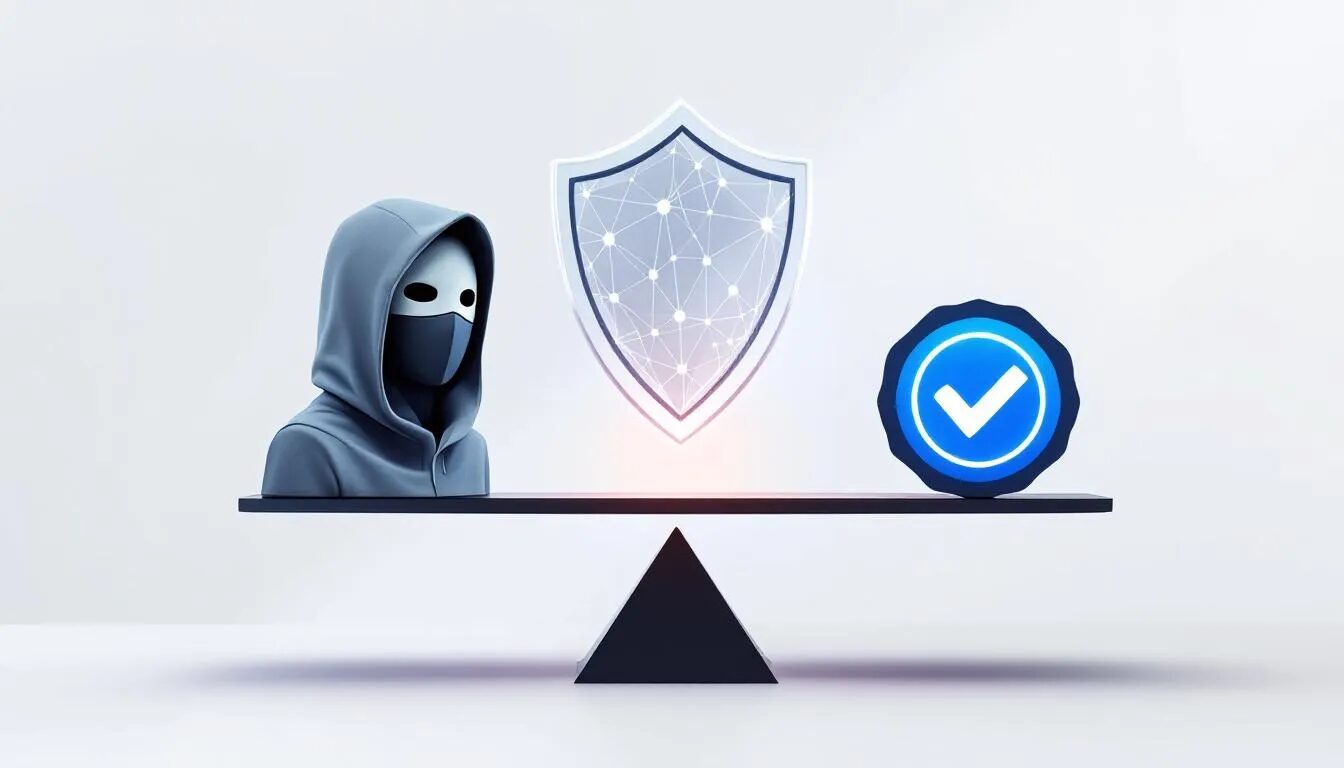
The challenge of balancing user privacy with accountability is crucial, as anonymity can lead to harmful behaviors online. Fake accounts can complicate efforts to combat online harassment, as they are easily created and discarded, hindering accountability. Users may adopt pseudonyms or fictional identities to protect their privacy, but this can also mask malicious intentions. Real name policies may help address these issues by encouraging transparency among users on social media accounts.
Anonymity can lead to the bystander effect, where individuals feel less compelled to help others in distress due to the lack of personal accountability. Efforts to mitigate the negative impacts of anonymity include account verification processes to ensure accountability while preserving user privacy. These processes can help in identifying and managing harmful users without compromising the anonymity of those who use it for positive purposes.
Technological solutions like VPNs and encrypted messaging can provide users with anonymity, but they may also be exploited for illicit activities. Previous research suggests that most research should explore community-driven approaches to anonymity that prioritize the needs and experiences of high-risk users. Next, we will discuss future directions for research on online anonymity, focusing on innovative methods to maintain user safety and privacy.
Future Directions for Research on Online Anonymity
Future investigations into online anonymity should prioritize the intersection of anonymity with user identity and social context. An evidence-based framework is essential for understanding the implications of anonymity on users’ behaviors and community dynamics. Future research should also ensure ethical standards, such as obtaining informed consent from participants, to protect their rights and privacy. This framework can help in developing policies and practices that balance the benefits of anonymity with the need for accountability.
Future studies should focus on developing innovative methods to maintain online anonymity without compromising user safety or privacy. These methods may include advanced data anonymization techniques, blockchain identity management, and other emerging technologies. Understanding the complex dynamics of anonymity in online spaces is crucial for creating safe and supportive digital environments.
In conclusion, summarizing the key difference and reinforcing the important context of understanding the multifaceted role of anonymity in the digital age is essential.
Summary
Anonymity in the online world is a complex and multifaceted phenomenon. It offers significant benefits for self-expression, emotional support, and protecting personal identity and privacy. However, it also presents challenges, such as enabling harmful behaviors and complicating efforts to build trust and accountability.
Understanding the role of anonymity in online communication is crucial for navigating the digital landscape. By exploring the benefits and drawbacks of anonymity, we can develop strategies to maximize its positive impacts while mitigating its negative effects. Future research and innovative approaches are essential for maintaining a balance between privacy and accountability in online environments.
As we move forward, it is essential to recognize the importance of anonymity in empowering individuals and fostering open communication. By understanding and addressing the complexities of online anonymity, we can create a safer, more inclusive digital world.
Frequently Asked Questions
How does anonymity affect online activities?
Anonymity significantly influences online activities by allowing individuals to engage in harmful behaviors without fear of repercussions, leading to increased deindividuation and decreased inhibition. This lack of social cues can foster a toxic environment where aggressive and extreme opinions are more freely expressed. Anonymity can also result in increased aggression, hostility, and “flaming” due to reduced inhibitions from a lack of face-to-face cues, further exacerbating the challenges of maintaining civility in online spaces.
Why is anonymity important in online communication?
Anonymity is crucial in online communication as it encourages open expression and safeguards personal privacy, allowing individuals to share thoughts without fear of judgment or repercussions. This freedom fosters richer dialogue and diverse perspectives. While anonymity can be misused, it plays a legitimate role in protecting fundamental human rights in digital spaces, ensuring that individuals can express themselves freely and safely.
What are the benefits of anonymity for self-expression?
Anonymity fosters genuine self-expression by freeing individuals from fear of judgment, allowing for honest communication and exploration of diverse identities. This protective layer enables deeper connections and authentic interactions.
How does anonymity provide emotional support in online spaces?
Anonymity fosters emotional support by allowing individuals to openly share their struggles and experiences in a judgment-free space, leading to meaningful connections and advice. This sense of safety encourages those who may otherwise feel isolated to engage and find comfort in shared experiences. It is crucial for the safety of vulnerable individuals, allowing them to seek support and explore their identity without revealing personal details, thus creating a secure environment for personal growth and healing.
What are the challenges of balancing anonymity and accountability?
Balancing anonymity and accountability is challenging because it can lead to harmful behaviors and the creation of fake accounts, making it difficult to hold individuals responsible for their actions. Implementing account verification processes can help address these issues.