

The lead generation landscape has fundamentally shifted. What worked in 2022 is failing spectacularly in 2026, and businesses clinging to outdated tactics are watching their sales pipelines dry up while competitors surge ahead with new approaches. Without lead generation, revenue slows, and competitors take over, making it a critical focus for businesses aiming to thrive in this evolving market.
The numbers tell a stark story: 95% of B2B marketers report that buyer behavior shifted significantly post-2023, requiring completely new lead generation strategies. Traditional tactics like static whitepapers, basic email campaigns, and cold calling now convert at rates so low they barely justify the effort, though cold calling can still generate leads quickly for some businesses. Meanwhile, businesses implementing the most effective lead generation tactics right now are seeing conversion rates 3x higher than those stuck in the past. The best lead generation strategies integrate multiple approaches—combining outbound marketing, SEO, content marketing, and digital advertising—to achieve optimal results tailored to specific business needs. Effective lead generation tactics include content marketing, SEO, social media marketing, digital marketing, and paid advertising. Search engine optimization (SEO) is crucial for attracting organic traffic and generating leads, as it ensures your content is discoverable by prospects actively searching for solutions. Generating qualified leads is an important stage of the customer acquisition and lead acquisition journey, ensuring businesses can adapt to these changes effectively. Successful businesses measure performance metrics like cost per lead and conversion rate, collect valuable data, and adapt strategies to stay competitive in this evolving landscape. Retargeting and remarketing campaigns are also highly effective in re-engaging visitors who did not convert initially.
This isn’t just about incremental improvements—it’s about survival in a market where privacy changes, AI integration, and evolving buyer expectations have rewritten the rules of effective lead generation. The companies thriving today understand that success requires a complete tactical overhaul, not minor adjustments to existing strategies. Lead generation is essential if you want to increase your brand’s revenue, making it a cornerstone of modern business strategies. Content marketing is a proven lead generation strategy that builds trust, addresses a specific pain point, and showcases expertise, helping to convert leads into customers. Producing high quality content and sharing success stories and customer testimonials are essential for building credibility and social proof. Content marketing can involve blogs, webinars, videos, and infographics, offering diverse ways to engage and inform potential leads. Video marketing, especially when it includes customer testimonials, is a highly engaging strategy that can transform cold prospects into warm leads through compelling content and calls to action.
In this comprehensive guide, you’ll discover the lead generation tactics delivering measurable results right now, complete with implementation frameworks, performance metrics, and real-world case studies. More importantly, you’ll learn why these tactics work in 2026’s unique landscape and how to implement them within the next 30 days. An effective lead generation strategy is crucial for any business, as it lays the foundation for sustained growth and competitive advantage. Offering a free trial is an effective lead generation strategy because it allows potential customers to experience the product before committing to a purchase, building trust and reducing barriers to entry. Email marketing remains a powerful lead generation technique due to its ability to reach a large audience and nurture leads over time, ensuring consistent engagement and building trust with potential customers. High converting landing pages play a key role in generating targeted leads and increasing sales within digital marketing and sales funnels. Referral programs should be designed to benefit both the referrer and the new lead, encouraging participation and maximizing lead generation. Optimizing marketing messages and tailoring communication to prospective clients are also critical for attracting and nurturing targeted leads.
Why Lead Generation Effectiveness Has Changed in 2026
Lead generation has evolved dramatically with AI integration and privacy changes affecting traditional tactics that once drove consistent results. The fundamental shift isn’t just technological—it’s behavioral. Today’s prospects consume content differently, research solutions more independently, and demand personalized experiences that demonstrate immediate value. Lead generation is the first step in your sales funnel, setting the stage for building meaningful customer relationships. Using social proof, such as testimonials and reviews, can significantly enhance lead generation by building trust and credibility with potential customers. Marketing automation can assist with lead scoring and data analysis and trigger timely follow-ups, ensuring prospects are engaged at the right time with relevant information.
Cookie deprecation and iOS 14.5+ updates have made third-party tracking less reliable for lead targeting, forcing marketers to abandon broad-spectrum approaches in favor of first-party data strategies. This technical limitation has actually created opportunity for businesses willing to invest in direct relationship building and value-first lead capture approaches. PPC advertising allows businesses to quickly get their website in front of potential customers by paying for ads, ensuring visibility even in a competitive digital landscape. Lead generation can determine the level of loyalty that the customer has, as it fosters trust and engagement from the outset.
Interactive and personalized content now converts 3x better than static lead magnets from 2022, reflecting prospects’ expectations for engaging, tailored experiences. The passive consumption model—where prospects downloaded PDFs in exchange for contact information—has been replaced by active engagement models where prospects participate in branded experiences that provide immediate, actionable value. Creating conversion-optimized landing pages is one of the most effective lead generation strategies, as they focus on a single offer and guide visitors toward conversion. Landing pages and forms should be optimized for user experience with clear copy and calls to action, ensuring prospects can easily understand and act on the offer presented.

The most significant change is the collapse of interruptive marketing effectiveness. Cold emails that once achieved 15-20% open rates now struggle to reach 5%. Display ads face banner blindness rates exceeding 90%. Even SEO-driven content competes in increasingly saturated search results where only the top 3 positions capture meaningful traffic. Connecting with potential customers begins when they hear about your product through someone else’s testimonial, as word-of-mouth recommendations build trust and credibility in ways traditional marketing cannot.
This environment rewards businesses that understand a critical principle: effective lead generation strategy in 2026 prioritizes relationship building over information extraction. The goal isn’t just capturing contact details—it’s creating genuine engagement that builds trust and positions your company as the obvious solution when prospects are ready to buy. Using multi-channel lead nurturing campaigns can effectively guide prospects through the sales funnel, ensuring a seamless and personalized experience.
The Top 5 Lead Generation Tactics Dominating 2026
AI-powered lead scoring and qualification systems that identify high-intent prospects in real-time represent the most transformative advancement in lead generation effectiveness. These systems analyze behavioral signals across multiple touchpoints—website interactions, content engagement, social media activity—to calculate prospect readiness scores that enable sales teams to focus on the highest-probability opportunities. High-value content can include case studies and informative blog posts, which not only attract prospects but also provide the depth of information needed to nurture them through the sales funnel.
The implementation involves integrating tools like HubSpot’s predictive lead scoring or Salesforce Einstein Lead Scoring with your existing CRM to automatically prioritize prospects based on conversion likelihood. Companies using AI lead scoring report 40% higher conversion rates and 60% reduction in sales cycle length, because sales teams stop pursuing low-intent prospects and concentrate effort where it delivers results.
Interactive video content with embedded lead capture forms achieving 67% higher engagement rates has emerged as the single most effective content format for B2B lead generation. Unlike passive video content, these experiences embed questions, personalization elements, and lead forms directly within the viewing experience, transforming viewers into active participants.
The most successful implementations use tools like Vidyard or Wistia to create product demos that ask viewers to input their specific use case, then customize the remaining content based on their responses. This approach generates qualified leads while providing genuine value, resulting in lead quality metrics significantly higher than traditional content marketing approaches.

Account-based marketing campaigns targeting Fortune 500 companies with personalized microsites have proven extraordinarily effective for high-value B2B lead generation. This approach treats each target account as a market of one, creating custom landing pages, tailored email sequences, and dynamic ad campaigns built around specific business challenges facing each prospect.
The tactical implementation involves identifying 50-100 ideal accounts, researching their current challenges through LinkedIn, company news, and industry reports, then creating account-specific content that directly addresses their situation. Marketing automation platforms like Marketo or Pardot enable dynamic content delivery that personalizes the experience based on the visiting company, resulting in engagement rates 10x higher than generic campaigns.
Voice search optimization targeting conversational queries like “best CRM software for startups” captures prospects earlier in the buying journey when they’re exploring solutions through natural language searches. This tactic requires optimizing content for question-based keywords and conversational phrases that prospects actually speak into devices.
The optimization process involves creating FAQ-style content that directly answers common prospect questions, using schema markup to help search engines understand content context, and optimizing for local intent when relevant. Companies implementing voice search optimization report 25% increases in organic traffic from high-intent queries.
Community-driven lead generation through exclusive Slack groups and Discord servers builds relationships that convert at rates exceeding traditional lead magnets. These communities position companies as thought leaders while creating environments where prospects engage with brands and each other, generating qualified leads through relationship building rather than information exchange.
Successful community strategies involve creating invitation-only groups focused on specific industries or challenges, providing regular expert insights and exclusive content, and facilitating peer-to-peer discussions that build trust and authority. The lead generation occurs naturally as community members recognize the host company’s expertise and reach out for solutions.
Content-Driven Lead Generation That Works in 2026
SEO-optimized pillar content targeting problem-aware keywords with search volumes above 1,000 monthly searches captures prospects actively researching solutions to specific challenges. This approach differs from traditional SEO content by focusing on commercial intent keywords rather than informational queries, attracting prospects closer to purchasing decisions.
The strategic framework involves identifying 10-15 core topics that align with your solutions, creating comprehensive pillar pages that thoroughly address each topic, then supporting these pages with detailed sub-topic content that targets long-tail variations. Tools like Ahrefs or SEMrush help identify keyword opportunities with sufficient search volume and manageable competition levels.
Implementation requires producing content that demonstrates expertise while incorporating natural calls-to-action for consultations, demos, or additional resources. The most effective pillar content achieves dual purposes: establishing topical authority for search engine optimization and providing genuine value that encourages lead capture form completion.
YouTube Shorts and TikTok videos addressing common pain points with clear CTAs to landing pages have emerged as surprisingly effective B2B lead generation channels. These platforms’ algorithm-driven distribution can expose content to highly relevant audiences without paid promotion, provided the content delivers immediate, actionable value.
The production approach involves creating 15-30 second videos that identify a specific problem, provide one actionable solution, and direct viewers to a landing page for additional resources. The key is addressing pain points that your target audience recognizes immediately, creating instant credibility that motivates further engagement.

LinkedIn newsletter publications that build subscriber lists of 10,000+ industry professionals represent one of the most effective lead generation strategies for B2B companies. LinkedIn’s newsletter feature distributes content directly to subscriber inboxes and notifications, creating a direct channel to engaged prospects without algorithm interference. Email marketing is a powerful lead generation strategy that allows businesses to nurture leads over time, ensuring consistent engagement and building trust with potential customers.
Successful LinkedIn newsletters focus on industry insights, trend analysis, and actionable advice rather than promotional content. The lead generation occurs through subscriber relationship building and strategic content that positions the author as a trusted advisor. Newsletter authors can then leverage their subscriber relationships for direct outreach, product launches, and event promotion.
Podcast guest appearances on shows with 5,000+ downloads per episode in your target industry provide access to highly engaged, relevant audiences while building personal authority and credibility. The lead generation effectiveness comes from audience trust transfer—listeners trust podcast hosts, and that trust extends to credible guests.
The strategic approach involves identifying podcasts where your target audience regularly engages, developing compelling talking points that provide genuine value, and ensuring each appearance includes clear information about how listeners can connect with you or access additional resources. The most effective podcast appearances result in sustained traffic increases and high-quality inbound inquiries.
Video Content for Maximum Lead Capture
15-30 second product demo videos embedded on pricing pages increasing conversions by 45% demonstrate the power of contextual video content for lead generation efforts. These short demos address specific prospect concerns at the exact moment they’re evaluating purchasing decisions, removing friction from the consideration process.
The implementation involves creating focused demo videos that show core product functionality without overwhelming prospects with feature lists. The videos should address the primary question prospects have when viewing pricing pages: “What exactly am I buying?” Clear, concise demonstrations build confidence and encourage form completion or sales contact.
Webinar recordings repurposed into 5-minute highlight reels for social media distribution extend the lead generation value of live events while accommodating modern attention spans. These condensed versions capture key insights and include calls-to-action for full webinar access or related resources, creating multiple lead capture opportunities from single events. Webinars are effective for lead generation as they combine education with engagement, attracting potential clients eager to learn more while showcasing your expertise and solutions.
The repurposing strategy involves identifying the most valuable segments from hour-long webinars, creating standalone videos that deliver complete value in under five minutes, and distributing these highlights across LinkedIn, YouTube, and email campaigns. Each highlight reel should include a specific call-to-action relevant to the content covered.
Personalized video messages sent to high-value prospects via LinkedIn and email outreach achieve response rates significantly higher than text-based communications. These videos demonstrate investment in the relationship while allowing for personality and expertise demonstration that builds trust more effectively than written messages.
The tactical implementation requires using tools like BombBomb or Loom to record brief, personalized videos addressing specific prospect challenges or opportunities. The most effective videos reference specific details from the prospect’s company or industry, demonstrating genuine research and interest rather than automated outreach.
Live streaming on LinkedIn and YouTube to demonstrate expertise and capture real-time leads creates authentic engagement opportunities that build authority while generating immediate prospect interest. Live content receives algorithmic priority on most platforms, expanding reach beyond existing follower bases.

Successful live streaming strategies involve regular scheduling to build audience expectation, interactive elements like Q&A sessions that encourage participation, and clear calls-to-action for viewers who want to continue the conversation privately. The lead generation occurs through direct engagement requests during streams and follow-up contact with active participants.
Written Content That Converts Visitors to Leads
Case study landing pages featuring measurable ROI results like “300% revenue increase in 6 months” provide social proof that converts prospects by demonstrating concrete outcomes rather than theoretical benefits. These pages work because they address the primary prospect question: “Will this actually work for me?” Referral programs incentivize happy customers to share your company with friends and family, generating new leads while leveraging the trust and credibility of personal recommendations.
Effective case studies include specific metrics, detailed challenge descriptions, solution implementation processes, and quantifiable results that prospects can relate to their own situations. The lead generation mechanism involves offering similar outcome consultations or assessments to prospects who engage with case study content.
Interactive calculators and assessment tools that provide instant value in exchange for contact information create win-win lead capture scenarios where prospects receive immediate, personalized insights while providing lead information. These tools work because they deliver value before requesting contact details, building trust and demonstrating expertise.
The development process involves identifying calculations or assessments that your target audience performs regularly, creating tools that provide more sophisticated analysis than prospects can perform independently, and designing user experiences that naturally encourage contact information sharing for personalized results delivery.
Industry reports with original survey data from 500+ respondents offered as gated content establish thought leadership while capturing qualified leads from prospects researching industry trends. Original research differentiates content from competitor offerings while providing genuinely valuable insights that justify lead form completion.
The creation process involves surveying your target audience about relevant industry challenges or trends, analyzing data to identify actionable insights, and presenting findings in professionally designed reports that demonstrate research credibility and analytical expertise.
Email course sequences delivering 7 daily lessons to nurture prospects over one week provide extended engagement opportunities that build relationships while educating prospects about solutions. This approach works because it delivers consistent value while keeping your company top-of-mind throughout the consideration process.
Successful email courses address specific skills or challenges that your target audience wants to improve, breaking complex topics into digestible daily lessons that build toward a natural conclusion where your product or service becomes the logical next step for continued progress.
Paid Advertising Strategies Delivering ROI in 2026
Google Ads campaigns targeting competitor brand names with comparison landing pages capture prospects already evaluating solutions in your category, representing some of the highest-intent traffic available through search engine optimization efforts. These campaigns work because they intercept prospects during active evaluation phases when purchasing decisions are imminent.
The implementation requires creating comparison pages that honestly evaluate your solution against competitors, highlighting unique advantages without disparaging competitor offerings. Ad copy should focus on differentiation rather than direct comparison, positioning your solution as the better choice for specific use cases or customer types.
Budget recommendations range from $2,000-10,000 monthly depending on competitor brand search volumes and cost-per-click rates. Expected conversion rates for competitor targeting campaigns typically range from 8-15%, significantly higher than general keyword campaigns, because the traffic represents prospects actively evaluating solutions.
LinkedIn Sponsored Content promoting free tools to decision-makers at companies with 100+ employees provides access to high-value prospects through professional network targeting capabilities. This approach works because it combines valuable content offers with precise audience targeting, ensuring ad spend reaches genuinely qualified prospects.
Effective LinkedIn campaigns target specific job titles, company sizes, and industries relevant to your solutions, promoting tools or resources that provide immediate value to the professional challenges these audiences face. The lead generation occurs when prospects access promoted tools and provide contact information for continued access or related resources.
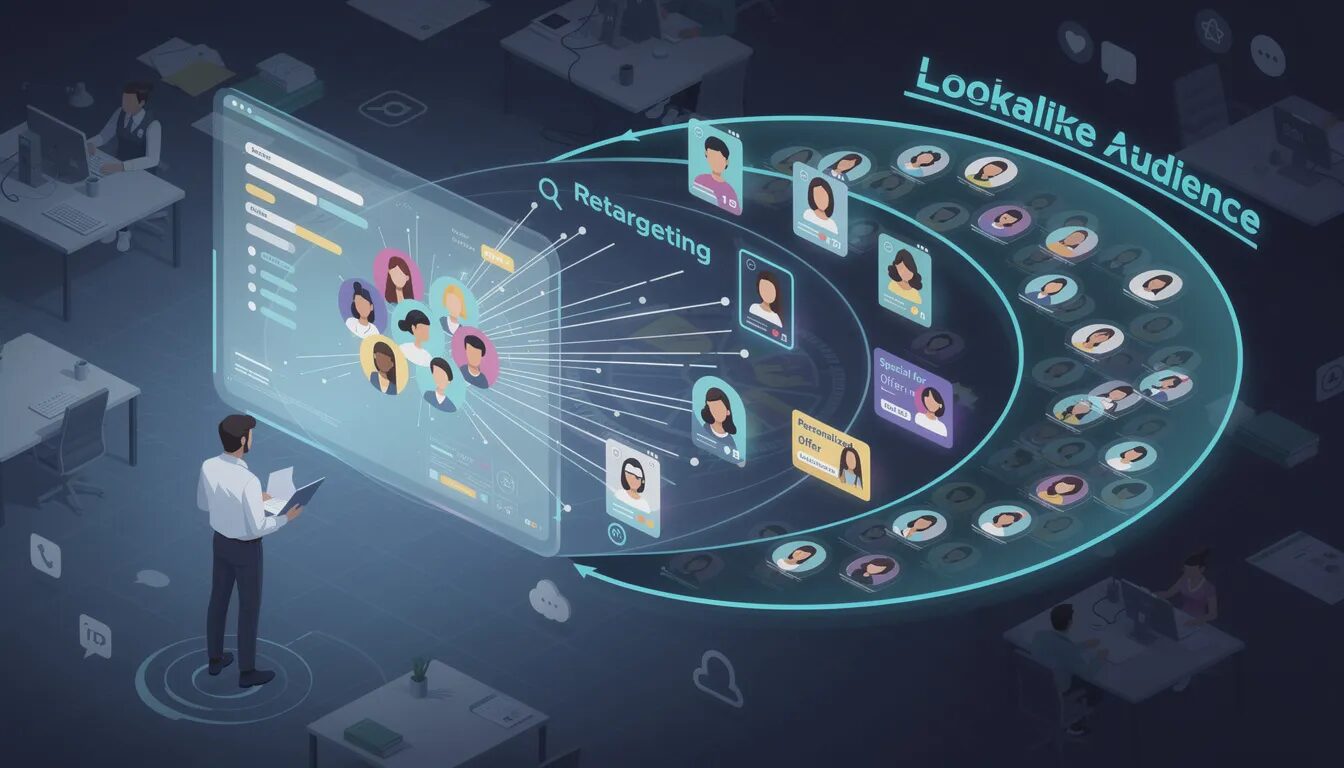
Facebook and Instagram retargeting campaigns using custom audiences from CRM data uploads re-engage existing prospects while expanding reach to similar audience profiles. This approach leverages first-party data to maintain engagement with known prospects while identifying new potential customers through lookalike audience targeting.
The tactical implementation involves uploading customer and prospect email lists to create custom audiences, developing creative assets that address different stages of the sales funnel, and setting up lookalike audiences based on highest-value customer segments. Conversion rates for retargeting campaigns typically range from 5-12%, depending on audience quality and creative relevance.
YouTube pre-roll ads targeting users who watched competitor videos in the last 30 days capture prospects actively researching solutions while building brand awareness through video content. This strategy works because it reaches prospects during active research phases when they’re most receptive to alternative solutions.
Campaign setup involves identifying competitor video content relevant to your solutions, creating engaging pre-roll content that captures attention within the first 5 seconds, and developing landing pages specifically designed for video traffic. Expected conversion rates range from 3-8%, with higher rates for campaigns targeting bottom-funnel competitor content.
TikTok advertising for B2C brands targeting Gen Z and Millennial demographics with video-first creative represents an emerging opportunity for businesses serving younger professional audiences. While traditionally considered a consumer platform, TikTok’s professional user base has grown significantly, creating B2B lead generation opportunities for companies targeting younger decision-makers.
Successful TikTok campaigns focus on authentic, educational content that demonstrates expertise without obvious promotional messaging. The lead generation occurs through profile visits and link clicks from engaged viewers, requiring landing pages optimized for mobile traffic and younger audience expectations.
Social Media Lead Generation Beyond Basic Posting
LinkedIn Sales Navigator prospecting with personalized connection requests achieving 30% acceptance rates provides direct access to decision-makers through professional relationship building. This approach works because it combines advanced targeting capabilities with personalized outreach that builds genuine professional connections rather than automated sales pitches.
The strategic framework involves using Sales Navigator’s advanced filters to identify prospects matching ideal customer profiles, researching connection candidates through their profiles and activity, and crafting personalized connection requests that reference specific shared interests or mutual connections. Follow-up messaging should focus on providing value rather than immediate sales pitches.
Effective implementation requires sending 15-20 connection requests daily with personalized messages, engaging with prospects’ content before sending connection requests to establish familiarity, and following up with helpful resources rather than sales pitches once connections are established. The lead generation occurs through relationship building that naturally evolves into business discussions.
Twitter Spaces hosting to position yourself as a thought leader and capture qualified leads creates real-time engagement opportunities with prospects interested in industry discussions. This approach works because it demonstrates expertise through live interaction while building personal connections that translate into business relationships.
Successful Twitter Spaces strategies involve regular hosting schedules focused on specific industry topics, inviting guest experts to expand audience reach, and engaging with participants during and after sessions to build ongoing relationships. The lead generation occurs through direct engagement requests from listeners and follow-up conversations with active participants.
Instagram Stories with interactive polls and question stickers driving traffic to lead magnets creates engaging content that builds audience relationships while directing followers to lead capture opportunities. This approach works because it combines entertainment value with strategic lead generation through interactive features that encourage participation.
The implementation involves creating story content that addresses follower interests and challenges, using polls and questions to encourage interaction and gather audience insights, and directing engaged followers to relevant lead magnets through story links and call-to-action messages.
Facebook Groups for niche communities where prospects gather to discuss industry challenges provides organic lead generation opportunities through value-driven participation in relevant professional discussions. This strategy works because it positions companies as helpful experts within communities where target audiences are already active and engaged.

Effective group participation involves identifying active groups where target audiences discuss relevant challenges, providing helpful responses to member questions without promotional messaging, and building reputation as a valuable community member before sharing relevant resources or making business connections.
Reddit participation in relevant subreddits with valuable contributions linking to helpful resources creates lead generation opportunities through authentic community participation. This approach works because Reddit users value genuine expertise and helpfulness, creating opportunities for businesses that contribute meaningfully to community discussions.
The strategic approach involves identifying subreddits where target audiences are active, reading community rules and culture before participating, providing genuinely helpful responses to user questions, and occasionally sharing relevant resources when they genuinely address community member needs. The lead generation occurs through profile visits and direct messages from community members who value your contributions.
Email Marketing and Automation Tactics for 2026
Behavioral trigger emails sent within 5 minutes of specific website actions like pricing page visits achieve significantly higher engagement rates than batch email campaigns because they respond to immediate prospect interest with relevant follow-up messaging. This approach works because it capitalizes on demonstrated intent while prospects are actively evaluating solutions.
The implementation requires marketing automation platforms like HubSpot or Marketo to track website behavior and trigger email sequences based on specific actions. Effective trigger emails address the specific content or page viewed, provide additional relevant information, and include clear calls-to-action for next steps in the evaluation process.
Common behavioral triggers include pricing page visits, case study downloads, demo video viewing, and competitor comparison page visits. Each trigger should initiate email sequences tailored to the demonstrated interest level and provide appropriate next steps for prospects at different funnel stages.
Progressive profiling forms that request additional information on subsequent form submissions reduce initial friction while building comprehensive prospect profiles over time. This approach works because it respects prospect time constraints while gathering intelligence needed for effective sales follow-up and personalization.
The tactical implementation involves starting with minimal required fields—typically name and email—then requesting additional information like company size, industry, or specific challenges during subsequent interactions. Marketing automation platforms enable dynamic form fields that adjust based on existing prospect data.
Abandoned cart recovery sequences for SaaS free trials with 3-email follow-up campaigns address the significant percentage of prospects who begin trial signup processes but don’t complete registration. This strategy works because it removes friction from trial access while maintaining engagement with interested prospects.
Effective abandoned cart sequences include immediate follow-up emails addressing common completion concerns, reminder emails highlighting trial benefits and easy completion steps, and final emails offering assistance or alternative trial access methods. The timing typically involves immediate, 24-hour, and 72-hour follow-up emails with decreasing frequency.
Newsletter referral programs offering exclusive content access for subscribers who refer 3+ contacts expand email list growth through existing subscriber networks while rewarding engaged community members. This approach works because it leverages subscriber satisfaction to drive organic growth through trusted personal recommendations.

Implementation involves creating exclusive content or resources available only to referral program participants, setting up tracking systems to monitor referral activity and reward achievement, and promoting referral opportunities through regular newsletter content and dedicated campaign emails.
Personalized email campaigns using first-party data to segment by industry, company size, and engagement level deliver higher open and click-through rates than generic email blasts because they address specific audience needs and interests. This approach works because it demonstrates understanding of recipient challenges while providing relevant solutions.
The segmentation process involves analyzing existing prospect and customer data to identify common characteristics and behavior patterns, creating segment-specific email content that addresses unique challenges and interests, and developing automated workflows that deliver appropriate content based on segment criteria.
Effective personalization goes beyond name insertion to include industry-specific examples, company size-appropriate solutions, and content matched to demonstrated engagement levels. Advanced personalization includes sending times optimized for recipient time zones and behavior patterns.
Conversion Optimization for Maximum Lead Capture
Landing pages with single call-to-action buttons achieving 25%+ conversion rates demonstrate the power of focused page design that eliminates decision fatigue and guides visitors toward specific actions. This approach works because it reduces cognitive load while making the desired action obvious and compelling.
Effective landing page design includes clear value propositions that address specific prospect challenges, minimal navigation options that prevent distraction, and single call-to-action buttons that stand out visually and use action-oriented language. The content should focus on benefits rather than features, addressing the primary question prospects have: “What’s in it for me?”
Testing should focus on headline clarity, call-to-action button color and text, form field requirements, and page layout variations. A/B testing tools like Optimizely or Google Optimize enable systematic testing of page elements to identify highest-converting combinations.
Exit-intent popups offering last-chance discounts or free consultations capture prospects who are about to leave without converting, providing final opportunities to demonstrate value and encourage engagement. This strategy works because it addresses departure triggers while providing incentives for immediate action.
Effective exit-intent popups offer genuine value rather than aggressive sales pitches, use clear headlines that address common departure reasons, and include simple form fields that don’t overwhelm prospects preparing to leave. The offers should be compelling enough to justify staying while being deliverable without significant resource investment.
Mobile-optimized forms with no more than 3 required fields reduce abandonment rates while accommodating the growing percentage of mobile traffic. This approach works because it respects mobile user expectations for simple, fast interactions while capturing essential lead information.
Form optimization includes large, finger-friendly buttons, auto-complete functionality for common fields, and clear error messaging that helps users correct mistakes quickly. Progressive profiling can gather additional information over time, reducing initial form complexity while building comprehensive prospect profiles.
Social proof elements like “Join 50,000+ marketers” counters and customer logo displays build credibility and reduce prospect concerns about company legitimacy and solution effectiveness. This strategy works because it leverages social validation to overcome natural skepticism about new solutions and companies.
Effective social proof includes specific numbers that demonstrate scale and success, customer logos from recognizable companies, testimonials that address common prospect concerns, and case study highlights that show measurable results. The social proof should be current, specific, and relevant to the target audience.

A/B testing headlines, button colors, and form placement to improve performance by 15-40% enables systematic optimization that compounds conversion improvements over time. This approach works because it relies on data rather than assumptions to guide design decisions while continuously improving results.
Testing priorities should focus on elements with highest impact potential: headlines that communicate value, call-to-action buttons that drive conversions, and form designs that affect completion rates. Testing should be systematic, with single variable changes tested individually to identify specific improvement drivers.
Emerging Technologies and Future-Proof Tactics
AI chatbots qualified to handle complex product questions and schedule sales demos automatically provide 24/7 lead qualification while reducing sales team workload and improving response times. This approach works because it delivers immediate assistance while capturing lead information and qualifying interest levels before human sales involvement.
Advanced chatbot implementation involves training AI systems on common prospect questions and objections, integrating with CRM systems to capture lead data and conversation history, and designing conversation flows that naturally progress from information gathering to appointment scheduling. The most effective chatbots handle routine questions while escalating complex inquiries to human sales representatives.
Modern chatbot platforms like Drift or Intercom enable sophisticated conversation flows that adapt based on prospect responses, providing personalized experiences that build rapport while gathering qualification information. Integration with calendar systems enables direct meeting scheduling without human intervention.
Voice search optimization for smart speakers targeting local business queries captures prospects using voice assistants to research solutions, representing an emerging opportunity for businesses serving local markets. This approach works because it intercepts prospects during casual research phases when they’re exploring options through natural language queries.
Optimization involves creating content that answers questions prospects ask verbally, using conversational language that matches natural speech patterns, and implementing structured data markup that helps search engines understand content context. Local businesses should focus on location-specific queries and service-related questions.
Augmented reality product demonstrations accessible through QR codes on marketing materials provide interactive product experiences that build understanding and interest while capturing engagement data. This approach works because it delivers immersive experiences that differentiate brands while providing valuable prospect insights.
Implementation involves developing AR experiences that showcase product features or benefits, creating QR codes that provide easy access to AR content, and integrating analytics to track engagement and interest levels. The technology requires mobile-optimized experiences that work across different device types.
Blockchain-based loyalty programs offering tokenized rewards for referrals and engagement create innovative incentive systems that encourage ongoing prospect and customer participation. This approach works because it provides tangible value for engagement while building communities around brand interaction.
The development process involves choosing appropriate blockchain platforms for token creation, designing reward systems that encourage desired behaviors, and creating user experiences that make token earning and redemption simple and valuable. Early adoption can provide competitive advantages while blockchain technology becomes more mainstream.
Virtual reality showrooms for high-ticket B2B sales allowing remote product experiences enable sophisticated product demonstrations without geographic limitations while providing immersive experiences that build confidence in complex purchasing decisions. This approach works because it overcomes distance barriers while delivering compelling product experiences.

VR implementation requires developing virtual environments that showcase products effectively, providing VR headsets or web-based VR access for prospects, and creating guided experiences that highlight key product benefits and capabilities. The technology is most effective for complex products where hands-on experience significantly impacts purchasing decisions.
Measuring and Optimizing Lead Generation Performance
Lead scoring models that incorporate website behavior, email engagement, and social media activity provide comprehensive prospect evaluation that enables sales teams to prioritize efforts on highest-probability opportunities. This approach works because it combines multiple data sources to create accurate interest and fit assessments.
Effective lead scoring includes demographic scoring based on company size, industry, and role; behavioral scoring based on website activity, content engagement, and email interactions; and negative scoring for activities that indicate low purchase intent. The scoring system should be regularly updated based on conversion data and sales team feedback.
Implementation requires marketing automation platforms that can track multi-channel activity and calculate composite scores, sales team training on score interpretation and follow-up protocols, and regular review of scoring criteria to ensure accuracy and relevance.
Attribution tracking using UTM parameters and Google Analytics 4 to identify top-performing channels enables accurate measurement of lead generation return on investment while informing budget allocation decisions. This approach works because it provides clear visibility into channel effectiveness and prospect journey patterns.
Proper attribution setup includes UTM parameter standards for all marketing campaigns, Google Analytics 4 configuration for lead tracking and conversion measurement, and regular reporting that connects lead generation activity to revenue outcomes. Advanced attribution may include multi-touch models that credit multiple touchpoints in prospect journeys.
Cost-per-lead benchmarks by industry provide context for evaluating lead generation performance and identifying optimization opportunities. Current benchmarks include SaaS ($239), Healthcare ($286), and Financial Services ($321), with significant variation based on target market and solution complexity.
Benchmark usage involves comparing current performance against industry standards, identifying channels or campaigns performing below benchmark levels, and investigating top-performing tactics for optimization insights. Benchmarks should be used for context rather than absolute targets, as business models and target markets create natural variation.
Conversion rate optimization using tools like Hotjar heatmaps and Crazy Egg click tracking provides detailed insights into prospect behavior and page performance that inform design and content improvements. This approach works because it reveals actual user behavior rather than assumed interaction patterns.
Optimization tools show where prospects click, how they scroll, and where they exit pages, enabling data-driven improvements to page design, content placement, and call-to-action positioning. Regular analysis should focus on high-traffic pages with conversion opportunities.
Monthly performance reviews focusing on lead quality metrics, not just quantity ensure lead generation efforts contribute to actual business growth rather than vanity metrics. This approach works because it maintains focus on revenue-generating activity while identifying areas for tactical improvement.
Effective reviews include lead-to-customer conversion rates by channel, average deal size by lead source, sales cycle length by lead type, and customer lifetime value by acquisition channel. The reviews should involve both marketing and sales teams to ensure alignment and shared understanding of performance drivers.
Implementation Strategy: Getting Started in the Next 30 Days
Week 1: Audit current lead generation performance and identify top 3 improvement opportunities by analyzing existing channel performance, conversion rates, and lead quality metrics to establish baseline measurements and priority areas for tactical implementation.
The audit process includes reviewing Google Analytics data for traffic sources and conversion paths, analyzing CRM data for lead quality and conversion rates by source, surveying sales teams about lead quality and follow-up experiences, and identifying gaps between current performance and industry benchmarks.
Focus areas typically include underperforming channels that consume resources without delivering results, high-traffic pages with low conversion rates, and lead sources that generate volume but poor sales outcomes. The goal is identifying specific tactical opportunities rather than broad strategic changes.
Week 2: Implement one high-impact tactic like AI chatbot or interactive content piece that can be deployed quickly while delivering measurable improvement to lead generation efforts. This approach focuses on quick wins that build momentum for larger tactical implementations.
Implementation priorities should focus on tactics with minimal technical requirements and immediate impact potential. AI chatbots can be implemented using platforms like Drift or Intercom within days, while interactive content can be created using tools like Typeform or Wistia for immediate deployment.
The implementation should include basic tracking to measure impact, clear success criteria for evaluating effectiveness, and plans for optimization based on initial performance data. Success builds confidence for larger tactical implementations in subsequent weeks.

Week 3: Launch retargeting campaign for website visitors who didn’t convert in the last 90 days using Facebook and Google Ads to re-engage prospects who demonstrated interest but didn’t complete desired actions. This tactic captures existing prospect interest while building systematic remarketing capabilities.
Campaign setup includes creating custom audiences from website visitors and email subscribers, developing ad creative that addresses common objections or concerns, and designing landing pages specifically for retargeting traffic that acknowledges previous engagement and provides new incentives for conversion.
The campaign should start with modest budgets to test performance and creative effectiveness before scaling successful approaches. Initial focus should be on prospects who visited high-intent pages like pricing, demos, or case studies.
Week 4: Create measurement dashboard and establish baseline metrics for ongoing optimization by consolidating lead generation data into regular reporting that tracks performance across all active channels and tactics.
Dashboard development includes connecting data sources through tools like Google Data Studio or HubSpot reporting, establishing regular reporting schedules that involve marketing and sales teams, and creating alerts for significant performance changes that require immediate attention.
The measurement framework should focus on metrics that directly connect to business outcomes: lead quantity and quality, conversion rates by channel, cost per acquisition, and customer lifetime value by lead source. The goal is creating accountability and optimization capability rather than extensive reporting for its own sake.
Focus on quick wins while building foundation for long-term lead generation success through systematic implementation, measurement, and optimization that creates sustainable competitive advantages in your target market.
Success in implementing the most effective lead generation tactics right now requires commitment to testing, measuring, and iterating based on results rather than assuming tactics will work without optimization. The companies succeeding in 2026’s lead generation landscape combine strategic thinking with tactical execution, measuring everything and optimizing relentlessly.
The lead generation tactics that work today require investment in technology, content, and systematic testing, but they deliver significantly higher returns than traditional approaches. Your competitors are already implementing these strategies—the question is whether you’ll adapt quickly enough to capture your share of available prospects or continue struggling with outdated tactics while watching others succeed.
Start with the 30-day implementation plan, focus on measurable results, and scale successful tactics while eliminating approaches that don’t deliver results. The most effective lead generation strategy combines multiple tactics into integrated systems that compound results over time, creating sustainable competitive advantages that drive long-term business growth.
Introduction to Lead Generation
Lead generation is the engine that powers business growth, driving the steady flow of potential customers into your sales pipeline. At its core, lead generation is the process of attracting and converting individuals or organizations who have shown interest in your product or service into paying clients. A good lead generation strategy goes beyond simply collecting contact information—it’s about identifying and targeting the right audience, understanding their needs, and delivering valuable content that resonates with their specific pain points.
To generate high quality leads, businesses must craft offers and messaging that speak directly to their ideal prospects. This means creating valuable content—such as guides, webinars, or interactive tools—that not only educates but also builds trust and positions your brand as a solution provider. The right lead generation strategy leverages multiple channels, from search engine optimization and social media to email marketing and paid advertising, ensuring you reach your audience wherever they are most active.
Ultimately, effective lead generation is about connecting with the right audience at the right time, nurturing those relationships, and guiding potential customers through the journey from initial interest to loyal, paying clients. By focusing on quality over quantity and consistently delivering value, businesses can build a sustainable pipeline of high quality leads that fuel long-term success.
Generation Examples and Case Studies
Examining real-world lead generation examples and case studies is one of the best ways to understand what works in today’s competitive landscape. For instance, companies that invest in search engine optimization (SEO) often see a significant boost in organic traffic and lead generation by ensuring their content ranks highly in search results for relevant keywords. This approach not only attracts a broader audience but also brings in prospects who are actively searching for solutions, resulting in higher conversion rates.
Social media marketing offers another powerful avenue for lead generation. Brands that engage their target audience on platforms like LinkedIn, Instagram, or Facebook often experience increased brand awareness and a steady stream of new leads. By sharing valuable insights, running interactive campaigns, and leveraging social proof, these companies build trust and encourage potential customers to take the next step.
Paid ads, such as Google Ads, provide a direct route to reaching high-intent prospects. Businesses that use targeted advertising to appear in front of their ideal customers at the right moment often see a measurable increase in both lead generation and conversion rates. For example, a B2B software company running Google Ads campaigns targeting competitor keywords saw a 12% lift in qualified leads and a notable improvement in sales pipeline velocity.
By studying these generation examples and case studies, businesses can gain valuable insights into which tactics deliver the best results for their specific market. This knowledge empowers marketers to refine their lead generation strategies, optimize their marketing campaigns, and ultimately generate more leads that convert into paying customers.
Conclusion
In conclusion, lead generation remains a cornerstone of business growth, and developing an effective lead generation strategy is essential for driving sales, revenue, and long-term success. By understanding the importance of lead generation and learning from proven generation examples and case studies, businesses can refine their lead generation efforts to consistently attract and convert high quality leads.
The most effective lead generation strategies combine content marketing, social media marketing, and paid ads to reach potential customers across multiple channels. However, the key to sustained success lies in providing genuine value, building trust, and nurturing relationships with your audience. Lead generation is not a one-time effort—it requires ongoing testing, optimization, and adaptation to stay ahead of changing trends and evolving customer expectations.
By committing to continuous improvement and leveraging the latest best practices in lead generation, businesses can outpace the competition, generate more leads, and achieve their growth objectives. Whether you’re just starting to build your lead generation strategy or looking to scale your existing efforts, remember that the foundation of effective lead generation is always delivering value to your potential customers and guiding them toward becoming loyal, paying clients.