
The business landscape has fundamentally shifted. While companies once competed primarily on price or product features, today’s most successful organizations have discovered why customer experience is the new competitive advantage. This transformation represents more than just a trend—it’s a complete reimagining of how businesses create value and secure their market position. Establishing a customer centric culture is now seen as a fundamental shift, where organizations align their mindset, processes, and strategies to consistently prioritize customer needs. Customer experience drives loyalty and brand reputation and is a sustainable competitive advantage that is hard to imitate.
In today’s business landscape, traditional competitive advantages like lower prices or superior product features are no longer enough to guarantee success. Modern consumers interact with brands across multiple channels, have access to unlimited information, and hold unprecedented power in the marketplace. This shift has forced business leaders to recognize that exceptional customer experience has become the primary differentiator that determines long-term success. To truly stand out, organizations must adopt a customer first mindset, ensuring that understanding and meeting customer needs is at the core of every decision. Customer experience (CX) differentiates companies because products and prices are easily matched by competitors. In markets saturated with similar products, a great experience becomes a key way for a business to stand out.
The evidence is overwhelming: companies that prioritize customer experience achieve significantly higher revenue growth, improved customer retention, and stronger brand loyalty than their competitors. Understanding why customer experience represents the new competitive advantage isn’t just about staying current with business trends—it’s about survival in an increasingly customer-centric marketplace. Customer experience impacts a company’s operations and financial success, making it a critical focus for sustainable growth.
The Great CX Awakening: How Customer Expectations Redefined Business Competition
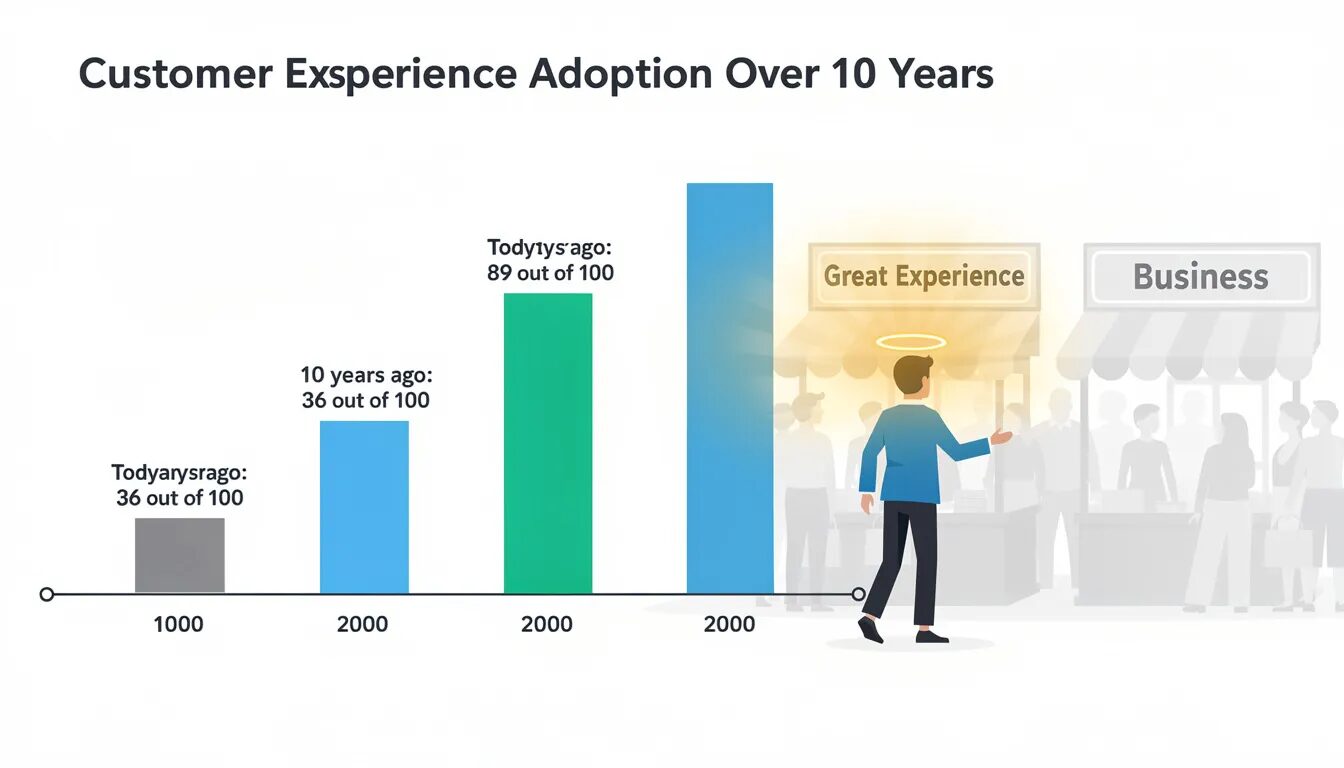
The transformation toward customer experience as a competitive advantage didn’t happen overnight. Today, 89% of businesses now compete primarily on customer experience, compared to just 36% a decade ago. This dramatic shift represents a fundamental change in how companies view their relationship with customers and what drives sustainable business growth. Providing a great customer experience builds loyalty and differentiation in crowded markets.
Modern customers interact with brands across 10+ touchpoints before making purchase decisions, creating a complex web of expectations that businesses must navigate successfully. Each interaction shapes the overall customer experience, from initial brand awareness through post-purchase support and beyond. Personalization is a key driver of Customer Experience (CX) and a powerful tool for creating a competitive advantage. This multichannel reality means that companies can no longer rely on isolated moments of excellence—they must deliver consistently outstanding service across every customer touchpoint. Customer expectations for personalized and seamless interactions have dramatically increased, making consistency more critical than ever.
Perhaps most revealing is the gap between what companies think they deliver versus what customers actually experience. While 80% of businesses believe they provide exceptional customer experiences, only 8% of customers agree. This massive disconnect reveals the enormous opportunity for businesses willing to genuinely prioritize customer experience and align their operations with changing customer expectations. Acquiring new customers is significantly more expensive than retaining existing customers, making it crucial for businesses to focus on their existing customers to drive loyalty and ensure sustainable revenue growth.
COVID-19 accelerated digital adoption and raised CX standards across all industries. The pandemic forced businesses to rapidly adapt their customer interactions, often revealing significant gaps in their customer experience strategies. Companies that had already invested in digital customer experience capabilities thrived, while those lacking such infrastructure struggled to meet evolving customer needs.
The reality is that price and product parity now force businesses to differentiate through experience quality. In most industries, competitors offer similar products at comparable prices, making traditional competitive advantages increasingly ineffective. This market saturation has elevated customer experience from a nice-to-have feature to an essential business strategy that determines market leadership.
The Revenue Reality: Quantifying CX’s Business Impact
The financial impact of superior customer experience extends far beyond customer satisfaction scores. Companies with superior CX achieve 4-8% higher revenue growth than competitors, demonstrating that investment in customer experience directly translates to measurable business outcomes. This revenue advantage compounds over time, creating an increasingly significant competitive gap between customer-centric organizations and those that haven’t prioritized the customer journey.
Customer-centric organizations are 60% more profitable than those that aren’t, highlighting the direct connection between customer focus and financial performance. This profitability advantage stems from multiple factors: reduced customer acquisition costs, higher customer lifetime value, increased repeat purchases, and positive word of mouth marketing that drives organic growth. By focusing on customer experience, companies can increase customer lifetime, encouraging repeat business and maximizing long-term profitability. Companies prioritizing excellent customer service often have more motivated employees, leading to higher job satisfaction and lower employee turnover.
The power of customer retention reveals another compelling financial argument for prioritizing customer experience. Improving customer retention by just 5% can increase profits by 25-95%, depending on the industry and business model. A strong focus on customer experience leads to higher customer retention rates, which are critical for sustained business growth. Companies that implement personalized approaches experience a significant increase in revenue. This enormous range demonstrates that while the specific impact varies, the directional relationship between retention and profitability remains consistently strong across different market contexts.
The cost of poor customer experience is equally dramatic. Poor customer experience costs US businesses $75 billion annually in lost revenue, representing a massive economic impact that affects entire industries. This figure includes direct revenue loss from customer churn, increased acquisition costs to replace lost customers, and opportunity costs from negative brand perception that affects potential customers.
The Loyalty Multiplication Effect
Customer loyalty creates a multiplication effect that amplifies the value of customer experience investments. Loyal customers have 3x higher lifetime value than first-time buyers, making customer retention significantly more valuable than customer acquisition from a financial perspective. This multiplier effect means that businesses focused on enhancing customer experience see compounding returns on their investment over time. By investing in customer experience, businesses are able to build long term relationships that drive repeat business and advocacy.
Emotionally connected customers show 2x the lifetime value of satisfied customers, revealing that customer satisfaction alone isn’t sufficient for maximum business impact. Creating emotional connections requires understanding customer motivations, anticipating customer needs, and delivering experiences that exceed expectations in meaningful ways. These emotional connections translate directly into increased customer lifetime value and stronger resistance to competitive offers. Emotional connections play a crucial role in customer experience and can significantly influence customer loyalty and advocacy.
The fragility of customer relationships in today’s market cannot be overstated. One negative experience causes 51% of customers to never do business with that company again, highlighting how a single failure can destroy years of relationship building. This statistic underscores the importance of consistency across all customer touchpoints and the need for robust systems to prevent service failures.
Word of mouth amplification demonstrates another crucial aspect of customer experience impact. Happy customers tell 4-6 people about positive experiences, while unhappy customers tell 9-15 people about negative experiences. Positive customer experiences translate into customer delight and motivate users to talk about your brand to their friends and colleagues. This asymmetry means that negative experiences have disproportionate impact on brand reputation and customer acquisition efforts. Happy customers become brand advocates and share their positive experiences with friends, family, and social media networks, amplifying the impact of exceptional customer service.
Interestingly, 73% of consumers will pay more for products with excellent customer experiences, proving that superior customer experience can command premium pricing. This willingness to pay more enables businesses to improve margins while simultaneously increasing customer satisfaction, creating a virtuous cycle of profitability and experience excellence. A great customer experience can turn customers into brand advocates who are willing to pay more for a better experience.
The Five Pillars of Competitive CX Advantage
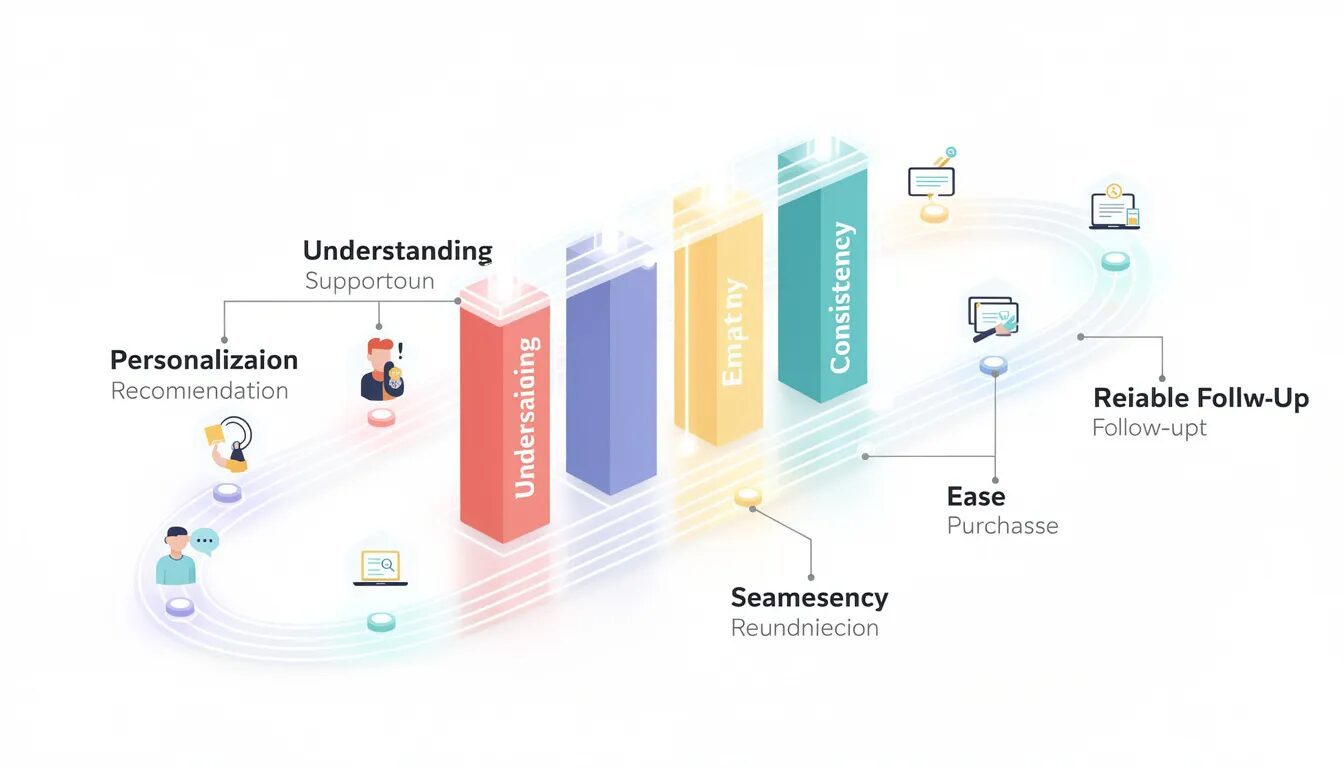
Building sustainable competitive advantage through customer experience requires mastering five essential pillars that work together to create exceptional experiences. Mastering these pillars is essential for building strong customer relationships that underpin sustainable competitive advantage. Customer journey mapping is a powerful tool for improving Customer Experience (CX) by providing a detailed visualization of the customer’s interactions with a brand. These pillars represent the core components that distinguish market leaders from followers in customer experience excellence.
Personalization at Scale
Personalization has evolved from a luxury to an expectation, with modern customers demanding experiences tailored to their specific needs and preferences. Delivering personalized experiences is now essential for meeting customer expectations and differentiating from competitors in a crowded marketplace. Netflix’s recommendation engine drives 80% of viewer engagement through personalized content, demonstrating the power of leveraging technology to deliver individualized experiences at massive scale. Personalization can be as simple as addressing customers by name or as complex as offering customized product recommendations based on past purchases.
Amazon’s “customers who bought this also bought” feature generates 35% of total revenue, illustrating how effective personalization directly translates to business results. This approach uses customer data to anticipate customer needs and present relevant options at the optimal moment in the customer journey.
The statistics supporting personalization are compelling: 80% of customers are more likely to purchase from companies offering personalized experiences. This preference for personalization spans across industries and customer segments, making it a universal requirement for competitive customer experience strategies.
Real-time personalization can increase conversion rates by up to 19%, showing that the timing and relevance of personalized interactions significantly impact business outcomes. Modern technology enables companies to analyze customer behavior in real-time and adjust their approach instantly, creating dynamic experiences that evolve with customer needs.
Implementing personalization at scale requires sophisticated customer data platforms that can unify information from various customer touchpoints and translate that data into actionable insights. Machine learning algorithms analyze purchasing patterns, browsing behavior, and customer feedback to predict preferences and customize interactions across multiple channels.
Omnichannel Consistency
Modern customers expect seamless experiences regardless of how they choose to interact with your brand. Companies with strong omnichannel strategies retain 89% of customers versus 33% for weak omnichannel approaches, highlighting the critical importance of consistency across all customer touchpoints.
Customers use an average of 6 touchpoints when seeking support, making it essential that each interaction feels connected and informed by previous interactions. This requirement means that customer data must be accessible across all departments and channels to ensure that customers feel valued and understood throughout their journey.
Disney’s seamless park-to-app-to-website experience sets the gold standard for omnichannel excellence. Whether booking reservations online, using mobile apps for park navigation, or interacting with staff in person, customers experience consistent service quality and brand messaging that reinforces their emotional connection to the brand.
Research shows that 91% of customers expect consistent experiences across all channels, making omnichannel consistency a baseline requirement rather than a competitive differentiator. Companies that fail to meet this expectation risk losing customers to competitors who provide more cohesive experiences.
Successful omnichannel implementation requires breaking down internal silos that prevent departments from sharing customer information effectively. Integrating systems and processes in this way not only supports seamless customer experiences but also significantly improves operational efficiency, enabling organizations to streamline workflows and drive better business outcomes. This cultural transformation often represents the biggest challenge for organizations seeking to improve their customer experience, as it requires new processes, technologies, and ways of thinking about customer interactions.
Proactive Problem Resolution
Shifting from reactive to proactive customer service can reduce churn by up to 67%, making it one of the most effective strategies for improving customer retention. Proactive service involves identifying and addressing potential issues before customers experience problems, demonstrating genuine concern for customer success.
Predictive analytics help companies identify potential issues before customers experience them by analyzing patterns in customer data, product usage, and support interactions. These systems can flag customers at risk of churn, predict product failures, or identify opportunities to enhance the customer experience before problems arise. Additionally, technology such as AI and chatbots enables businesses to address customer queries efficiently in real-time, leading to improved customer satisfaction and reduced support costs.
Zappos’ proactive shipping updates and surprise upgrades create memorable experiences that exceed customer expectations and build emotional connections. These unexpected positive interactions generate customer loyalty that extends far beyond the immediate transaction and often result in positive word of mouth marketing.
Despite its effectiveness, only 23% of companies currently use proactive customer service strategies, representing a significant opportunity for businesses willing to invest in predictive customer service capabilities. Early adopters of proactive service approaches gain competitive advantages that become increasingly difficult for competitors to match.
Implementing proactive problem resolution requires sophisticated monitoring systems that can track customer behavior patterns and identify potential issues across various customer touchpoints. Machine learning algorithms analyze historical data to predict future problems and recommend interventions that prevent negative experiences.
Emotional Connection Building
Creating emotional connections with customers drives loyalty that transcends rational decision-making and price sensitivity. Emotionally connected customers are less price sensitive and more likely to recommend brands to others, making emotional connection a powerful driver of business growth.
Apple’s Genius Bar creates emotional bonds that extend beyond technical support by training staff to understand customer frustrations and provide empathetic solutions. This approach transforms potentially negative support experiences into positive brand interactions that strengthen customer relationships.
Brands with emotional connections see 2.5x higher customer engagement compared to those that rely solely on transactional relationships. This increased engagement translates into more frequent interactions, higher purchase frequency, and greater customer lifetime value.
Human-to-human interactions remain crucial even in digital-first strategies, as customers still crave authentic connections with brands. While technology enables efficiency and scale, the human element provides the emotional resonance that creates lasting customer loyalty and advocacy. Companies that rely solely on chatbots or automated responses can miss the bigger picture: that customers want to feel valued, not processed.
Building emotional connections requires training employees to demonstrate empathy, understand customer motivations, and respond to emotional as well as practical needs. Making customers feel valued is essential in fostering loyalty and strengthening emotional bonds with the brand. This skill development goes beyond product knowledge to include emotional intelligence and communication skills that help employees connect with customers on a personal level.
Speed and Convenience Optimization
Modern customers expect immediate responses and frictionless interactions across all customer touchpoints. Customers expect responses within 1 hour on social media and 24 hours via email, creating urgent requirements for businesses to optimize their response times and customer engagement processes.
Technical performance directly impacts customer experience, with page load times over 3 seconds causing 53% of mobile users to abandon sites. This statistic highlights the importance of technical excellence in supporting customer experience goals and the need for businesses to continuously optimize their digital infrastructure.
Self-service options resolve 67% of customer issues without human intervention, demonstrating customer preference for quick, convenient problem resolution. Effective self-service systems empower customers to find answers independently while freeing human agents to focus on complex issues that require personal attention.
One-click purchasing can increase conversion rates by 35-40%, showing how removing friction from business processes directly improves business outcomes. Simplifying customer interactions requires analyzing each step of the customer journey and eliminating unnecessary complexity that creates customer effort.
Friction reduction strategies should focus on identifying pain points in the customer journey and implementing solutions that make interactions easier, faster, and more intuitive. This approach requires ongoing analysis of customer feedback and behavior data to identify areas where the customer experience can be streamlined.
Technology as the CX Enabler
Technology serves as the foundation that enables businesses to deliver exceptional customer experiences at scale. Modern platforms enable companies to deliver superior customer experiences, support, and analytics by integrating data, automating processes, and providing actionable insights. Modern customer experience strategies rely on sophisticated technological platforms that can process vast amounts of customer data, automate routine interactions, and provide insights that drive continuous improvement.
AI and Machine Learning Applications
Artificial intelligence has transformed customer experience capabilities by enabling personalization, prediction, and automation at unprecedented scale. Chatbots handle 67% of customer interactions without human intervention by 2024, demonstrating the growing sophistication of AI-powered customer service tools.
Sentiment analysis helps companies respond appropriately to customer emotions by analyzing text, voice, and behavioral data to understand customer feelings and motivations. This technology enables customer service representatives to adjust their approach based on emotional context, improving the effectiveness of customer interactions.
Predictive analytics identify customers at risk of churn with 85% accuracy, enabling proactive interventions that prevent customer loss. These systems analyze patterns in customer behavior, purchase history, and support interactions to predict future actions and recommend appropriate responses.
Machine learning personalizes experiences for millions of customers simultaneously by processing individual customer data and delivering customized content, recommendations, and offers in real-time. This capability enables businesses to scale personalization efforts without proportional increases in operational complexity.
Implementation of AI and machine learning requires careful planning and phased rollouts that allow businesses to learn and adapt their approaches based on customer feedback and performance data. Successful implementations focus on augmenting human capabilities rather than replacing human interactions entirely.
Data Analytics and Customer Intelligence
Customer data platforms unify information from 15+ different touchpoints, creating comprehensive customer profiles that inform every interaction. These platforms integrate data from websites, mobile apps, social media, customer service interactions, and purchase history to provide a complete view of each customer’s relationship with the brand.
Real-time analytics enable instant responses to customer behavior changes by monitoring customer actions across all touchpoints and triggering appropriate responses based on predefined rules and machine learning algorithms. This capability allows businesses to capitalize on opportunities and address issues as they emerge.
Journey mapping reveals specific friction points that cost businesses revenue by visualizing the complete customer experience and identifying moments where customers encounter difficulties or abandon their intended actions. This analysis enables targeted improvements that have measurable impact on business outcomes.
Behavioral analytics predict customer needs with 70%+ accuracy by analyzing patterns in customer actions and identifying signals that indicate future behavior. These insights enable businesses to anticipate customer requirements and provide relevant solutions before customers explicitly request them.
Analyzing customer data requires sophisticated tools and expertise to transform raw information into actionable insights. By analyzing customer feedback and behavior, businesses can gain insights into customer preferences and pain points, allowing them to refine their CX strategies for better results. Businesses must invest in both technology platforms and analytical capabilities to fully leverage their customer data for competitive advantage.
Measuring CX Success: Beyond Traditional Metrics
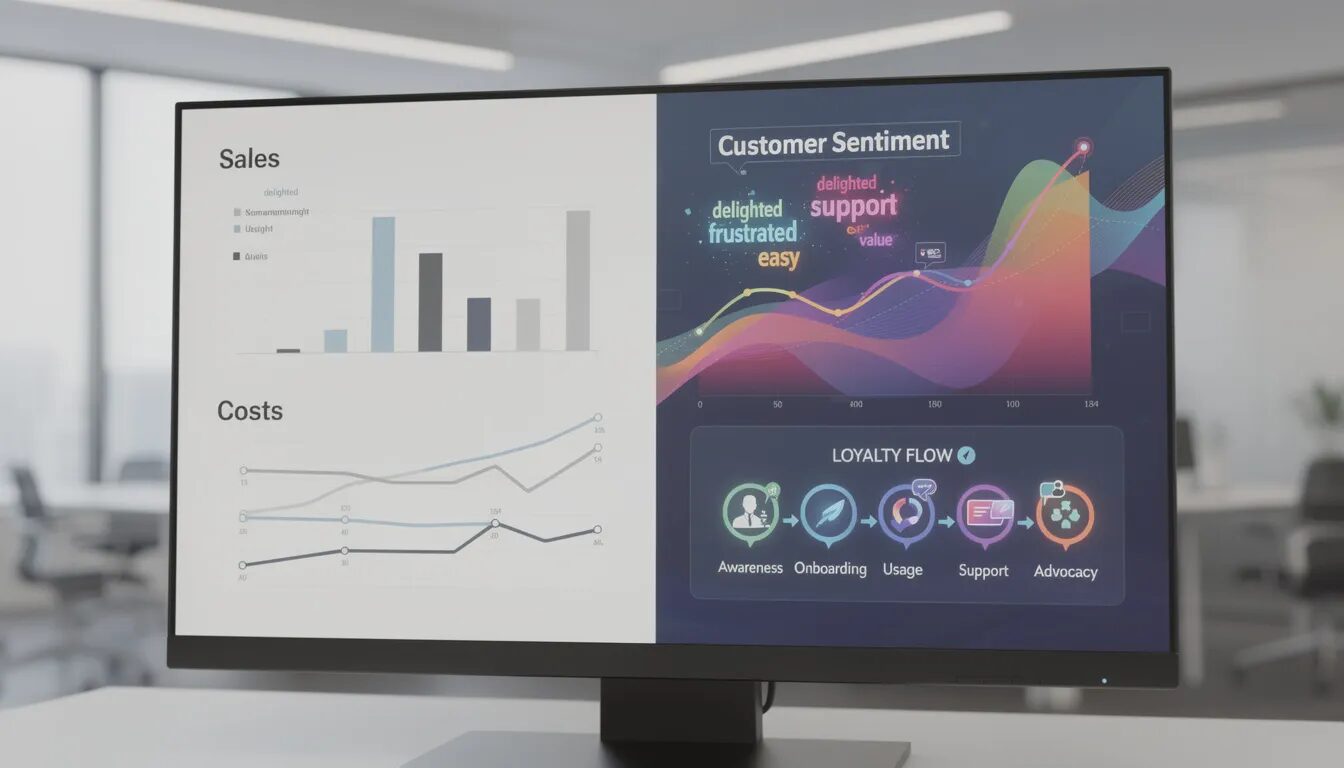
Traditional business metrics often fail to capture the full impact of customer experience investments, making it essential for businesses to adopt new measurement approaches that reflect the complex nature of modern customer relationships. Effective measurement requires combining quantitative metrics with qualitative insights to understand both the what and why of customer behavior. Metrics should also capture the impact of great service on customer loyalty and advocacy, as exceptional service is a key driver of long-term customer relationships.
Net Promoter Score (NPS) correlates strongly with revenue growth, making it a valuable leading indicator of business performance. NPS measures customer willingness to recommend a brand to others, providing insight into customer loyalty and potential for organic growth through word of mouth marketing.
Customer Effort Score (CES) predicts retention better than satisfaction scores by measuring how easy it was for customers to accomplish their goals. This metric recognizes that customers value convenience and efficiency, often more than exceeding expectations in other areas.
Customer lifetime value (CLV) measures long-term CX impact on profitability by calculating the total revenue a business can expect from a customer relationship over time. This metric helps businesses understand the return on investment for customer experience initiatives and prioritize efforts that drive the highest long-term value.
Employee Net Promoter Score (eNPS) links internal culture to external experience by measuring employee satisfaction and engagement. Research consistently shows that engaged employees deliver better customer experiences, making employee satisfaction a leading indicator of customer experience quality.
Real-time feedback collection through multiple channels provides immediate insights that enable rapid response to customer concerns and opportunities. Modern feedback systems integrate with customer journey mapping to provide context-rich insights that inform both immediate responses and long-term strategic decisions.
Key metrics to track include:
| Metric | What It Measures | Why It Matters |
|---|---|---|
| Net Promoter Score | Likelihood to recommend | Predicts growth and loyalty |
| Customer Effort Score | Ease of interaction | Predicts retention better than satisfaction |
| Customer Lifetime Value | Long-term financial impact | Measures ROI of CX investments |
| First Contact Resolution | Service efficiency | Reduces costs and improves satisfaction |
| Customer Acquisition Cost | Cost effectiveness | Shows impact of referrals and reputation |
Benchmarking data varies significantly across industries, but top-performing companies typically achieve NPS scores above 50, first contact resolution rates above 75%, and customer retention rates above 90%. These benchmarks provide targets for businesses seeking to achieve competitive advantage through customer experience excellence.
Building a CX-Driven Organization
Creating sustainable competitive advantage through customer experience requires more than implementing new tools or processes—it demands fundamental organizational transformation that aligns every aspect of the business around customer success. This transformation touches culture, structure, processes, and people development.
Cultural Transformation Strategies
Southwest Airlines demonstrates how employee-first culture creates exceptional customer experiences by empowering employees to prioritize customer satisfaction over rigid policies. This approach recognizes that happy employees create happy customers, establishing a foundation for sustainable customer experience excellence.
Customer-centric KPIs align all departments toward common CX goals by measuring success based on customer outcomes rather than internal operational metrics. This alignment ensures that every decision considers impact on the customer experience, creating consistency across all customer touchpoints.
Regular customer feedback sessions keep teams connected to real experiences by providing direct exposure to customer voices and concerns. These sessions help employees understand the impact of their work on customer satisfaction and identify opportunities for improvement.
Cross-functional CX teams break down departmental silos that prevent coordinated customer experience delivery. These teams bring together representatives from all customer-facing departments to ensure consistent messaging, processes, and service quality across all channels.
Successful cultural transformation requires strong leadership commitment and clear communication about the importance of customer experience to business success. Leaders must model customer-centric behavior and recognize employees who demonstrate excellence in customer experience delivery.
Change management strategies should include:
- Executive sponsorship and visible commitment to CX excellence
- Clear communication about why customer experience matters to business success
- Training programs that develop customer-centric skills and mindsets
- Recognition and reward systems that celebrate customer experience achievements
- Regular measurement and communication of progress toward CX goals
Employee Empowerment and Training
Empowered employees resolve 70% more customer issues on first contact by having authority to make decisions that prioritize customer satisfaction over internal policies. This empowerment reduces customer effort and creates more satisfying experiences for both customers and employees.
Regular CX training increases customer satisfaction scores by 15-20% by developing skills in empathy, problem-solving, and communication. Investing in training and empowering employees enhances Customer Experience (CX). Effective training programs go beyond product knowledge to include emotional intelligence and customer psychology.
Ritz-Carlton’s $2000 employee empowerment budget creates memorable experiences by allowing any employee to spend up to $2000 per guest to resolve issues or create special moments. This approach demonstrates trust in employee judgment and commitment to customer satisfaction.
Customer feedback directly influences employee recognition and rewards, creating clear connections between customer experience outcomes and individual success. This alignment ensures that employees understand how their actions impact customer satisfaction and business results.
Training frameworks should include:
- Customer empathy and emotional intelligence development
- Product knowledge that enables confident problem-solving
- Communication skills that create positive interactions
- Authority and guidelines for making customer-focused decisions
- Regular updates on customer feedback and experience trends
Employee empowerment requires clear guidelines that balance customer satisfaction with business sustainability, ensuring that empowered decisions support both customer happiness and long-term business viability. Regular coaching and feedback help employees develop judgment that serves both customer and business interests effectively.
The Future of CX Competitive Advantage
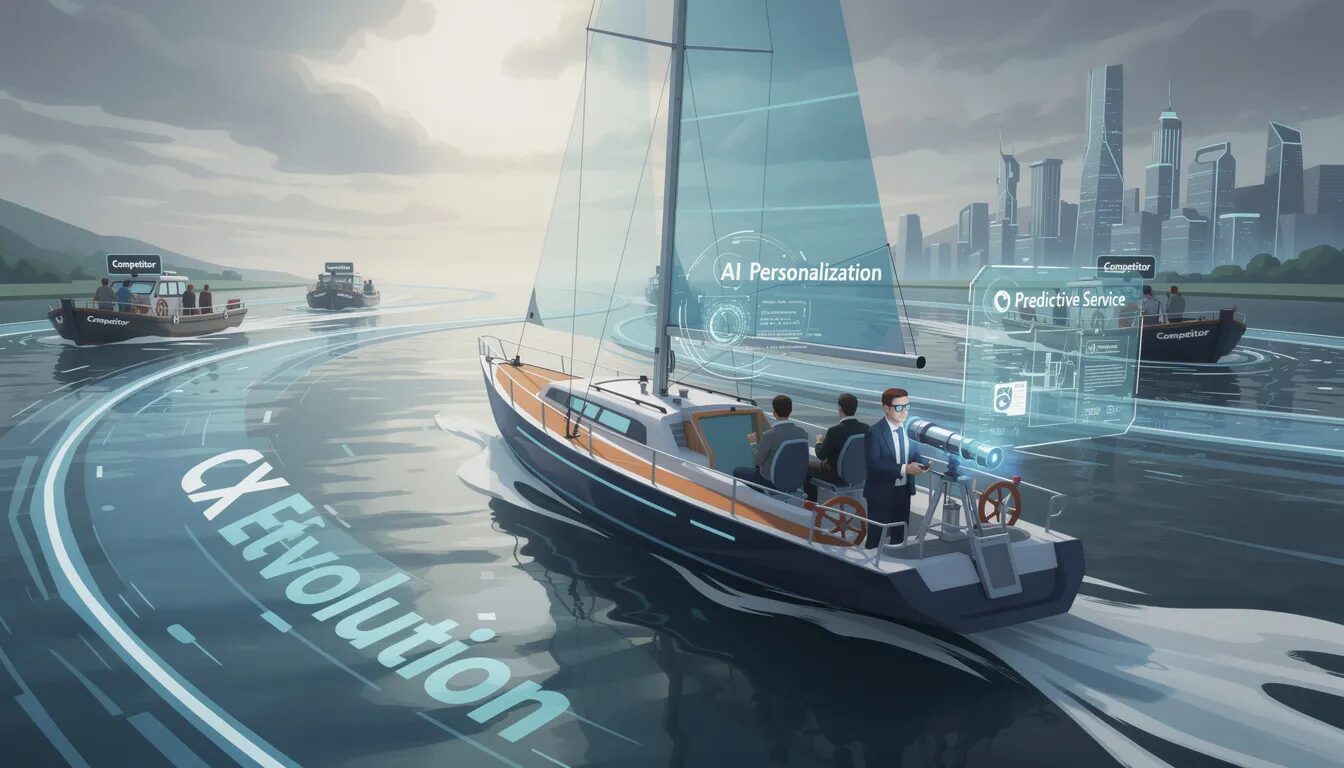
The evolution of customer experience continues to accelerate, driven by technological advances and changing customer expectations. Companies that understand and prepare for future CX trends will establish competitive advantages that become increasingly difficult for competitors to match.
Voice and conversational interfaces will handle 40% of customer interactions by 2026, fundamentally changing how customers engage with businesses. These interfaces enable more natural, efficient interactions that reduce customer effort while providing businesses with rich data about customer preferences and behaviors.
Augmented reality will transform product discovery and customer support by allowing customers to visualize products in their environment and receive interactive guidance for setup and troubleshooting. This technology bridges the gap between digital and physical experiences, creating new opportunities for customer engagement.
Hyper-personalization using IoT data will predict customer needs before they arise by analyzing behavioral patterns, environmental factors, and usage data from connected devices. This predictive capability enables businesses to provide proactive service that anticipates and addresses customer requirements automatically.
Sustainability and social responsibility become integral to customer experience as customers increasingly choose brands that align with their values. This trend requires businesses to integrate purpose-driven messaging and actions into their customer experience strategies.
Emotional AI will detect and respond to customer feelings in real-time by analyzing voice patterns, facial expressions, and text sentiment to adjust interactions based on emotional context. This technology enables more empathetic customer service that responds to both rational and emotional customer needs.
The businesses that will dominate future markets are those investing in CX technology and capabilities today. These investments compound over time, creating increasingly sophisticated customer experience capabilities that become barriers to competitive entry.
Future CX leaders will need to:
- Integrate emerging technologies into coherent customer experience strategies
- Balance automation with human touch points that create emotional connections
- Use data privacy and security as competitive differentiators rather than compliance requirements
- Create customer experiences that reflect brand values and social responsibility
- Continuously evolve customer experience strategies based on changing expectations and technological capabilities
Conclusion
The transformation of customer experience into the primary competitive advantage represents one of the most significant shifts in modern business strategy. Companies that recognize this transformation and act decisively to enhance their customer experience capabilities position themselves for sustainable success in increasingly competitive markets.
The evidence supporting customer experience as the new competitive advantage is overwhelming: higher revenue growth, improved profitability, increased customer loyalty, and better employee engagement all result from strategic focus on customer experience excellence. These benefits compound over time, creating expanding competitive gaps between customer-centric organizations and those that haven’t prioritized the customer journey.
Success in this new competitive landscape requires more than implementing individual customer experience initiatives—it demands comprehensive organizational transformation that aligns culture, processes, technology, and measurement around customer success. This transformation touches every aspect of business operations, from product development to employee engagement to financial planning.
The urgency of this transformation cannot be overstated. Customer expectations continue to evolve rapidly, driven by technological advances and exposure to best-in-class experiences from market leaders. Companies that delay investment in customer experience capabilities risk falling permanently behind competitors who are building sophisticated customer-centric operations.
Understanding why customer experience is the new competitive advantage provides the foundation for strategic planning, but execution determines market success. The businesses that thrive in tomorrow’s market are those that begin building their customer experience advantages today, creating capabilities that enable them to anticipate customer needs, deliver exceptional experiences, and continuously evolve their approach based on customer feedback and changing market conditions.
The future belongs to organizations that make customers feel valued, anticipate customer requirements, and consistently deliver experiences that exceed expectations across every touchpoint. Companies that embrace this reality and invest accordingly will find themselves leading markets rather than following competitors who understood the power of customer experience as a competitive weapon.
The Voice of the Customer: Harnessing Feedback for Continuous Improvement
In today’s competitive market, the brands that consistently deliver exceptional customer experiences are those that truly listen to their customers. Harnessing customer feedback is no longer optional—it’s a strategic necessity for gaining a sustainable competitive advantage. By actively seeking out and acting on the voice of the customer, businesses can align their offerings with evolving customer expectations, ensuring that every interaction contributes to higher customer satisfaction and long-term loyalty.
Customer feedback provides a direct window into what customers value, where they encounter friction, and how their needs are changing. Whether gathered through customer surveys, online reviews, social media listening, or direct customer interactions, this feedback is a goldmine for identifying opportunities to delight customers and address pain points before they escalate. In a competitive market where customer expectations continue to rise, the ability to quickly adapt based on real-world insights sets leading companies apart.
Continuous improvement fueled by customer feedback enables organizations to fine-tune their customer journey, optimize business processes, and deliver personalized experiences that make customers feel valued. For example, analyzing customer feedback can reveal recurring issues with a particular touchpoint, prompting targeted improvements that reduce customer effort and increase satisfaction. Over time, this customer-centric approach not only enhances the overall customer experience but also builds a loyal customer base that is more likely to make repeat purchases and advocate for the brand.
Moreover, leveraging customer feedback demonstrates to customers that their opinions matter, strengthening emotional connections and trust. When customers see that their concerns are addressed and their suggestions implemented, they are more likely to remain loyal—even in the face of competitive pricing or alternative options.
In summary, making customer feedback a central part of your strategy is essential for meeting customer expectations, driving continuous improvement, and maintaining a competitive edge. By listening, learning, and acting on the voice of the customer, businesses can deliver the exceptional experiences that today’s customers expect—and secure their place as leaders in the customer-centric era.