The Technology-First Team Building Revolution
The way organizations build high-performing teams has fundamentally transformed. In 2024, teams using AI-powered development tools like GitHub Copilot and Microsoft Copilot reported a remarkable 55% increase in developer productivity, while companies maintaining traditional team structures struggled to keep pace. This isn’t just about adopting new tools—it’s about building modern teams around technology as the core organizing principle. A well-chosen tech stack enables scalability, maintainability, and performance optimization, allowing businesses to respond quickly to market demands. Leveraging automation tools and seamless cloud deployments can further boost efficiency in team performance by accelerating project delivery and optimizing technical workflows.
The shift toward technology-first team building represents more than digital transformation; it’s a complete reimagining of how teams collaborate, communicate, and deliver results. Remote and hybrid work models have accelerated this evolution, making technology-enabled team structures not just advantageous but essential for survival in competitive markets. Promoting work-life balance prevents burnout and enhances overall well-being, resulting in a more productive tech team. Celebrating achievements, recognizing milestones, and fostering a supportive environment can significantly boost morale and motivation. Remote work, accelerated by the pandemic, is likely to become the norm in many tech teams, requiring a focus on fostering strong virtual collaboration practices. Building diverse and inclusive tech teams will be critical to tap into a wider range of perspectives and talent pools, driving innovation and creativity.
Research indicates that organizations successfully implementing technology-driven team approaches see measurable improvements across multiple dimensions: 30% higher employee engagement, 20% reduced turnover, and significantly improved project velocity. These aren’t coincidental benefits—they’re the direct result of aligning team architecture with modern technological capabilities. Continuous learning and upskilling will be non-negotiable for tech teams to stay ahead of the curve as technology changes at an ever-increasing pace. Additionally, diversity within technology teams leads to fresh ideas and innovative solutions, further enhancing team performance and creativity.
The traditional model of co-located teams relying on face-to-face communication and manual coordination has given way to distributed, always-connected teams that leverage cloud platforms, AI automation, and sophisticated collaboration tools. Automation in these environments helps reduce manual errors and streamlines workflows, improving accuracy and operational efficiency. This represents a fundamental shift from technology as a support function to technology as the foundation of team effectiveness. Open communication fosters a culture of trust and transparency among team members, which is essential for the success of these modern, distributed teams. The zero-trust security model has become critical for securing modern, scalable infrastructures, continuously verifying every access request.

Core Technologies Shaping Modern Team Structures
Cloud Platforms and Infrastructure
Cloud platforms like AWS, Microsoft Azure, and Google Cloud have become the backbone of modern team collaboration. These platforms enable engineering teams to provision resources instantly, scale applications globally, and maintain consistent development environments regardless of team member location. Google Cloud, for instance, provides integrated DevOps tools that allow cross functional teams to deploy applications 10 times faster than traditional on-premises setups. Cloud-native architecture is essential for maintaining a competitive edge in the digital era, allowing for faster experimentation and deployment of new features.
The shift to cloud platforms fundamentally changes how technology teams operate. Instead of managing servers and hardware procurement cycles, teams can focus on building features and solving business problems. Analytics tools are essential for monitoring performance and making data-driven adjustments, ensuring that teams can optimize their workflows and outcomes. This transition eliminates traditional infrastructure bottlenecks that previously required specialized expertise and lengthy setup processes.
Communication tools like Slack, Microsoft Teams, and Discord create virtual team spaces that replicate and enhance in-person collaboration. These platforms integrate with hundreds of other tools, creating unified workspaces where team members can access project updates, code repositories, documentation, and real-time conversations without switching contexts. CRM integrations with these communication platforms help teams manage and automate customer interactions across multiple channels, improving sales and marketing effectiveness. Using unified communication platforms can keep everyone on the same page, ensuring seamless collaboration and reducing miscommunication.
Project management platforms including Jira, Asana, and Monday.com provide transparency and accountability that was difficult to achieve with traditional management approaches. These tools automatically track progress, identify bottlenecks, and generate reports that help teams stay aligned with business objectives. Additionally, these platforms support managing customer relationships by providing better visibility into sales pipelines and client communications.
DevOps tools including Kubernetes, Docker, and Jenkins streamline development workflows by automating manual processes that previously consumed significant team time. Modern tech stacks built around these tools enable continuous integration and deployment, reducing the time between code changes and production releases from weeks to minutes.
AI and Automation Tools
Artificial intelligence has evolved from experimental technology to essential infrastructure for high performing teams. ChatGPT and Claude assist with documentation, code review, and problem-solving, effectively providing each team member with an intelligent assistant available 24/7. These tools don’t replace human expertise but amplify it, enabling teams to tackle more complex challenges and deliver creative solutions faster. Artificial intelligence and machine learning are also transforming how applications operate, allowing for more personalized user experiences and smarter data handling, which further enhances team capabilities.
Automated testing frameworks reduce manual QA work by 70% in modern teams, freeing skilled professionals to focus on strategic testing scenarios and user experience optimization. Machine learning algorithms can identify potential bugs, security vulnerabilities, and performance issues before they reach production environments.
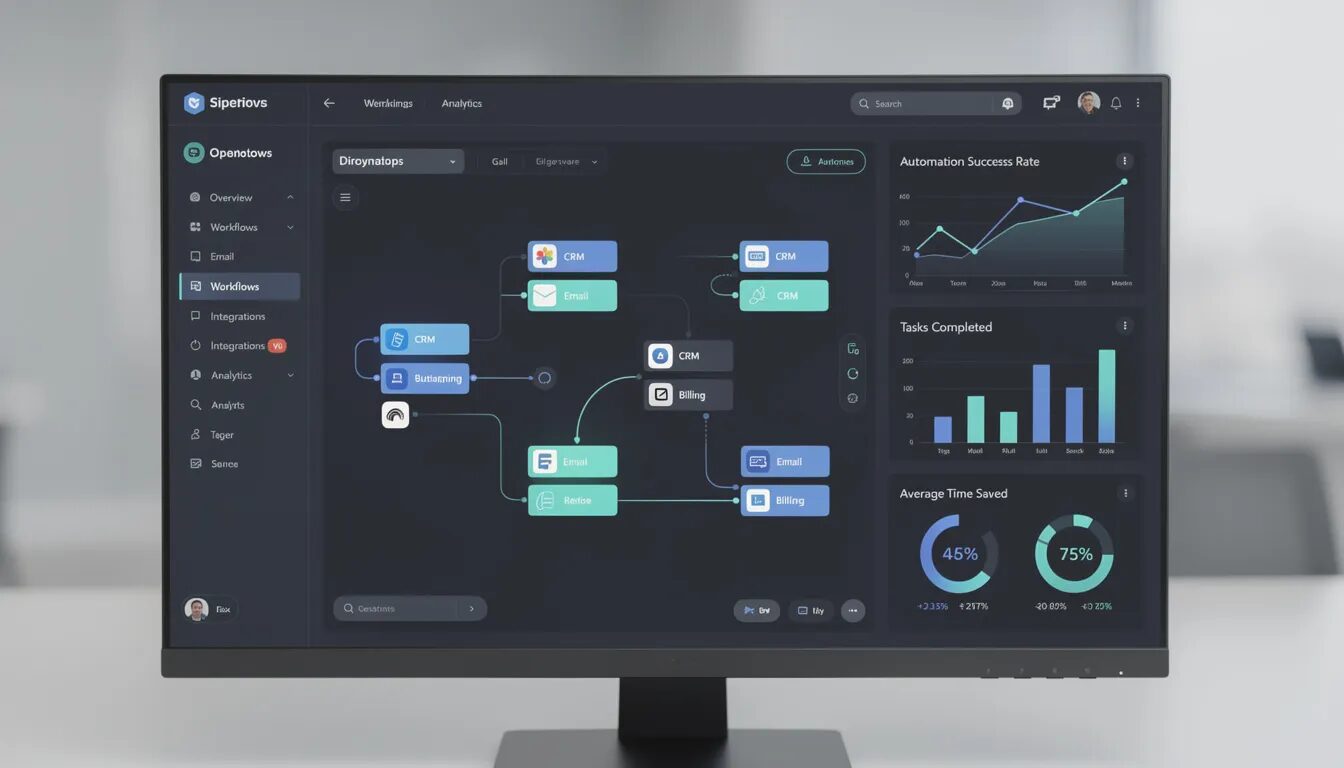
Low-code platforms like Zapier and Microsoft Power Platform enable citizen developers throughout the organization to build automation workflows and simple applications. This democratization of development capabilities means that cross functional teams can solve their own process problems without waiting for engineering resources.
Machine learning operations (MLOps) tools have become critical for data science teams working with large datasets and complex models. These platforms automate model training, deployment, and monitoring, enabling data scientists to focus on feature engineering and algorithm development rather than infrastructure management.
Collaboration and Communication Platforms
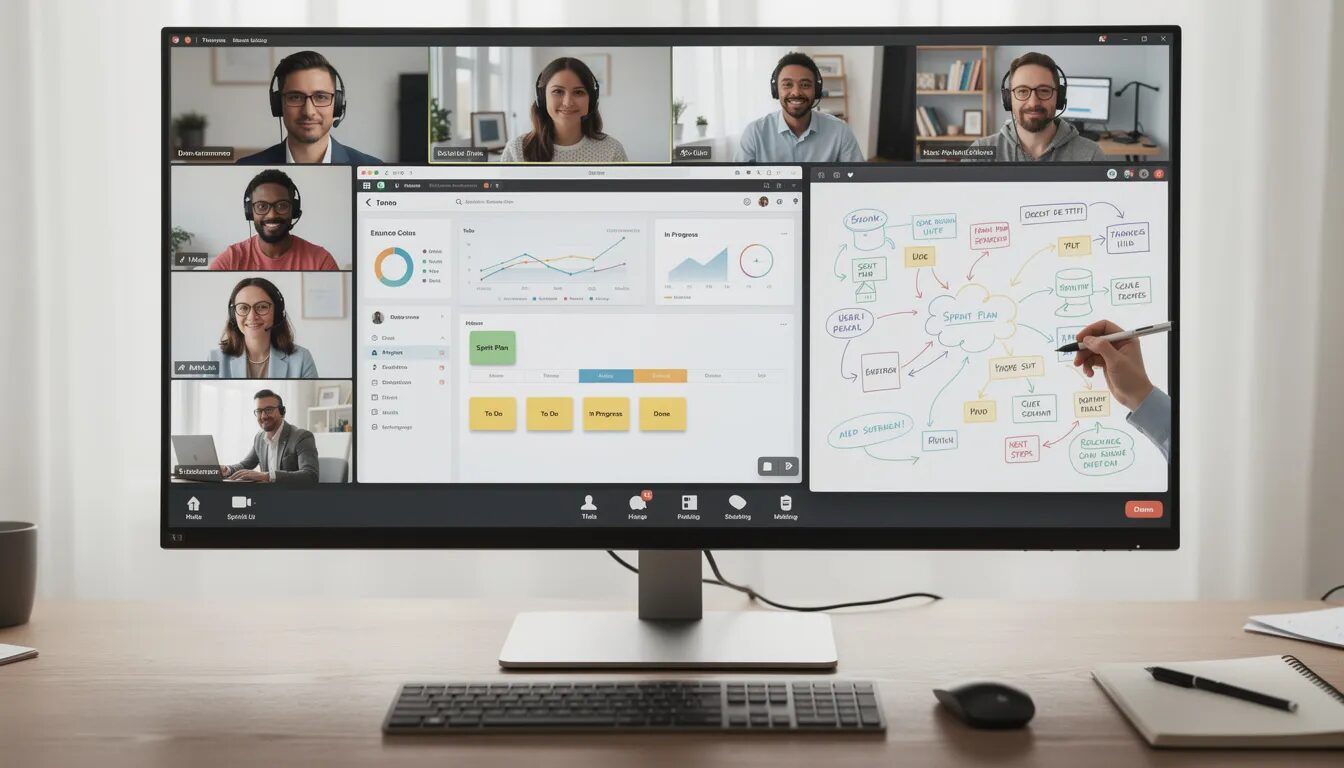
Video conferencing tools including Zoom and Google Meet have evolved beyond simple meeting replacements to become sophisticated collaboration environments. Screen sharing, recording capabilities, and real-time annotation tools enable remote teams to work together as effectively as co-located teams, with the added benefit of automatically documented sessions. These platforms help teams communicate effectively, fostering stronger collaboration and understanding.
Whiteboarding platforms like Miro and Figma facilitate visual collaboration that was previously impossible in distributed environments. Design teams can iterate on prototypes in real-time, while engineering teams can collaborate on system architecture diagrams and technical specifications with participants across multiple time zones. Fostering a culture of collaboration enhances problem-solving capabilities and promotes a positive work environment, making these tools invaluable for modern teams.
Version control systems including Git, GitLab, and Bitbucket enable seamless collaboration on code and documentation. These platforms track every change, enable parallel development streams, and provide automated conflict resolution that makes large-scale collaboration possible without coordination overhead.
Knowledge sharing systems including Notion, Confluence, and SharePoint create organizational memory that persists beyond individual team members. Well integrated tech stack implementations ensure that tribal knowledge becomes documented, searchable institutional knowledge that supports continuous learning and onboarding processes.
Building Technology-Enabled Team Structures
Agile and DevOps Integration
Modern team structures increasingly adopt cross-functional squads using variations of Spotify’s model, with embedded technology specialists who bring deep expertise in specific domains. These squads typically include software developers, designers, product managers, and data analysts who share responsibility for complete feature delivery rather than working in isolated functional silos. Diversity within tech teams brings fresh ideas and innovative solutions, fostering creativity and driving success in these collaborative environments.
DevSecOps teams integrate security practitioners directly into development workflows from day one, rather than treating security as a separate phase. This integration prevents costly rework and ensures that security considerations influence architecture decisions early in the development process.
Platform teams provide internal tools and infrastructure as a service to other teams within the organization. These teams focus on creating reliable, scalable foundations that enable application teams to move faster and worry less about underlying technical complexity.
Scrum teams with integrated CI/CD pipelines achieve faster deployment cycles by automating the path from code commit to production deployment. Teams using continuous integration report 85% fewer integration issues compared to traditional development approaches, while maintaining higher code quality through automated testing and review processes. These practices directly enhance the team’s performance by streamlining workflows and increasing deployment speed.
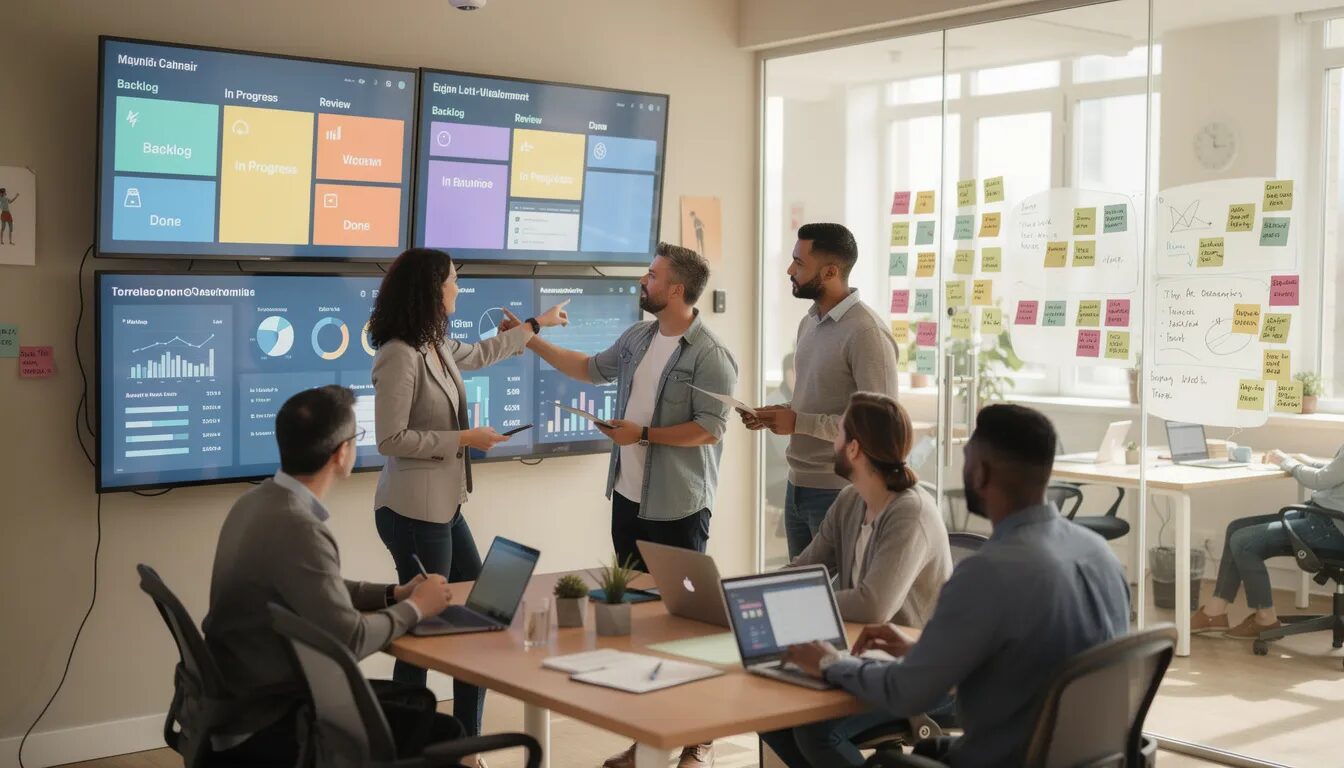
Kanban boards with automated workflow triggers and notifications provide real-time visibility into work progress without requiring manual status updates. Team members can focus on completing work rather than reporting on work, while stakeholders maintain full visibility into project status and potential bottlenecks.
Site reliability engineering (SRE) practices help teams maintain system uptime while continuously deploying new features. SRE teams use automation, monitoring, and error budgets to balance reliability with innovation velocity, ensuring that rapid development doesn’t compromise user experience.
Remote-First Team Architecture
Building successful remote-first teams requires deliberately designing for distributed collaboration from the beginning. Asynchronous communication protocols using tools like Loom and async Slack channels enable teams to maintain momentum across time zones while reducing the number of required meetings. Balancing synchronous and asynchronous communication accommodates different time zones and work styles, ensuring inclusivity and efficiency.
Digital-first documentation practices eliminate tribal knowledge by requiring that all important information be captured in searchable, accessible formats. Teams that implement these practices successfully onboard new team members 60% faster than those relying on informal knowledge transfer.
Virtual onboarding programs with VR training modules create immersive experiences that help remote employees feel connected to company culture and team dynamics. These programs can simulate real workplace scenarios and provide hands-on training with company-specific tools and processes.
Performance tracking through OKRs (Objectives and Key Results) and automated metrics dashboards provides objective measurement of team contribution and individual growth. Encouraging feedback and celebrating achievements boosts morale and motivation within tech teams. Data analytics from development tools, project management systems, and communication platforms create comprehensive pictures of team performance without requiring subjective assessments.
The key to remote-first architecture is designing systems that work better than in-person alternatives, not just equivalently. Teams achieving this standard often report higher productivity and job satisfaction than their co-located counterparts, along with access to global talent pools that improve overall team capability.
Essential Skills for Technology-Driven Teams
Technical Competencies
Digital literacy across all roles has become non-negotiable in technology-driven organizations. Marketing professionals need to understand API integrations for campaign automation, while sales teams require familiarity with CRM automation and data analysis tools. This doesn’t mean everyone becomes a programmer, but everyone needs comfort with technology as a problem-solving tool.
Cloud computing fundamentals enable team members to understand how modern applications scale, deploy, and integrate with other systems. Basic knowledge of cloud platforms helps non-technical team members make informed decisions about tool selection and understand the implications of various architectural choices.
API integration knowledge allows teams to connect different systems and create automated workflows that eliminate manual data entry and reduce errors. Teams with strong API literacy can rapidly prototype solutions and integrate new tools into their existing tech stack without extensive technical support.
Data analysis skills support evidence-based decision making across all business functions. Team members who can query databases, create visualizations, and identify trends in data contribute to better strategic decisions and can validate assumptions with real evidence rather than intuition.
Understanding data privacy regulations like GDPR and CCPA has become essential as teams handle increasing amounts of customer data across multiple systems. Teams that understand these requirements can design compliant processes from the beginning rather than retrofitting compliance later.
Basic programming skills in languages like Python or JavaScript, or proficiency with no-code platforms, enable team members to automate routine tasks and build simple tools for their specific needs. This capability reduces dependence on engineering resources for minor customizations and process improvements.
Soft Skills for Tech Teams
Virtual communication and presentation skills have become as important as technical expertise for remote and hybrid teams. Effective virtual communicators can facilitate engaging meetings, present complex information clearly through screen sharing, and maintain team energy across video calls.
Cross-cultural collaboration skills are essential for teams spanning multiple geographic regions and cultural backgrounds. Understanding communication styles, time zone etiquette, and cultural preferences helps distributed teams work together effectively and avoid misunderstandings that can derail projects.
Emotional intelligence becomes more challenging but more important in virtual environments where non-verbal cues are limited. Team members skilled in reading virtual body language, checking in on colleague well-being, and creating psychological safety in digital environments help their teams maintain strong relationships despite physical distance.
Adaptability to rapidly changing technology landscapes is crucial as new tools, platforms, and methodologies emerge constantly. Team members with growth mindset approach learning new technologies as opportunities rather than burdens, helping their teams stay ahead of technological trends and competitive threats.
Leadership Strategies for Modern Tech Teams
Digital Transformation Leadership
Successful leaders of technology teams adopt servant leadership approaches that focus on team enablement rather than command-and-control management. These leaders remove obstacles, provide resources, and create environments where team members can do their best work rather than micromanaging daily activities.
Data-driven performance management uses metrics from development tools, project management systems, and collaboration platforms to understand team effectiveness objectively. Leaders can identify performance bottlenecks, recognize high contributors, and make resource allocation decisions based on evidence rather than assumptions.
Continuous feedback loops through tools like 15Five and Culture Amp replace annual performance reviews with ongoing conversations about growth, challenges, and career development. This approach helps leaders address issues before they become serious problems and ensures that team members receive regular recognition and guidance.
Change management strategies for technology adoption achieve 80% success rates when implemented systematically, compared to 30% success rates for ad-hoc technology rollouts. Successful change management includes stakeholder alignment, training programs, and phased rollouts that allow teams to adapt gradually to new tools and processes. AI and automation will continue to play an increasingly prominent role in tech stacks, taking on repetitive tasks and freeing up human talent for more strategic initiatives.
ROI calculation frameworks for technology investments help leaders demonstrate the business value of tools, training, and team structure changes. Leaders who can articulate the financial impact of team productivity improvements gain support for continued investment in team development and technology infrastructure.
Technology budget allocation based on team productivity metrics ensures that investment decisions support actual team needs rather than vendor marketing or industry trends. Teams that can measure the impact of different tools on their workflow can optimize their tech stack for maximum effectiveness.
Stakeholder Alignment and Risk Management
Stakeholder alignment through technology roadmaps and regular communication helps non-technical executives understand how team investments support business objectives. Leaders who can translate technical decisions into business impact gain support for team initiatives and avoid conflicts over resource allocation.
Risk management for technology dependencies and vendor relationships protects teams from disruptions when external services fail or vendors change their offerings. Diversified tech stacks and contingency plans help teams maintain operational efficiency even when individual tools or services become unavailable.
Effective leaders regularly communicate progress, challenges, and successes to stakeholders across the organization, ensuring that team contributions remain visible and valued. This communication builds organizational support for continued investment in team development and technology infrastructure.
Overcoming Common Technology Team Challenges
Tool Consolidation and Integration
The average team now uses 87 different SaaS applications, creating complexity that can overwhelm team members and reduce productivity rather than enhancing it. Technology audit processes help teams identify redundant tools and consolidate their tech stack to focus on essential tools that integrate well with each other.
API-first integration strategies using platforms like Zapier and MuleSoft create seamless workflows between different tools without requiring custom development work. Teams that invest time in setting up these integrations can eliminate manual data entry and reduce the context switching that disrupts focused work.
Tool consolidation efforts typically reduce software costs by 25% while improving team productivity by reducing the cognitive load of managing multiple similar tools. The key is choosing a well integrated tech stack that supports all necessary functions rather than optimizing individual tool capabilities in isolation.
Single sign-on (SSO) implementation improves both security and user experience by reducing the number of passwords team members must remember and manage. SSO also provides IT administrators with centralized access control that can be quickly updated when team members change roles or leave the organization.
Vendor management strategies help teams optimize their existing tech stack by negotiating better terms, consolidating contracts, and ensuring that tool capabilities align with actual team needs. Regular vendor reviews can identify opportunities to upgrade, downgrade, or replace tools based on changing team requirements.
Security and Compliance
Zero-trust architecture implementation provides security for distributed teams by requiring verification for every access request regardless of location or device. This approach protects sensitive data and systems even when team members work from unsecured networks or personal devices.
Regular security training and phishing simulation programs help team members recognize and avoid security threats that target human vulnerabilities rather than technical systems. Teams that invest in security education experience 70% fewer successful phishing attempts and data breaches.
Compliance automation tools for standards like SOC 2, ISO 27001, and industry-specific regulations reduce the manual effort required to maintain compliance while providing continuous monitoring and reporting. Automated compliance reduces the risk of violations and associated penalties.
Incident response protocols designed for distributed teams ensure that security incidents can be detected, contained, and resolved quickly even when team members are working from different locations. These protocols include communication plans, technical procedures, and escalation paths that work across time zones and communication channels.
Teams that proactively address security and compliance requirements avoid the costly disruptions of data breaches and regulatory violations while building customer trust that supports business growth and competitive advantage.
Talent Acquisition and Development
The competition for skilled technology professionals requires organizations to offer more than competitive salaries. Teams that provide excellent professional development opportunities, healthy work life balance, and interesting technical challenges attract and retain better talent than those focused solely on compensation.
Certification programs and training programs help existing team members develop new skills and advance their careers while ensuring that the team maintains current expertise as technology evolves. Organizations that invest in continuous learning see higher employee engagement and lower turnover rates.
Mentorship programs and knowledge sharing initiatives help teams scale their expertise by ensuring that knowledge transfers between experienced and newer team members. These programs reduce onboarding time for new hires while creating career development opportunities for senior team members.
Remote hiring practices expand talent pools by removing geographic constraints, but require different evaluation methods that assess collaboration skills and self-direction in addition to technical competencies. Teams that master remote hiring can access global talent while maintaining strong team culture.
Future Trends in Technology Team Building
Emerging Technologies and Team Impact
AI-powered team formation based on skills matching and project requirements will revolutionize how organizations assemble teams for specific initiatives. Machine learning algorithms can analyze past project success factors, individual working styles, and technical expertise to suggest optimal team compositions that maximize both performance and team member satisfaction.
Generative AI is already reducing code development time by 40%, fundamentally changing the role of software developers from writing code to architecting solutions and reviewing AI-generated implementations. This shift requires new skills in AI tool management, prompt engineering, and quality assurance for AI-generated work.
Virtual and augmented reality for immersive team collaboration will become mainstream by 2026 as hardware costs decrease and software capabilities improve. VR meetings will enable spatial collaboration that’s impossible with traditional video conferencing, while AR will overlay digital information onto physical workspaces for hybrid teams.
Edge computing creates new requirements for distributed system architecture that will reshape how technology teams design and deploy applications. Teams working with edge computing need expertise in networking, distributed databases, and real-time processing that differs significantly from traditional cloud development. Emerging technologies such as blockchain, augmented reality, and 5G are poised to revolutionize how applications are built and consumed. Emerging technologies will require tech stacks to be flexible and adaptable to accommodate new features, increased user load, and evolving market demands.
Blockchain technology for decentralized team governance and compensation enables new organizational models where team members can participate in profit-sharing and decision-making through transparent, automated systems. Early adopters are experimenting with DAOs (Decentralized Autonomous Organizations) for project-based team structures.
Preparing for Technological Change
5G networks enable real-time collaboration capabilities that were previously impossible, supporting high-bandwidth applications like live video editing and real-time data processing across mobile and field teams. Organizations should begin planning applications that leverage these new capabilities.
Internet of Things (IoT) integration creates opportunities for cross functional teams spanning hardware and software development, requiring new collaboration models between traditionally separate engineering disciplines. Teams building IoT products need expertise in embedded systems, cloud platforms, data analytics, and user experience design.
Quantum computing will create specialized team roles and requirements as the technology becomes commercially viable. While still emerging, organizations should begin identifying team members interested in quantum computing education and start building relationships with academic institutions and vendors developing quantum capabilities.
The accelerating pace of technological change means that organizations must build teams around learning agility rather than specific technical skills. Teams that can rapidly adopt new technologies and adapt their workflows will maintain competitive advantages as the tech landscape continues evolving.
Serverless computing platforms are eliminating the need for traditional infrastructure management roles while creating new requirements for application architecture and cost optimization. Teams should develop expertise in serverless platforms and event-driven architectures to take advantage of these scalable solutions.
Organizations that can effectively manage this transition—automating routine work while upskilling team members for higher-value activities—will achieve significant competitive advantages through improved operational efficiency and innovation capability.
Implementation Framework for Technology-Enabled Teams
Successfully building modern teams around technology requires a systematic approach that addresses technical infrastructure, team structure, skills development, and cultural transformation simultaneously. Organizations that attempt piecemeal implementations often struggle with tool proliferation, skills gaps, and resistance to change.
Start by conducting a comprehensive technology audit to understand your existing tech stack, identify gaps, and eliminate redundant tools that create unnecessary complexity. Regular audits of your tech stack are essential to identify areas for improvement and ensure optimal performance. This audit should evaluate not just the tools themselves but how well they integrate and support team workflows.
Develop clear business objectives for team technology investments, ensuring that new tools and processes support measurable business outcomes rather than just following industry trends. Teams that can demonstrate ROI for their technology choices gain organizational support for continued innovation and improvement.
Invest in comprehensive training programs that address both technical skills and collaboration capabilities needed for technology-enabled teams. The learning curve for new technologies can be steep, but organizations that provide structured learning support see faster adoption and better outcomes.
Create feedback mechanisms that allow teams to continuously improve their technology usage and workflows. Regular retrospectives, tool evaluations, and process refinements help teams optimize their effectiveness over time rather than just maintaining status quo.
Establish clear governance processes for technology adoption that balance innovation with stability. Teams need freedom to experiment with new tools while ensuring that critical business processes remain reliable and secure.
Plan for gradual scaling that allows successful practices to spread across the organization without disrupting established workflows. Teams that have mastered technology-enabled collaboration can serve as models and mentors for other teams undergoing similar transitions.
Measuring Success and Continuous Improvement
Technology-enabled teams require different success metrics than traditional teams. While traditional metrics like project completion and budget adherence remain important, modern teams should also track collaboration effectiveness, knowledge sharing efficiency, and technology adoption rates.
Team performance metrics should include both quantitative measures like deployment frequency, lead time for changes, and mean time to recovery, as well as qualitative measures like team satisfaction, learning velocity, and cross-functional collaboration effectiveness.
Use data analytics from your tech tools to identify areas for improvement and celebrate milestones in team development. Most modern platforms provide rich analytics that can reveal patterns in team behavior and opportunities for optimization.
Regularly communicate progress to stakeholders using dashboards and reports that translate technical metrics into business impact. Leaders who can effectively demonstrate the value of technology investments in team building gain support for continued innovation and resources.
Establish processes for sharing learnings across teams to accelerate organizational learning and avoid duplicating effort. Knowledge sharing platforms and communities of practice help successful innovations spread throughout the organization.
Monitor both leading indicators (like tool adoption rates and training completion) and lagging indicators (like productivity improvements and employee satisfaction) to understand the full impact of technology investments in team building.
Create mechanisms for constructive feedback from team members about technology effectiveness and process improvements. The people using tools daily often have the best insights into optimization opportunities and potential issues.
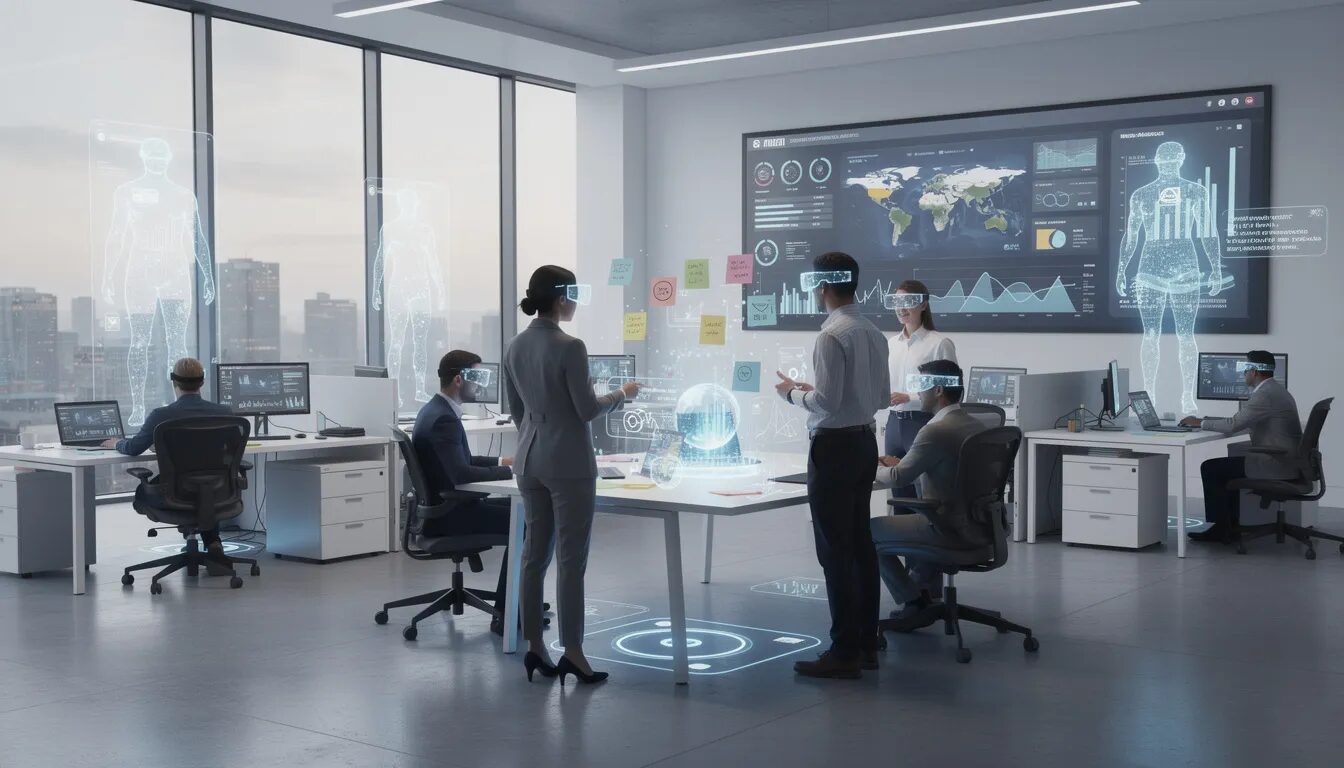
Organizations that excel at building modern teams around technology will dominate their industries in 2025 and beyond. The competitive advantages of technology-enabled teams—faster innovation cycles, global talent access, scalable collaboration, and data-driven decision making—compound over time as these teams learn and improve their capabilities.
The framework outlined here provides a roadmap for organizations ready to embrace this transformation. Success requires commitment to continuous learning, willingness to experiment with new technologies, and focus on outcomes rather than just tool adoption.
Start by assessing your current team structures and technology capabilities. Identify the biggest opportunities for improvement and begin implementing changes systematically. The teams and organizations that begin this transformation now will be best positioned to capitalize on emerging technologies and changing business models in the years ahead.
Remember that building modern teams around technology is not just about deploying new tools—it’s about creating environments where technology amplifies human capabilities and enables better outcomes for both team members and customers. Teams that master this balance will achieve sustainable competitive advantages that grow stronger over time.
The digital revolution is not coming—it’s here. Organizations that can effectively build modern teams around technology will thrive, while those that cling to traditional approaches will struggle to compete in an increasingly technology-driven business environment. The question is not whether to embrace this transformation, but how quickly and effectively your organization can adapt.
Defining Modern Teams
Modern teams are defined by their agility, innovation, and ability to thrive in a rapidly evolving technological landscape. At the heart of these teams is a well integrated tech stack that enables seamless collaboration, efficient workflows, and the adoption of new tools as business needs change. Continuous learning is a core value, empowering team members to stay ahead of technological trends and adapt to emerging challenges with confidence.
Cross functional collaboration is another hallmark of modern teams, breaking down silos and encouraging diverse perspectives to solve complex problems. By fostering a culture of trust and psychological safety, organizations encourage team members to share knowledge, experiment with new ideas, and learn from both successes and setbacks. This environment not only boosts morale but also leads to better outcomes, as teams are more willing to innovate and take calculated risks.
Ultimately, modern teams are built to respond quickly to change, leveraging their tech stack and collaborative culture to drive business objectives forward. By prioritizing psychological safety and continuous learning, these teams are equipped to navigate the complexities of today’s technological landscape and deliver sustained value.
Importance of Data Analytics
Data analytics is a cornerstone of the modern tech stack, providing the actionable insights that drive smarter business decisions and fuel growth. By integrating advanced data analytics tools into their tech stack, organizations can achieve seamless integration across platforms, enabling different teams to access and interpret data in real time. This not only enhances operational efficiency but also facilitates communication and collaboration, ensuring everyone is working from the same set of insights.
A modern tech stack that prioritizes data analytics empowers businesses to identify areas for improvement, optimize processes, and anticipate future trends. Whether it’s understanding customer behavior, tracking product performance, or streamlining internal operations, data analytics transforms raw information into strategic advantage. The ability to harness data from various tech tools and platforms allows teams to make informed decisions quickly, adapt to market changes, and maintain a competitive edge in the modern tech landscape.
By embedding data analytics into daily workflows, organizations can break down barriers between different teams, promote knowledge sharing, and drive continuous improvement across all levels of the business.
Engineering Team Empowerment
Empowering the engineering team is essential for building high performing teams that can fully leverage a modern tech stack. Providing engineers with the right tools, access to cloud platforms, and opportunities to work with emerging technologies like machine learning enables them to develop creative solutions that drive business growth. Regular team meetings and constructive feedback sessions foster open communication, helping engineers stay ahead of industry trends and continuously improve their skills.
Certification programs and lifelong learning initiatives are key to maintaining technical expertise and motivation within the engineering team. By supporting professional development and encouraging team members to pursue new certifications, organizations ensure their teams remain at the forefront of the digital revolution. A healthy work life balance is equally important, as it boosts morale, reduces burnout, and allows engineers to bring their best selves to work.
Ultimately, an empowered engineering team is more innovative, adaptable, and capable of delivering scalable solutions that meet evolving business needs. By investing in the right tools, fostering a culture of continuous improvement, and prioritizing work life balance, organizations can build engineering teams that are ready to tackle the challenges of today’s fast-paced technological environment.