
The window for small business digital transformation is closing fast. With digital transformation spending projected to hit $3.9 trillion by 2027, companies that don’t evolve their business models risk being left behind by more agile competitors. Platform business models—once the exclusive domain of tech giants—have become accessible to small businesses willing to embrace new technologies and strategic partnerships. However, initial investments in technology and training can be significant barriers for small businesses entering the platform economy, making it essential to plan resources carefully.

The data tells a compelling story. Platform-based businesses represent 70% of unicorn startups valued over $1 billion, while small businesses using platforms like Etsy saw 20% sales growth in 2023 despite economic headwinds. A local delivery startup using platform principles can scale faster than traditional logistics companies that own fleets, and boutique retailers on Shopify access global markets without the overhead of physical expansion. Similarly, Uber connects independent drivers with passengers, reducing capital expenditures and maintenance costs compared to traditional taxi companies. Platform businesses are transforming the world economy and global markets by enabling new forms of interaction, trade, and innovation on a worldwide scale.
This shift isn’t just for Silicon Valley anymore. Small agencies, solo consultants, and micro-brands are successfully building platforms using tools like Shopify, Salesforce Starter Suite, and white-label marketplace software. The key is understanding how to adopt these models incrementally, building capabilities one layer at a time. For those not ready to build their own platforms, leveraging third-party platforms like Amazon or Etsy can provide market exposure and a stepping stone into the platform economy. However, heavy reliance on third-party platforms can create risks for small businesses, including loss of control over brand and data.
This guide provides a practical, step-by-step approach to platform adoption—covering what platform business models actually mean for small businesses, which types work best for different companies, and how to implement them even with teams of fewer than 20 people. You’ll learn to create value by connecting multiple parties, scale without proportional cost increases, and stay ahead of market changes through 2027. However, small businesses face cybersecurity and data privacy risks when operating online within platform models, making it essential to implement robust security measures. When planning to adopt a platform-based model, it is also crucial for small businesses to evaluate and adapt their business ideas to ensure a strong value proposition and sustainable growth.
Why Platform Models Matter for Small Businesses in 2025
Digital transformation spending is accelerating at an unprecedented pace, with projections reaching $3.9 trillion by 2027. For small businesses, the 2025-2027 window represents a critical opportunity to adopt platform-based business models before competitors establish unbreakable network effects in local markets. Establishing trust via clear rules and transparent policies is crucial for small businesses building platforms, as it fosters user confidence and long-term engagement.
Platform models have helped specific small firms achieve remarkable growth compared to traditional product-only approaches:
- A local food delivery startup launched in 2021 expanded to three cities by 2024 without owning vehicles, leveraging existing restaurants and gig workers
- A boutique home goods retailer on Etsy grew from $50k to $500k annual revenue in 18 months by tapping into the platform’s 90 million active buyers
- A niche B2B software marketplace founded in 2020 now connects 200+ vendors with enterprise clients, generating $2M annually through transaction fees
The misconception that platforms are only for “Big Tech” companies like Amazon and Airbnb is rapidly disappearing. Small agencies create specialized marketplaces using Shopify’s multi-vendor capabilities, solo consultants build subscription-based communities, and micro-brands develop product ecosystems that extend their core offerings. Airbnb, for example, has over 150 million users, showcasing the immense potential of platform businesses in connecting diverse user groups and revolutionizing the travel industry.
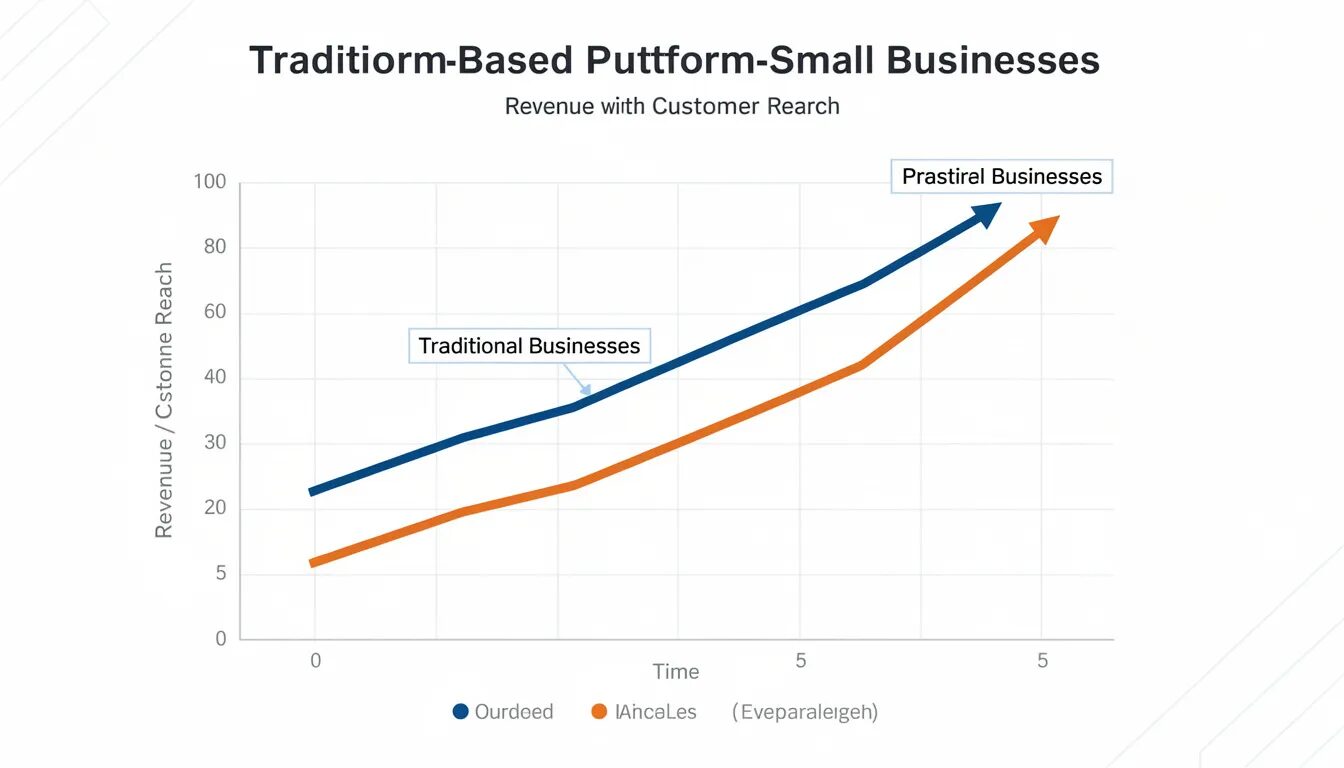
Here’s why platform adoption matters now for small businesses:
- Access to new markets: Platforms break geographic constraints, letting local businesses serve customers globally
- Reduced customer acquisition costs: Network effects drive organic growth as each new user attracts others
- Asset-light scaling: Growth doesn’t require proportional increases in inventory, staff, or physical infrastructure
- Data-driven insights: Platform interactions generate valuable analytics for optimizing operations and pricing
- Revenue diversification: Multiple income streams from transaction fees, subscriptions, and partnerships reduce risk
This article provides a practical view of platform model adoption, breaking down what these business models mean for companies with limited resources, which types fit different business situations, and how to build platform capabilities one technology layer at a time. Even teams with fewer than 20 people can apply these strategies to drive growth and engage customers more effectively.
What Is a Platform-Based Model for a Small Business?
A platform business model for small businesses creates value by connecting multiple parties—such as buyers and sellers, clients and service providers, or property owners and renters—through digital or partially digital infrastructure that facilitates transactions, collaborations, or information exchange.
Unlike traditional “pipeline” small businesses that own and control their entire value chain, platform-based models act as intermediaries enabling direct interactions between different user groups. Consider the difference between a local bakery that only sells its own products versus a neighborhood food marketplace launched in 2022 that connects multiple local bakeries, restaurants, and specialty food vendors with customers seeking convenient ordering and delivery. Alibaba started as an eCommerce marketplace, with most products listed and shipped by non-professional sellers, exemplifying how platforms can scale by leveraging external participants.
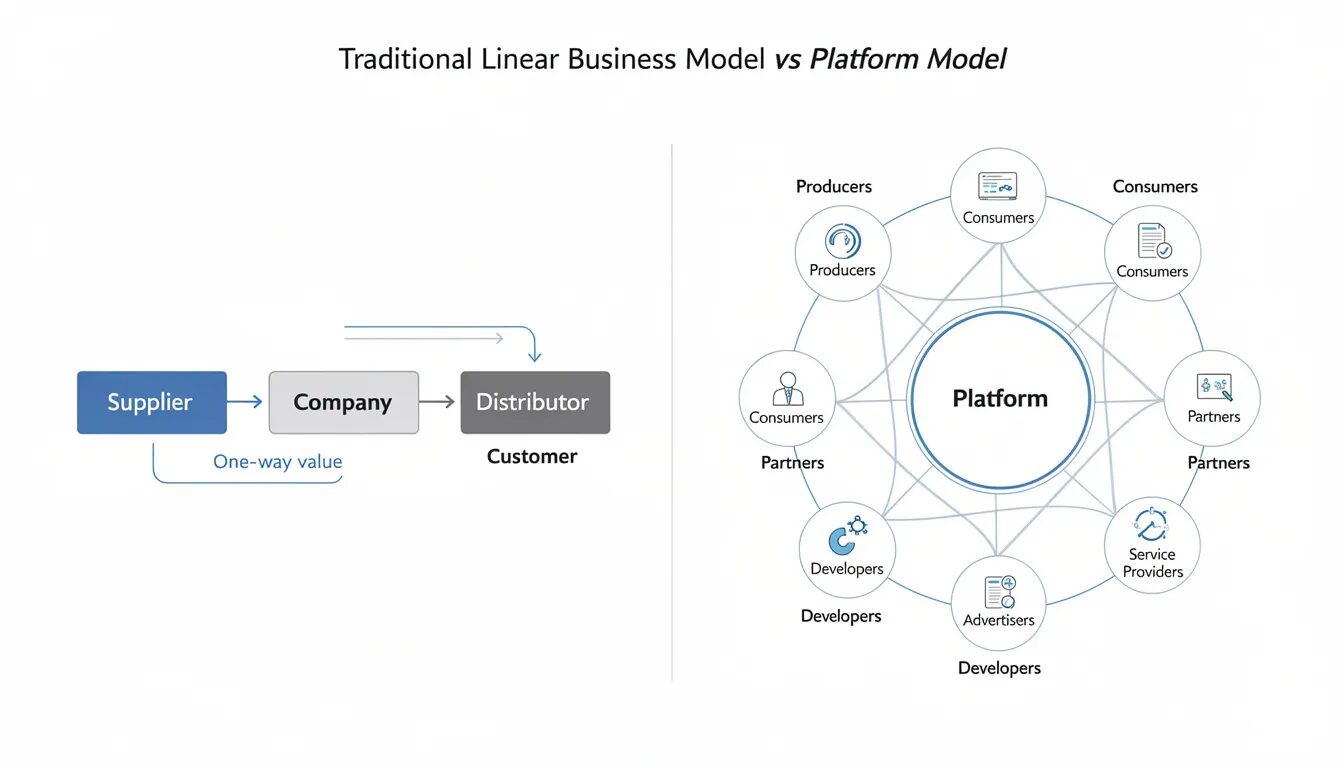
Platform models work especially well for small businesses in these scenarios:
- Service marketplaces: A regional home-service app matching homeowners with vetted plumbers, electricians, and contractors
- Specialized B2B platforms: A 2-person agency launching a marketplace connecting marketing freelancers with small business clients
- Niche product ecosystems: A boutique furniture brand that lets independent designers sell compatible accessories through its website
- Knowledge and content platforms: A fitness instructor building a subscription community where members access workouts, nutrition guides, and peer support
Revenue generation for small-scale platforms typically follows these patterns:
- Transaction fees: Taking 10-20% commission on each booking, sale, or service completed
- Subscription tiers: Monthly fees for vendors to access premium features, analytics, or priority placement
- Lead generation fees: Charging service providers for qualified customer referrals
- Data-driven upsells: Using platform interactions to recommend complementary services or products
Platforms can also offer specific services tailored to client needs—such as design support, offsite construction management, or workflow optimization—which can be monetized through licensing, subscriptions, or as part of the platform’s overall value proposition.
Small businesses can also diversify their monetization methods by incorporating ads, providing additional revenue streams and financial stability.
The key advantage for small businesses lies in leveraging existing assets—customer relationships, industry expertise, or specialized knowledge—to create new value without requiring massive capital investment in inventory or infrastructure. Small businesses should use data and technology such as AI and cloud computing to connect users, enabling seamless interactions and fostering growth. Platforms can diversify revenue streams through fees, ads, and data, providing stability for small businesses. Platform owners focus on facilitating interactions, maintaining quality standards, and continuously improving the user experience rather than producing goods or services directly.
Types of Platform Models Small Businesses Can Realistically Use
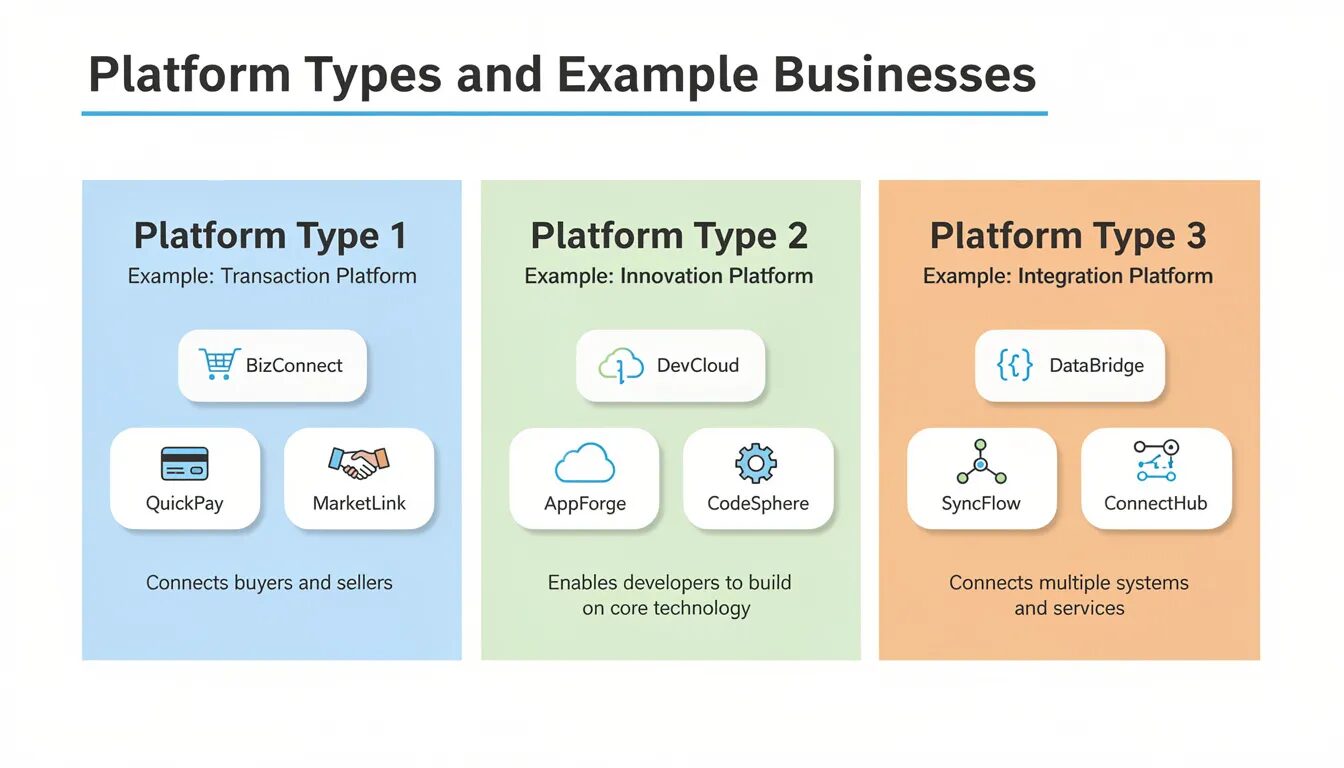
Research on Industry 4.0 and emerging business models identifies three broad platform types that map well to small business opportunities: product platforms, transaction platforms, and product-as-a-service platforms. A digital platform is an open architecture structured to connect disparate systems, applications, data streams, and service providers into an ecosystem. Platforms have a modular architecture, where each service component functions as a pluggable block to create different product combinations. Construction start-ups are increasingly adopting platform-based business models to redefine value creation and enhance collaboration across the value chain, demonstrating the versatility of these models across industries. Many construction start-ups focus on incremental improvements to existing products, leveraging customer feedback and digital capabilities to optimize their offerings. They prioritize maintaining client value by refining internal processes and standardizing operations, ensuring customer satisfaction and a competitive edge. Additionally, a higher degree of integration or collaboration in capability development can enhance operational efficiency and resource utilization for these start-ups.
Product platforms enable small businesses to standardize core components while allowing external partners to build complementary offerings. A modular furniture brand founded in 2019 exemplifies this approach—they created standardized mounting systems and dimensions that let third-party designers sell compatible shelving, lighting, and accessories through the main website. This approach works well for businesses with strong design capabilities or proprietary manufacturing processes that can become the foundation for a broader ecosystem.
Transaction platforms connect buyers and sellers, service providers and clients, or other complementary parties through digital infrastructure. A regional wedding marketplace launched in 2020 demonstrates this model by connecting photographers, florists, caterers, and venues with engaged couples. The platform charges booking fees ranging from 8-15% and provides tools for vendor profiles, customer reviews, calendar integration, and payment processing. Small businesses with strong local networks or industry expertise often find success with transaction platforms.
Product-as-a-service platforms transform ownership models into access-based subscriptions while creating community around shared resources. A 3D-printer leasing platform created in 2021 illustrates this concept—local makers, students, and small businesses subscribe monthly for access to high-end equipment. The platform operator handles bookings, maintenance, material supplies, and usage analytics while building a community of users who share knowledge and collaborate on projects.
Mini case examples help illustrate practical applications:
- Berlin-based home repair platform (founded 2021): Started as a simple transaction platform connecting homeowners with verified contractors, now expanding to include tool rental and project management software
- Austin food truck coordination platform (launched 2022): Helps food trucks optimize routes and timing while giving customers real-time location and menu information across the city
- Vancouver sustainable goods marketplace (established 2020): Connects eco-conscious consumers with local artisans and sustainable product manufacturers, emphasizing community and environmental impact
Choosing the Right Platform Model for Your SMB
Model selection should align with your current assets and capabilities rather than chasing trends or copying successful platforms in other industries. Assess these key factors when choosing your platform approach:
- Existing audience size and engagement: Transaction platforms need active buyers and sellers from day one, while product platforms can start with your current customer base
- Partner network potential: Evaluate how many complementary businesses or service providers you can realistically onboard within 6-12 months
- Regulatory complexity: Some industries like healthcare, finance, or real estate require additional compliance considerations that affect platform design
- Payment and dispute handling capacity: Consider your ability to manage transactions, resolve conflicts, and maintain quality standards as volume grows
A practical roadmap for 2025-2026 might follow this sequence:
- Months 1-6: Launch as a niche transaction platform in your city or specialized market segment
- Months 7-12: Validate demand and refine the user experience based on real transaction data
- Year 2: Layer on subscription features or product-as-a-service components once you reach 500+ monthly transactions or a similar volume threshold
- Year 3: Consider expanding geographically or adding complementary platform features
The key is starting small and focused rather than trying to build a comprehensive platform immediately. Many successful small business platforms began as simple websites or apps that solved one specific problem well before expanding their scope and capabilities.
Benefits of Platform Models for Small Businesses (Beyond the Buzzwords)
Small businesses face mounting pressures in 2024-2025: rising advertising costs, talent shortages, and customer expectations for personalized experiences despite limited budgets. Platform business models address these challenges by fundamentally changing how small businesses engage customers, scale operations, and access new markets.
Improved customer engagement emerges from the community and ecosystem effects that platforms naturally create. A small fitness platform launched in 2023 used recommendation algorithms and community forums to connect members with similar goals and interests. By facilitating peer connections alongside professional instruction, they doubled member retention within 12 months compared to traditional online fitness programs. Effective user experience design is crucial for attracting and retaining users on a platform, ensuring seamless interactions and satisfaction. Importantly, maintaining a human touch is crucial for small businesses—even as they scale through digital platforms, personal connections and tailored experiences help preserve customer loyalty and trust.
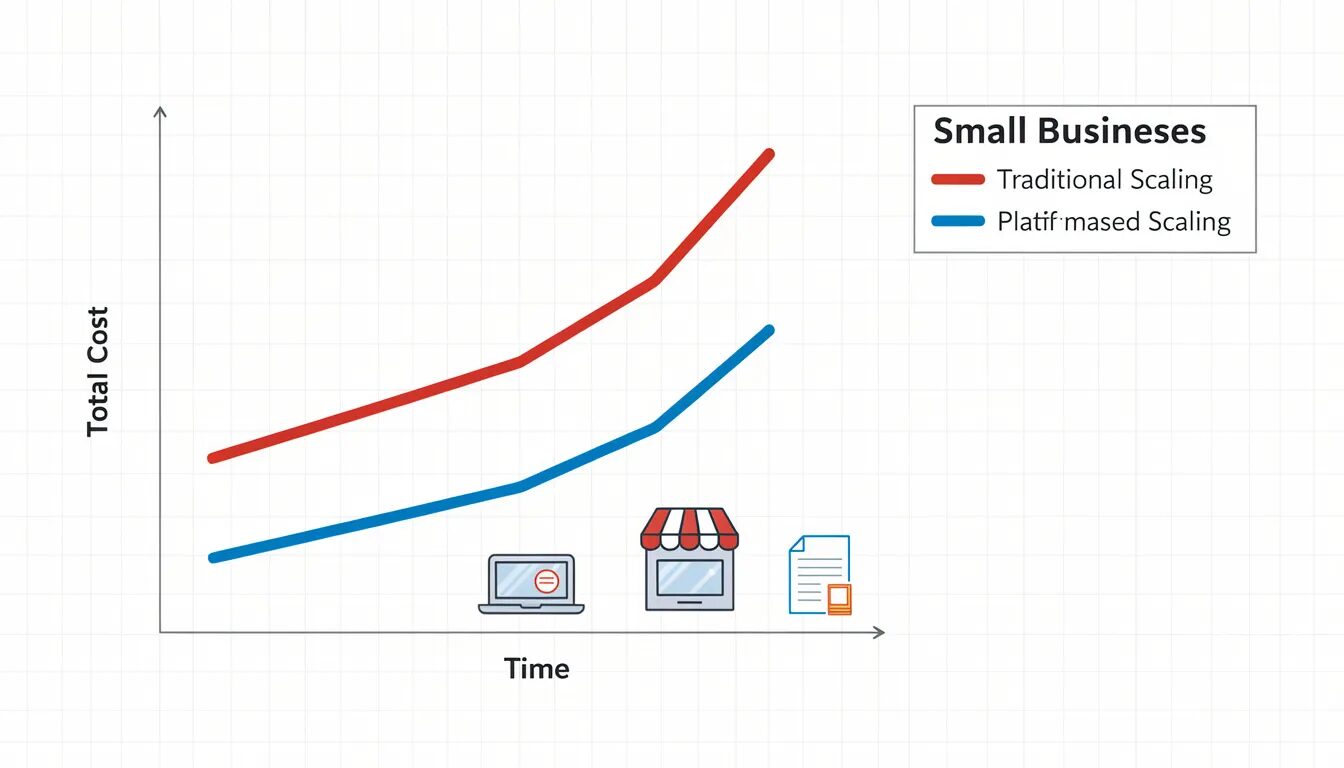
Scalability with minimal capital represents perhaps the most significant advantage for resource-constrained small businesses. A local delivery marketplace launched in 2020 expanded from serving one city to three by 2024 without purchasing vehicles or hiring full-time drivers. Instead, they built technology that connects restaurants, customers, and independent delivery partners, mirroring Uber’s approach but at a regional scale. Revenue grew 300% while fixed costs increased only 40%. Traditional businesses often suffer from rigid structures that hinder innovation and agility by locking talent into fixed roles and teams, whereas platform models enable more flexible and adaptive operations.
Cost efficiency comes from leveraging existing infrastructure rather than building everything from scratch. Small platforms can rent cloud computing power, use payment processors like Stripe, integrate communication tools like Twilio, and utilize identity verification services—all on pay-per-use models. A B2B marketplace for specialty manufacturing parts, launched in 2022, serves 200+ suppliers and 1,000+ buyers while operating with just four full-time employees.
Access to new markets happens through strategic partnerships and platform integrations. A 5-person marketing agency integrated with Salesforce Starter Suite in 2025, exposing their specialized services to clients in industries and regions they couldn’t reach through traditional sales methods. This partnership approach generated 30% of their new business within six months.
Concrete performance improvements from platform adoption include:
- Customer acquisition cost reduction: Platform businesses typically see 50-90% lower acquisition costs as network effects drive organic growth
- Revenue per customer increase: Cross-selling and upselling through platform data insights can boost average customer value by 25-40%
- Operational efficiency gains: Automated matching, payment processing, and customer service reduce manual work by 60-70%
- Market expansion speed: Platform businesses can enter new markets 3-5 times faster than traditional expansion methods. Platforms also provide valuable data for small businesses to make informed decisions about marketing and product development, further enhancing their competitive edge.
- Customer acquisition cost reduction: Platform businesses typically see 50-90% lower acquisition costs as network effects drive organic growth
- Revenue per customer increase: Cross-selling and upselling through platform data insights can boost average customer value by 25-40%
- Operational efficiency gains: Automated matching, payment processing, and customer service reduce manual work by 60-70%
- Market expansion speed: Platform businesses can enter new markets 3-5 times faster than traditional expansion methods
Strategic Advantages Over Traditional SMB Models
Network effects create competitive moats even for small, local platforms. Once a city-specific service marketplace reaches 200 service providers and 5,000 regular customers, switching to competitors becomes difficult for both sides. Users don’t want to lose their established relationships, reviews, and preferences, while service providers resist rebuilding their customer base elsewhere.
The data advantage from platform interactions reveals opportunities that traditional businesses miss. A small e-commerce platform analyzed 10,000 yearly transactions to identify seasonal patterns, optimal pricing strategies, and new product categories that generated 20% additional revenue in the following year. This level of insight would be impossible for a traditional retail business with the same revenue volume.
Platform models also command higher business valuation multiples compared to traditional service firms. Between 2021-2024, small business marketplace acquisitions averaged 8-12x annual revenue, while comparable traditional businesses sold for 2-4x revenue multiples. This difference reflects investors’ recognition of platform scalability and defensibility.
The strategic shift from owning assets to orchestrating ecosystems fundamentally changes how small businesses compete. Instead of competing purely on price or product features, platform businesses compete on convenience, community, and continuously improving experiences powered by data and network effects. Aligning business units with shared platforms and enterprise-wide capabilities can significantly improve speed, efficiency, and organizational agility. However, companies often struggle to align incentives between business units and platform goals during the transition to platform-based models.
Building Your Platform One Tech Layer at a Time
Platform development for small businesses doesn’t require building sophisticated technology from day one. The most successful small business platforms evolve gradually, adding capabilities as they prove value and generate revenue. Digital platforms help scale and streamline the governance of all platform participants, optimizing interactions across a wide range of participants. Platforms require a connector enabling all players to communicate with one another without friction. Importantly, digital platforms make it easier for small businesses to onboard new partners, expanding market reach and generating mutual value through enhanced collaboration and access to new markets. Adopting a data-driven and agile culture is important for small businesses operating platforms to facilitate rapid adjustments. For example, Ping An, a Chinese insurer, built a platform of services related to different aspects of consumers’ lives, amassing over 364 million users, demonstrating the scalability and reach of platform models.
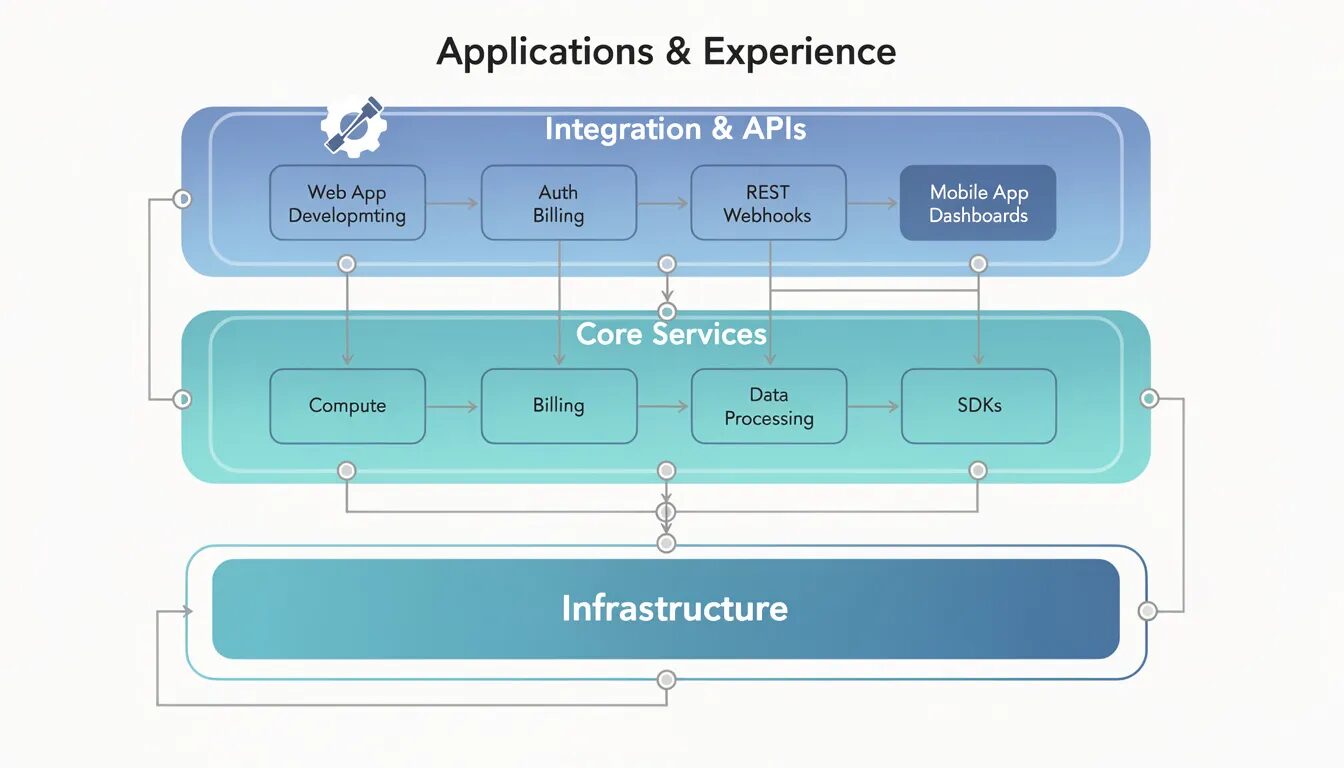
The following sections break platform development into four practical layers that even micro-businesses can tackle using off-the-shelf tools and emerging technologies. This approach lets small businesses start with basic functionality and evolve toward more sophisticated capabilities based on real user feedback and market validation.
Rather than investing heavily in custom software development, small businesses can leverage existing platforms, APIs, and no-code solutions to create platform experiences that compete effectively with larger players. The key is understanding which capabilities to build versus buy, and how to sequence development to maximize learning and minimize financial exposure. Investing in modular, cloud-based technology is essential for supporting rapid user growth and ensuring scalability as the platform evolves.
Core Systems and Services Layer
This foundation layer provides the essential digital infrastructure that transforms traditional business services into reusable, scalable platform components. Small businesses should focus on creating modular services that external partners can easily access and integrate, typically achievable within the first 3 months of platform development.
Essential components for the core layer include:
- Multi-party onboarding flows: Systems that let vendors, service providers, or partners join your platform quickly with clear documentation and approval processes
- Service cataloging: Standardized ways to list and categorize offerings, whether products, services, or capabilities
- Basic matching logic: Simple algorithms or workflows that connect supply with demand based on location, availability, skills, or other relevant criteria
- Payment processing: Secure transaction handling that splits payments between platform owner and service providers
- Communication tools: Messaging, notifications, and status updates that keep all parties informed
Technology choices should prioritize speed and reliability over custom features. Shopify Plus or WooCommerce can host multi-vendor marketplaces, while white-label marketplace solutions launched post-2020 provide ready-made platforms for service-based businesses. Headless content management systems like Strapi or Contentful enable modular content that supports different user types and experiences.
Infrastructure recommendations emphasize renting over building. Cloud hosting through AWS, Google Cloud, or Azure provides scalable computing power. Managed database services eliminate server maintenance overhead. Third-party authentication providers handle user management and security. Payment gateways like Stripe or Square manage financial transactions and compliance.
Milestone checklist for core layer completion:
- New vendors or partners can complete onboarding in under 24 hours
- Basic transactions process successfully with automatic payment splitting
- Customer support can resolve common issues without technical intervention
- The system handles 10x current transaction volume without performance degradation
Data and Analytics Layer
Small business platforms can start collecting valuable data from day one through user interactions, searches, bookings, and feedback. The analytics layer transforms this raw data into actionable insights that improve matching accuracy, enhance user experience, and identify new business opportunities. Implementing robust security measures and transparency in data policies builds trust in platform environments. Access to large datasets enables informed decision-making and personalization of customer experiences for small businesses, allowing them to better meet user needs and optimize their offerings.
Data collection priorities focus on metrics that directly impact platform performance:
- User behavior data: Sign-ups, searches, time spent, click-through rates, and conversion funnels
- Transaction data: Volume, frequency, average values, completion rates, and cancellation patterns
- Quality indicators: Reviews, ratings, response times, and dispute resolution outcomes
- Partner performance: Listing quality, response rates, customer satisfaction, and repeat business metrics
Tool recommendations for small business budgets include embedded analytics in existing platforms (Stripe Dashboard, Shopify Analytics), Google Analytics 4 for web traffic analysis, and built-in reporting features in popular CRM systems. These tools provide sophisticated insights without requiring dedicated data science expertise.
Practical applications of analytics for platform optimization include:
- Improving matching algorithms: Analyzing successful pairings to enhance future recommendations
- Pricing optimization: Understanding price sensitivity and seasonal demand patterns
- Quality control: Identifying consistently high-performing vendors and problematic listings
- Growth opportunities: Discovering underserved market segments or popular service combinations
Data governance basics ensure compliance and build user trust. Anonymize personally identifiable information, clearly communicate data collection practices, implement GDPR/CCPA compliance where required, and document data retention and deletion policies.
12-month analytics goals might include raising repeat booking rates from 20% to 35%, reducing customer acquisition costs by 25%, or improving average vendor response times by 50%. These measurable targets guide platform improvements and demonstrate value to stakeholders.
Integration Layer
The integration layer creates the “connective tissue” that allows your platform to communicate with partner systems, internal tools, and external applications through APIs, webhooks, and automated workflows. This connectivity multiplies your platform’s value by extending its reach and capabilities.
Essential integrations for small business platforms typically include:
- CRM connectivity: Syncing customer data with systems like Salesforce Starter Suite, HubSpot, or Pipedrive to maintain unified customer profiles
- Marketing automation: Connecting to email platforms like Mailchimp, social media management tools, and advertising platforms for coordinated campaigns
- Inventory management: Real-time synchronization with supplier systems to ensure accurate availability and pricing
- Financial systems: Integration with accounting software like QuickBooks, Xero, or FreshBooks for automated bookkeeping and financial reporting
- Communication tools: Connecting messaging, video calling, and notification systems to provide seamless user experiences
Implementation approaches have become much simpler with the proliferation of integration platforms and pre-built connectors. Tools like Zapier, Make (formerly Integromat), or Pipedream enable complex workflows without custom programming. Many modern business applications provide native integrations that can be configured through administrative interfaces.
Architecture planning should establish clear data ownership and flow patterns before building integrations. Document which systems serve as the “source of truth” for different data types—customer information, inventory, pricing, support tickets. This prevents conflicts and ensures data consistency across connected systems.
Success metrics for integration layer effectiveness include reduced manual data entry (target: 80% automation), faster customer onboarding (target: under 2 hours), and improved data accuracy (target: 95% consistency across systems).
Partnership Layer
The partnership layer transforms your platform from a technology project into a thriving ecosystem. This layer focuses on onboarding, managing, and growing relationships with suppliers, service providers, complementary businesses, and technology partners who extend your platform’s capabilities.
Partner acquisition strategy should start with 5-10 anchor partners who represent your ideal provider profile. These early adopters help validate your value proposition, refine onboarding processes, and serve as case studies for recruiting additional partners. Quality matters more than quantity in the initial phase. Onboarding anchor partners and validating your value proposition set the stage for the next phase of platform development, which involves broader market expansion and deeper collaboration.
Onboarding playbook components ensure consistent partner experiences:
- Clear value proposition: Specific benefits partners receive, including access to customers, reduced marketing costs, or operational efficiencies
- Transparent economics: Revenue-sharing terms, fee structures (typically 10-20% for marketplaces), and payment schedules
- Simple contracts: Standardized agreements that address liability, quality standards, and termination conditions
- Training materials: Documentation, video tutorials, or live sessions covering platform features and best practices
Partner success management requires ongoing attention to relationship health and mutual value creation. Quarterly check-ins, Net Promoter Score surveys, and joint business planning sessions help maintain engagement and identify growth opportunities.
Scaling examples from successful small platforms show different approaches to partnership growth:
- Geographic expansion: A home services platform added 20 new cities by partnering with established local contractor networks
- Service category expansion: A wedding marketplace grew from photography to full-service planning by recruiting complementary vendors
- Technology partnerships: A B2B marketplace integrated with industry-specific software to become the preferred vendor network for existing applications
Feedback loops with partners should influence platform development priorities. Regular surveys, usage analytics, and direct conversations reveal which features drive partner success and which create friction. This input ensures platform evolution serves the entire ecosystem, not just end customers.
Organizational Capabilities Small Businesses Need to “Platformize”
Technology alone doesn’t create successful platform businesses. Small businesses must develop dynamic capabilities that enable them to sense market opportunities, design value-creating solutions, integrate internal strengths with external partners, and continuously adapt as conditions change. The transition to platform-based business models requires significant changes in governance and leadership. Companies adopting platform-based models often face challenges related to organizational structure and governance. The transition to platform-based business models requires a long-term transformation involving substantial changes to production systems and supply chain management. The transition often requires a cultural shift within organizations to embrace new ways of working. Research on construction startups and digital transformation identifies four critical capabilities: resonance, ideation, integration, and reconfiguration.
These capabilities aren’t abstract concepts but practical behaviors that small businesses can develop gradually over 12-24 months. Unlike large corporations that might hire specialized teams for each capability, small businesses must build these skills within existing roles and processes, making efficiency and focus essential.
The following sections translate each capability into actionable practices for companies with fewer than 50 employees, emphasizing techniques that support platform development while maintaining day-to-day operations.
Resonance: Sensing Real Market Friction
Resonance capability enables small businesses to detect mismatches between what markets need and what current solutions provide. This involves systematically listening to customers, partners, and industry signals to identify platform opportunities that create genuine value rather than just following trends.
Customer discovery techniques that work for resource-constrained businesses include:
- Monthly customer interviews: Schedule 15-30 minute conversations with existing customers to understand their broader challenges and unmet needs
- Support ticket analysis: Review 2022-2024 customer service interactions to identify recurring problems that suggest systemic issues
- Competitor monitoring: Track feature launches, pricing changes, and customer reviews of competing solutions using simple tools like Google Alerts or social media monitoring
Market signal identification helps small businesses spot emerging opportunities before they become obvious to everyone. A small B2B platform specializing in legal technology pivoted from generic freelancing to a specialized legal marketplace in 2023 after recognizing that law firms struggled to find qualified technology consultants who understood their specific compliance requirements.
Documentation practices ensure insights inform platform decisions rather than disappearing in busy day-to-day operations. Maintain a living research log that captures:
- Customer pain points that your current solution doesn’t address
- Requests for connections to other service providers or vendors
- Complaints about existing platforms or intermediaries
- Opportunities to improve industry-standard processes
Systematic listening involves creating multiple channels for ongoing feedback rather than relying on ad-hoc conversations. Regular surveys, user advisory panels, and partner feedback sessions provide structured input that reveals patterns and priorities.
Ideation: Designing Platform Value Propositions
Ideation capability transforms sensed opportunities into concrete platform concepts, revenue models, and minimum viable products. Small businesses need structured approaches to generate and evaluate ideas quickly while maintaining focus on their core market.
Structured ideation techniques accessible to small teams include:
- Lean canvas workshops: Map platform concepts using Alexander Osterwalder’s business model canvas adapted for multi-sided platforms
- Design sprint methodology: Conduct focused 1-2 week explorations of specific platform features or user experiences
- Rapid prototyping: Build low-fidelity mockups using tools like Figma, Marvel, or even PowerPoint to visualize platform interactions
Revenue model experimentation should test different approaches systematically rather than guessing what might work. A niche education platform launched in 2022 tested subscription, commission-based, and sponsorship models over six months before settling on a hybrid approach that maximized revenue per user while maintaining partner satisfaction.
Value proposition design requires thinking carefully about value creation for every side of the platform. Vendors need access to customers, operational efficiencies, or reduced marketing costs. Customers need better selection, convenience, or pricing. Platform owners need sustainable revenue and defensible competitive positions.
Idea evaluation criteria help small businesses focus on concepts with the highest probability of success:
- Market demand validation: Evidence that multiple customer segments want this solution
- Partner availability: Confirmed interest from potential suppliers or service providers
- Technical feasibility: Realistic implementation using available tools and budget
- Revenue potential: Clear path to sustainable profitability within 12-18 months
Integration: Combining Internal Strengths and External Partners
Integration capability involves knowing when to build capabilities internally versus partnering or outsourcing, particularly for technology and operations. Small businesses must make these decisions strategically to maintain competitive advantages while leveraging external expertise and infrastructure.
Build-versus-partner decisions should focus on core differentiation. Keep activities that create unique value in-house while outsourcing generic functions to established providers. A successful home services platform maintains tight control over its matching algorithm and customer experience design but uses third-party solutions for payment processing, identity verification, and background checks.
Strategic capability mapping helps small businesses identify which skills and systems to own by 2027 versus those that should remain external. Create a simple matrix that evaluates each function based on strategic importance and current internal capability:
- High importance, high capability: Build and maintain internally
- High importance, low capability: Partner strategically or acquire capability
- Low importance, high capability: Consider offering as a service to others
- Low importance, low capability: Outsource to established providers
Partnership strategy differs significantly from traditional vendor relationships. Platform partnerships often involve revenue sharing, joint product development, and shared customer success metrics. Examples include:
- Technology partnerships: Integrating with complementary software platforms to reach new customer segments
- Channel partnerships: Working with existing businesses that serve your target market
- Capability partnerships: Collaborating with specialized service providers to extend your platform’s offerings
Integration examples demonstrate different approaches to building platform capabilities:
- Logistics-light model: A food delivery platform partners with existing restaurants and independent drivers rather than building kitchen facilities or hiring employees
- Technology-heavy model: A B2B marketplace invests in proprietary matching algorithms while using third-party solutions for payments and communication
- Community-focused model: A creative services platform emphasizes internal community management and quality curation while outsourcing technical infrastructure
Reconfiguration: Adapting as the Platform Grows
Reconfiguration capability ensures platforms evolve effectively as market conditions, user needs, and competitive dynamics change. Small businesses must build habits of continuous experimentation and adaptation while maintaining operational stability.
Continuous optimization practices include regular testing and refinement of platform features, policies, and business models:
- A/B testing protocols: Systematically test different onboarding flows, user interfaces, and feature sets
- Policy adjustment cycles: Periodically review and update partner agreements, fee structures, and quality standards
- Market expansion evaluation: Use data to guide geographic or vertical expansion decisions
Adaptation examples show how successful small platforms modified their approaches based on experience:
- A 2021 home-cleaning marketplace shifted from city-wide coverage to high-density neighborhoods after analyzing order patterns in 2022-2023, improving unit economics and service quality
- A freelancer platform added video introduction features after discovering that personal connections significantly improved project success rates
- A B2B parts marketplace introduced financing options for larger orders, increasing average transaction size by 40%
Performance monitoring should track leading indicators that signal when changes are needed:
- User engagement metrics: Time spent, repeat usage, and feature adoption rates
- Partner satisfaction: Regular surveys and retention rates among suppliers
- Economic indicators: Unit economics, lifetime value, and contribution margins
- Competitive position: Market share, customer acquisition costs, and differentiation
Quarterly platform reviews provide structured opportunities to evaluate performance and plan adjustments. These sessions should include stakeholders from customer success, partner management, and business development to ensure decisions consider all aspects of platform health.
Change management for small teams requires balancing experimentation with stability. Implement changes in limited test groups before full rollouts, communicate changes clearly to all stakeholders, and maintain fallback plans for adjustments that don’t work as expected.
Practical Roadmap: Adopting a Platform Model in 12–24 Months
Platform transformation for small businesses requires a phased approach that balances speed with sustainability. This roadmap provides concrete timelines and milestones for transitioning from traditional business models to platform operations between 2025-2027, emphasizing validation and incremental growth over dramatic pivots.
Discovery Phase (Months 0-3) focuses on validating multi-sided demand and establishing foundational understanding:
- Market validation activities: Conduct 20+ customer interviews to identify unmet connection needs in your industry
- Partner assessment: Map 50+ potential suppliers, service providers, or complementary businesses in your target market
- Competitive analysis: Research existing platforms in adjacent markets and identify gaps or improvements
- Regulatory review: Understand licensing, insurance, and compliance requirements for your sector and target geography
- Technology evaluation: Test 3-5 no-code platform builders or white-label marketplace solutions
MVP Launch Phase (Months 4-9) emphasizes rapid learning through real transactions:
- Narrow focus selection: Choose one city or industry vertical for initial launch rather than trying to serve broad markets
- Minimum feature set: Launch with basic listing, search, communication, and payment capabilities only
- Anchor partner recruitment: Onboard 10-20 high-quality suppliers or service providers as founding partners
- Customer acquisition: Target 100-500 initial customers through direct outreach, partnerships, and word-of-mouth
- Feedback collection: Implement systematic user research and analytics to guide improvements
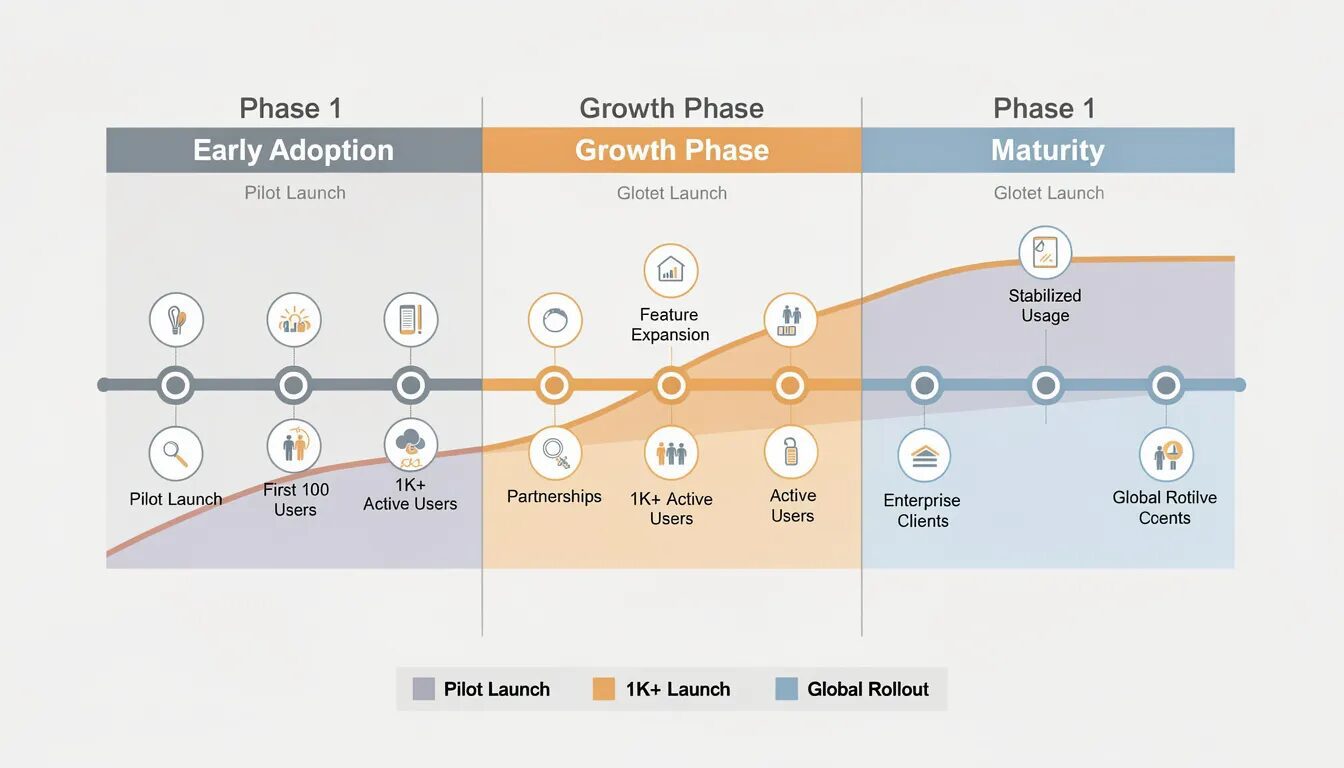
Scale & Optimize Phase (Months 10-24) builds on validated demand with systematic growth:
- Data layer development: Implement analytics, recommendation engines, and performance dashboards
- Partner program formalization: Create standardized onboarding, training, and success management processes
- Geographic expansion: Add new markets only after achieving specific metrics in the initial market (e.g., 1,000+ monthly transactions, 80%+ partner satisfaction)
- Feature enhancement: Add advanced capabilities like mobile apps, API access, or integration with industry-specific tools
- Business model optimization: Test pricing adjustments, new revenue streams, and partnership structures
Key performance thresholds that indicate readiness for each phase transition:
- Discovery to MVP: Confirmed demand from 10+ customers and 5+ potential partners
- MVP to Scale: 100+ monthly transactions, positive unit economics, and 70%+ user satisfaction
- Scale to Growth: 1,000+ monthly active users, 50+ active partners, and sustainable growth rate
Common Pitfalls and How Small Businesses Can Avoid Them
Platform development presents specific challenges that can derail small business efforts before they gain momentum. Understanding these pitfalls helps entrepreneurs avoid costly mistakes and maintain focus on value creation.
Serving too many user segments simultaneously dilutes limited resources and confuses value propositions. A 2022 marketplace that tried to serve both B2B and B2C customers from launch struggled with conflicting feature requirements and marketing messages. Prevention: Start with one clearly defined customer segment and one type of supplier, expanding only after achieving strong product-market fit.
Building custom technology too early consumes cash and development time that could be spent on customer acquisition and market validation. Many small businesses waste 6-12 months building features that platforms like Shopify, Square, or Salesforce already provide. Prevention: Use existing platforms and tools for at least the first 12 months, customizing only features that create genuine competitive advantages.
Underestimating support and dispute resolution leads to operational overwhelm as transaction volume grows. A regional service marketplace launched in 2023 lost credibility when customer service response times exceeded 48 hours during busy periods. Prevention: Design clear terms of service, transparent review systems, and documented dispute resolution processes before scaling marketing efforts.
Misaligned incentives with partners creates conflicts that damage platform reputation and partner retention. Fee structures that heavily favor the platform, unclear performance standards, or poor communication about policy changes drive away quality suppliers. Prevention: Structure partnerships as genuine collaborations with shared success metrics and regular feedback sessions.
Premature scaling before achieving strong unit economics leads to unsustainable cash burn. Monitor customer acquisition costs, lifetime value, and contribution margins carefully. Prevention: Set specific profitability thresholds that must be met in one market before expanding geographically or adding new service categories.
Each pitfall shares a common theme: prioritizing growth over foundations. Successful small business platforms build sustainable operations, clear value propositions, and strong partner relationships before pursuing rapid expansion.
Next Steps for Small Businesses Ready to Go Platform-Based
The transition to platform business models requires immediate action on four key fronts. Start these activities within the next 30 days to maintain momentum and avoid analysis paralysis that keeps many small businesses stuck in traditional approaches. Developing an operating-model blueprint is a common step for companies transitioning to platform-based models. The transition necessitates substantial changes to production systems, supply chain management, and target markets. Seeding the platform by supplying initial content or offering incentives can help overcome the “chicken or egg” problem, ensuring early engagement and building a foundation for growth.
Map existing assets and capabilities that could form the foundation of a platform business:
- Customer relationships: Identify segments that frequently ask for services or products you don’t currently provide
- Industry expertise: Catalog specialized knowledge, certifications, or relationships that could benefit other businesses
- Technology infrastructure: Assess current tools, data, and systems that could support multi-party interactions
- Partner networks: List suppliers, complementary businesses, or professional contacts who might participate in a platform ecosystem
Choose a specific platform type based on your strongest assets rather than market trends. Transaction platforms work well for businesses with strong local networks, product platforms suit companies with standardized offerings, and service platforms leverage existing expertise and customer relationships.
Conduct partner validation by having conversations with at least 10 potential suppliers, service providers, or complementary businesses. Gauge their interest in platform participation, understand their current challenges with customer acquisition or operations, and identify what value propositions would motivate their involvement.
Sketch a layered architecture using this guide’s framework, identifying which existing tools can provide core platform functionality, what data you’ll collect from day one, which systems need integration, and how you’ll onboard and manage partners.

Leverage existing SMB tools to reduce upfront investment and accelerate time to market:
- CRM platforms: Use Salesforce Starter Suite, HubSpot, or Pipedrive to manage multi-party relationships
- E-commerce platforms: Build on Shopify Plus, WooCommerce, or BigCommerce for marketplace functionality
- No-code builders: Explore Bubble, Adalo, or Glide for custom app development without programming
- Integration tools: Connect systems using Zapier, Make, or native platform integrations
Set concrete 12-month goals tied to platform metrics rather than just revenue targets:
- Partner goals: Onboard 20 active suppliers or service providers by Q2 2026
- User goals: Reach 1,000 active platform users by Q4 2026
- Transaction goals: Facilitate 500 monthly transactions or bookings by end of 2026
- Quality goals: Maintain 85%+ satisfaction scores from both customers and partners
The shift to platform models represents more than operational change—it’s a strategic opportunity for small businesses to scale faster, engage customers more effectively, and create sustainable competitive advantages. Companies that take disciplined steps toward platform capabilities in 2025-2027 will be better positioned to thrive as markets become increasingly connected and digitally mediated.
Start with one platform type, validate demand quickly, and build capabilities progressively. The businesses that embrace platform thinking now will lead their industries as traditional competitors struggle to match the scale, efficiency, and innovation that platform models enable.
Customer Experience in Platform Business
The platform business model has fundamentally transformed how companies engage customers, making customer experience the cornerstone of value creation and growth. Unlike traditional business models, where customer experience was often a secondary concern, platform businesses place it at the heart of their strategy. This shift is driven by the capabilities of digital platforms, which allow companies to deliver seamless, personalized, and scalable experiences that adapt to evolving customer needs.
In a platform business, every interaction—whether it’s online shopping, booking a service, or connecting with other users—becomes an opportunity to engage customers and build loyalty. Emerging technologies such as artificial intelligence and advanced data analysis empower platform owners to continuously improve their offerings, anticipate customer preferences, and deliver relevant recommendations in real time. For example, social media platforms use sophisticated algorithms to curate content and ads, creating a more engaging and tailored experience for each user.
Strategic partnerships with external partners, such as suppliers, service providers, and property owners, are key components of successful platform development. By integrating offerings from a diverse network of partners, platform businesses can provide a broader range of services and solutions, ensuring that customer needs are met quickly and efficiently. This collaborative approach is especially evident in the sharing economy, where platforms like Airbnb and Uber connect users with property owners and drivers, creating new markets and opportunities while maintaining a high degree of customer satisfaction.
To deliver exceptional customer experience, platform businesses must leverage the right tools and systems—such as CRM software, data analytics platforms, and automated communication tools—to gain deep insights into customer behavior. This data-driven approach enables companies to create more personalized and relevant experiences, respond rapidly to market changes, and continuously improve their offerings. For instance, a platform business might use customer feedback and transaction data to refine its matching algorithms, introduce new features, or expand into new markets.