
The business world is witnessing a fundamental shift that’s reshaping how companies create value, serve customers, and compete in the global economy. Digital ecosystems are now central to business strategy, making it essential for organizations to understand ecosystem dynamics and adapt their strategic planning to stay competitive. As digital transformation accelerates and technology systems become increasingly interconnected, traditional linear business models are giving way to something far more powerful: platform ecosystems.
These digital ecosystems represent more than just technological evolution—they’re a complete reimagining of how businesses operate, scale, and thrive in the digital age. From Amazon’s marketplace to Apple’s App Store, the most valuable companies today aren’t just selling products or digital services; they’re orchestrating vast networks of ecosystem participants who create value together. Digital ecosystems deliver concrete advantages for both businesses and their customers, allowing companies to access new markets and streamline operations through strategic partnerships. Mobile shopping has become the default for many consumers, with platforms like Instagram and TikTok evolving into social commerce hubs, further demonstrating the power of these ecosystems.
This comprehensive exploration reveals why platform ecosystems aren’t just a trend, but the fundamental operating model that will define successful businesses in our increasingly connected future.
The Rise of Platform Ecosystems in Digital Commerce
The transformation from linear business models to ecosystem-based approaches represents a fundamental change in competitive strategy. While traditional companies focus on owning and controlling their value chain, platform ecosystems create value by enabling and orchestrating the value creation of others. This shift requires businesses to think differently about their role—moving from being the sole value creator to becoming an enabler that helps ecosystem participants connect businesses, exchange data, and generate new revenue streams. Evolving operating models are necessary to address the unique challenges and opportunities presented by digital ecosystems, including risk management, open innovation, and orchestration.
Network Effects Drive Exponential Value Creation
The power of platform ecosystems lies in their ability to generate network effects—a phenomenon where each additional participant increases the value of the platform for all existing users. As more users join a platform, it becomes more attractive to other potential participants, creating a virtuous cycle of growth that traditional businesses simply cannot match. This growth is further driven by trends such as AI, social commerce, and the demand for seamless mobile experiences, which continue to reshape consumer expectations and business strategies. AI personalizes recommendations and product discovery while improving customer service through AI-powered chatbots, enhancing the overall user experience.
Airbnb’s trajectory perfectly illustrates this principle in action. Starting with a simple concept of connecting travelers with spare room owners, the platform now serves over 150 million users across 220 countries. Each new host makes the platform more valuable for travelers by increasing accommodation options, while each new traveler makes it more attractive for potential hosts by expanding the customer base.
This creates exponential rather than linear growth patterns. Unlike traditional businesses that must invest proportionally to scale their operations, successful ecosystems benefit from organic scaling as ecosystem participants naturally attract more participants. Payment ecosystems demonstrate this beautifully—as more merchants accept a payment method, consumers are more likely to use it, which in turn attracts more merchants in a self-reinforcing cycle.
The shared infrastructure model amplifies these benefits. When ecosystem participants share technology systems, data analysis capabilities, and digital infrastructure, they dramatically reduce individual operating costs while accessing capabilities that would be prohibitively expensive to develop independently. This collaborative approach enables small businesses to compete with larger competitors by leveraging the collective resources of the entire ecosystem.
For users, network effects translate into continuous innovation and improved experiences. As platforms grow, they attract specialized service providers, complementary products, and enhanced features that benefit the entire network. This creates switching costs that keep customers engaged while providing them with genuinely increasing value over time. Seamless journeys will be expected, providing frictionless integrated experiences across all touchpoints from discovery to post-purchase support. Hyper-personalization relies on AI and data to create individualized shopping experiences that enhance brand loyalty, further solidifying the value of these ecosystems. In the near future, hyper-personalized experiences will leverage autonomous AI agents to coordinate complex transactions across multiple brands, effectively acting as personal shoppers to streamline and enhance the user experience.
Superior Scalability and Cost Efficiency
Platform ecosystems fundamentally change the economics of business growth. Traditional companies face linear scaling challenges—to serve twice as many customers, they typically need to double their infrastructure, staff, and operational capacity. Platform ecosystems, however, can achieve exponential growth without proportional increases in infrastructure costs.
Digital infrastructure enables this transformation. Cloud computing, application programming interfaces, and automated systems allow platforms to handle massive transaction volumes with minimal human intervention. When Uber connects millions of riders with drivers worldwide, the core platform manages these connections through software rather than requiring physical infrastructure expansion in each market.
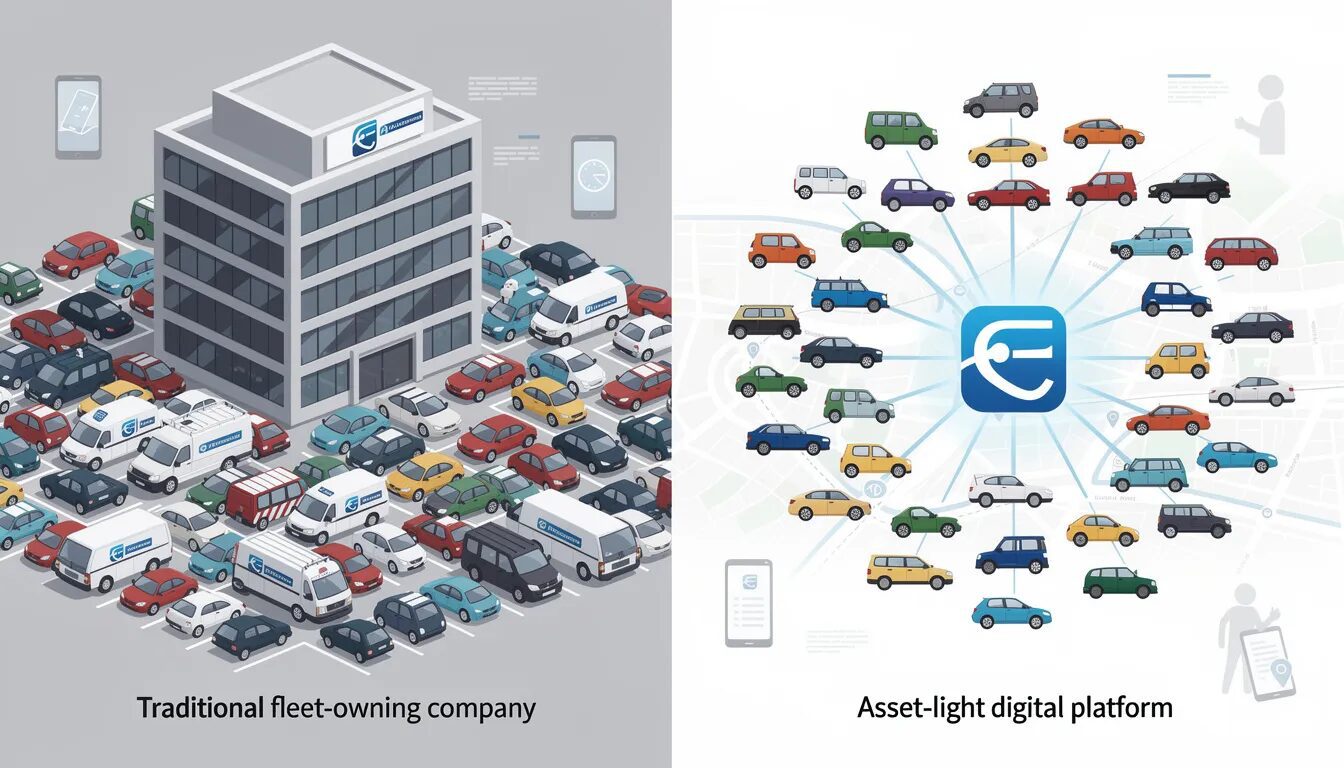
The capital efficiency advantages are striking. Instead of owning and maintaining fleets of vehicles, Uber’s model leverages the capital investments of independent drivers. This approach dramatically reduces the company’s capital requirements while enabling rapid geographic expansion. Other businesses can adopt similar strategies, focusing their resources on platform development and ecosystem orchestration rather than asset-heavy operations.
Economies of scale become more pronounced as transaction volume increases across platforms. The fixed costs of technology systems, security infrastructure, and platform management are spread across an ever-growing number of transactions. This creates a competitive moat—established platforms can often provide services at lower costs than new entrants, making it difficult for direct competitors to gain market share.
Edge computing is further enhancing these efficiency gains. By processing data closer to users and reducing latency, edge computing enables platforms to deliver high-speed, responsive experiences that would be impossible with traditional centralized systems. This technological advancement particularly benefits platforms serving global markets where network latency could otherwise degrade user experiences.
Enhanced Customer Experience Through Integration
Platform ecosystems excel at eliminating user friction by creating seamless, integrated experiences across multiple services and physical devices. When data flows freely between ecosystem components, users can access complex functionality through simple interfaces, often without realizing the sophisticated coordination happening behind the scenes.
Netflix exemplifies this integration advantage. The platform’s recommendation algorithm influences approximately 80% of content viewed, using viewing history, user preferences, and behavioral data to create personalized experiences. This level of customization requires integration between content delivery systems, user analytics, recommendation engines, and interface design—capabilities that would be extremely difficult for individual content creators to develop independently.
Apple’s ecosystem demonstrates how integration creates customer loyalty and reduces switching costs. Users who own multiple Apple devices benefit from features like seamless file sharing, synchronized notifications, and universal clipboard functionality. These integrated experiences become more valuable as users adopt more ecosystem components, creating strong incentives to remain within the Apple ecosystem rather than switching to alternative platforms.
In some markets, platform ecosystems like WeChat have become deeply integrated into users’ daily life. WeChat handles everything from messaging and payments to booking services, making it an essential tool in users’ everyday routines and reducing the need to switch between different apps.

For businesses, integrated ecosystems enable single points of management for complex operations. Rather than juggling multiple separate systems for customer data, payment processing, inventory management, and marketing automation, ecosystem participants can often manage these functions through unified interfaces. This integration reduces training requirements, minimizes errors, and enables more sophisticated automation.
The customer data flowing through integrated ecosystems enables unprecedented personalization. When platforms can track user behavior across multiple touchpoints and services, they can deliver highly targeted experiences that anticipate user needs. Research shows that high-ecosystem-focused organizations exceed their peers by 20 percentage points in customer personalization capabilities, directly translating to improved customer satisfaction and retention.
Data Monetization and Innovation Opportunities
Platform ecosystems generate vast amounts of user data that can be transformed into new revenue streams and innovation opportunities. This data advantage creates competitive moats that are difficult for traditional businesses to replicate, as the insights become more valuable as more participants contribute to the data pool. The effectiveness of data monetization relies on a robust digital system that connects participants, manages value exchange, and adapts to evolving ecosystem needs.
Spotify demonstrates sophisticated data monetization through its machine learning-powered recommendation systems. The platform analyzes listening patterns, user preferences, playlist creation, and social sharing to create personalized playlists like Discover Weekly and Release Radar. These features not only enhance user engagement but also provide valuable insights to music labels and artists about audience preferences and market trends.
The innovation potential extends far beyond customer insights. Platforms can identify emerging market opportunities by analyzing transaction patterns, user behavior, and ecosystem participant performance. This real-time market intelligence enables rapid product development and strategic partnerships that traditional market research methods would take months or years to uncover.
Data privacy and security remain critical considerations in data monetization strategies. Successful platforms implement federated approaches that enable insights generation while protecting individual user privacy. This balance is essential for maintaining user trust and complying with regulations like GDPR and CCPA, which govern how companies collect and use customer data.

Cross-ecosystem data exchange creates additional opportunities for innovation. When different platforms share anonymized insights or enable integrated experiences, they can create new services that neither could develop independently. This collaborative approach to data analysis drives continuous innovation while respecting data privacy requirements.
For ecosystem participants, access to aggregated data insights levels the playing field. Small businesses can access market intelligence and customer analytics that would traditionally only be available to large corporations. This democratization of data access enables more informed decision-making and strategic planning across the entire ecosystem.
Access to Global Markets and Strategic Partnerships
Digital platforms eliminate many traditional barriers to international expansion, enabling businesses to access global markets through existing digital infrastructure rather than building physical presence in each target region. This accessibility has transformed how companies approach growth and market entry strategies.
Zé Delivery’s rapid expansion across Brazil during the pandemic illustrates this advantage. By leveraging AB InBev’s existing network and digital infrastructure, the platform quickly scaled to serve customers nationwide without building traditional retail infrastructure. This approach reduced customer acquisition costs while enabling rapid market penetration.
Strategic partnerships within ecosystems create multiplier effects that benefit all participants. When platforms facilitate connections between complementary service providers, they enable integrated solutions that create more value than individual services. These partnerships often emerge organically as ecosystem participants discover synergies and collaboration opportunities. Including a broad range of strategic partners—such as suppliers, distributors, and even competitors—within digital ecosystems is crucial to unlocking additional value and financial benefits beyond just serving customers.
The direct-to-consumer commerce enabled by platforms has revolutionized how businesses reach customers. Small manufacturers can now sell globally through platforms like Amazon or Alibaba without developing their own e-commerce infrastructure, payment processing, or international logistics capabilities. This access democratizes global commerce and enables niche businesses to find worldwide audiences. Platforms like TikTok and Instagram allow consumers to buy directly within social feeds, integrating shopping features into social commerce.

Cross-border data exchange within ecosystems enables new forms of international collaboration. When platforms provide secure, compliant methods for sharing information across jurisdictions, they enable business partnerships that would be difficult to establish through traditional means. This capability is particularly valuable for service industries where knowledge and expertise can be delivered digitally. Digital ecosystems also enable emerging technological applications that require high performance, low-latency, and secure data exchange, further enhancing their value proposition.
Platform ecosystems also reduce currency and payment friction in international transactions. By handling complex payment processing, currency conversion, and compliance requirements, platforms enable businesses to focus on their core competencies rather than international payment logistics.
Supporting Emerging Technologies and Innovation
Platform ecosystems serve as launching pads for emerging technologies, providing the high-performance infrastructure and large user bases necessary for artificial intelligence, IoT, and Web3 applications to achieve scale and demonstrate value. This symbiotic relationship accelerates technological adoption while creating new opportunities for ecosystem participants.
Hybrid cloud infrastructure within ecosystems enables rapid experimentation and deployment of new technologies. Companies can test AI models, deploy IoT sensors, or develop blockchain applications using shared infrastructure rather than building dedicated systems. This approach significantly reduces the barriers to innovation and enables faster time-to-market for new technologies.
The Ethereum blockchain ecosystem exemplifies how platforms can support decentralized applications. By providing the underlying infrastructure and development tools, Ethereum enables thousands of developers to create innovative financial services, gaming applications, and digital marketplaces. Each application adds value to the overall ecosystem while benefiting from the shared security and network effects.

Interconnection platforms reduce the complexity and costs associated with adopting new technologies. Rather than requiring each company to develop expertise in every emerging technology, platforms can provide standardized interfaces and tools that simplify integration and deployment. This approach accelerates adoption rates and enables smaller businesses to leverage cutting-edge technologies. Business strategies are increasingly shifting towards modular approaches that use APIs for integrating customized solutions, leading to greater agility and adaptability in dynamic markets.
The data requirements of emerging technologies align well with platform ecosystem capabilities. AI and machine learning models require large datasets for training and validation—exactly what platform ecosystems generate through their operations. This creates opportunities for platforms to offer AI-powered services to ecosystem participants while improving their own capabilities through enhanced data analysis.
Edge computing integration within ecosystems enables new categories of applications that require low latency and real-time processing. Platforms that can process data at the edge while maintaining ecosystem connectivity create opportunities for augmented reality, real-time gaming, and IoT applications that wouldn’t be feasible with traditional centralized architectures. To overcome challenges posed by these emerging technologies, organizations are increasingly adopting hybrid infrastructure approaches, which combine the benefits of edge computing with centralized systems for optimal performance.
Risk Management and Security in Ecosystem Business
Operating within interconnected digital environments creates unique cybersecurity challenges that require sophisticated approaches to data security and risk management. As businesses become increasingly reliant on shared digital infrastructure, understanding and mitigating these risks becomes critical for ecosystem success. Cybersecurity concerns are becoming increasingly complex and damaging, posing significant threats to enterprise security and privacy if not adequately addressed.
Cybersecurity in platform ecosystems requires a multi-layered approach that goes beyond traditional perimeter security models. When multiple organizations share infrastructure and exchange data, security breaches can potentially affect the entire ecosystem. This interconnectedness demands collaborative security approaches where ecosystem participants share threat intelligence and implement coordinated defense strategies. Interconnection platforms can lower cybersecurity risks for enterprises by enabling secure data exchanges and fostering collective security measures across participants.
Federated API frameworks provide real-time security insights while maintaining the flexibility that makes ecosystems valuable. These systems can monitor transactions, detect anomalous behavior, and respond to threats without requiring centralized control that might stifle innovation. The key is balancing security requirements with the openness that enables ecosystem value creation.

Data privacy compliance has become increasingly complex as regulations like GDPR and CCPA impose strict requirements on how companies collect, process, and share customer data. Platform ecosystems must implement privacy-by-design approaches that protect user data while enabling the data exchange that creates ecosystem value. These regulations apply across ecosystem boundaries, affecting all participants and requiring coordinated efforts to ensure compliance while maintaining operational efficiency.
Neutral ecosystems provide secure, private environments for data exchange by implementing trusted third-party governance models. These approaches enable companies to collaborate and share insights without exposing sensitive business information or customer data to direct competitors. This balance is essential for maintaining ecosystem participation while protecting competitive advantages.
Risk distribution within ecosystems can actually reduce overall risk exposure for individual participants. When businesses share infrastructure costs, diversify revenue sources through multiple ecosystem partnerships, and benefit from collective security investments, they often achieve better risk profiles than they could maintain independently.
Future Trends Shaping Platform Ecosystems
Artificial intelligence is rapidly becoming the “nervous system” of platform ecosystems, orchestrating complex interactions, predicting user needs, and automating routine tasks. As AI capabilities advance, platforms will become increasingly intelligent, providing proactive services and seamless experiences that anticipate user requirements before they’re explicitly expressed.
Machine learning algorithms are already optimizing ecosystem operations in real-time, from dynamic pricing and inventory management to fraud detection and customer service. Future developments will enable even more sophisticated orchestration, with AI systems managing ecosystem participant matching, resource allocation, and service quality optimization with minimal human intervention.
Edge computing represents another transformative trend, bringing processing power closer to users and devices to reduce latency and improve privacy. This distributed approach enables new categories of applications while addressing concerns about centralized data control. Edge computing particularly benefits IoT applications and real-time services that require immediate response times.

Developing interoperability standards will enable seamless cross-ecosystem data exchange and user experiences. Rather than competing platforms creating isolated silos, emerging standards will allow users to move data and maintain relationships across different ecosystems. This interoperability will reduce platform lock-in while enabling new forms of ecosystem collaboration.
Sustainability concerns are driving energy-efficient ecosystem design as the environmental impact of digital infrastructure becomes more apparent. Future platforms will need to balance performance and scalability with environmental responsibility, leading to innovations in green computing, renewable energy integration, and carbon-neutral operations. These sustainability concerns are not just influencing design but are also reshaping the growth trajectory of ecosystems, as businesses and consumers alike prioritize environmentally responsible practices. Additionally, the distinction between online and offline commerce will fade as retailers create highly integrated “phygital” experiences combining digital convenience with physical immersion.
The integration of Web3 technologies, including blockchain and decentralized protocols, will enable new models of ecosystem governance and value distribution. These technologies can create more transparent, participant-owned ecosystems where value is distributed more equitably among contributors rather than concentrated among platform owners.
Strategic Implementation for Businesses
Understanding the four key ecosystem roles is essential for developing effective participation strategies. Companies can function as consumers (using ecosystem services), producers (providing services to the ecosystem), orchestrators (managing ecosystem operations), or enablers (providing infrastructure or tools for other participants). Most successful ecosystem strategies involve playing multiple roles simultaneously.
Consumer Role: Organizations leverage existing ecosystem services to improve their operations, reduce costs, or access new capabilities. This might involve using cloud services, marketplace platforms, or integrated software solutions to enhance business performance without internal development investments.
Producer Role: Companies provide products or services that add value to ecosystem participants. This could include developing applications for platform marketplaces, providing specialized services to ecosystem members, or creating content for platform consumption.
Orchestrator Role: Organizations coordinate ecosystem activities, manage participant relationships, and ensure overall ecosystem health. This role requires significant investment but offers the greatest potential for value capture and competitive advantage.
Enabler Role: Companies provide the infrastructure, tools, or services that make ecosystem operations possible. This might include payment processing, security services, analytics tools, or development platforms.
The assessment framework for determining optimal ecosystem participation strategy should evaluate current capabilities, market position, customer relationships, and competitive dynamics. Companies with strong technology systems and customer data may be well-positioned for orchestrator roles, while those with specialized expertise might excel as producers or enablers.
Governance requirements for successful ecosystem management include establishing clear participation guidelines, maintaining quality standards, resolving disputes, and ensuring fair value distribution. Effective governance balances platform control with participant autonomy, creating environments where innovation can flourish while maintaining ecosystem integrity.
Companies can balance risk minimization with learning opportunities by starting with low-stakes ecosystem participation and gradually increasing involvement as they develop expertise and relationships. This approach enables organizations to understand ecosystem dynamics without making large initial investments or committing to strategies that may not align with their capabilities.
Real-World Success Stories
Salesforce’s ecosystem demonstrates the powerful combination of platform functionality and ecosystem value creation. With over 4,000 integrated applications available through the AppExchange, Salesforce has created a comprehensive business software ecosystem that generates revenue through multiple streams: direct software licensing, transaction fees from third-party applications, and data services.
The Salesforce ecosystem exemplifies how platform ecosystems create value for all participants. Independent software developers gain access to Salesforce’s customer base and infrastructure, customers benefit from integrated solutions that extend core functionality, and Salesforce captures value through its platform while enabling partner success. This model has contributed significantly to Salesforce’s growth and market valuation.
WeChat’s super app serves 1.3 billion users across messaging, payments, social media platforms, and digital services, demonstrating how platform ecosystems can integrate diverse functionality into seamless user experiences. Users can message friends, pay for purchases, book travel, order food, and access government services through a single application interface.

The WeChat ecosystem illustrates the power of integration and network effects. As more services become available within WeChat, users have fewer reasons to use alternative platforms, while service providers gain access to WeChat’s massive user base. This creates strong network effects that reinforce WeChat’s position in the Chinese market.
Microsoft 365’s integration of productivity applications, cloud services, and business tools shows how traditional software companies can successfully transition to ecosystem models. By connecting Office applications with cloud storage, communication tools, and business intelligence services, Microsoft creates value that exceeds the sum of individual applications.
A notable example in health care is the rise of digital health ecosystems. These platforms connect patients, doctors, insurers, and pharmacies, enabling integrated digital services such as appointment scheduling, electronic prescriptions, and insurance claims processing. This transformation in the health care sector demonstrates how digital ecosystems can streamline collaboration and improve outcomes for all stakeholders.
These success stories demonstrate common characteristics of thriving platform ecosystems: clear value propositions for all participants, seamless integration between services, strong network effects, and governance models that balance platform control with participant innovation. They also show how different industries and business models can successfully implement ecosystem strategies.
The competitive advantages demonstrated by these platforms include reduced customer acquisition costs through ecosystem cross-selling, increased customer retention through integration and switching costs, access to diverse revenue streams, and the ability to scale rapidly through partner networks rather than internal expansion.
Conclusion
Platform ecosystems represent more than an evolution of digital business—they’re a fundamental transformation in how value is created, distributed, and captured in the modern economy. As we’ve explored, these interconnected networks of businesses, developers, and users create exponential value through network effects, superior scalability, enhanced customer experiences, and unprecedented access to data and global markets.
The evidence is clear: companies that embrace platform ecosystem strategies consistently outperform those clinging to traditional linear business models. From Salesforce’s billion-dollar partner ecosystem to WeChat’s super app serving over a billion users, successful organizations are proving that the future belongs to those who can orchestrate value creation across networks rather than simply creating value in isolation.
For business leaders, the question isn’t whether platform ecosystems will dominate the future of online business—it’s how quickly they can adapt their organizations to thrive in this new paradigm. The companies that recognize this shift early and invest in ecosystem capabilities will secure competitive advantages that will compound over time, while those that delay risk finding themselves locked out of the digital economy’s most valuable opportunities.
The transformation won’t happen overnight, but the trajectory is unmistakable. As artificial intelligence, edge computing, and emerging technologies continue advancing, platform ecosystems will become even more powerful and essential for business success. The future of online business isn’t just digital—it’s ecosystem-driven, and that future is already here.
Definition and Explanation of Digital Ecosystems
A digital ecosystem is a dynamic network of interconnected digital platforms, infrastructure, and services that enables seamless exchange of data, resources, and value among a diverse set of participants—including businesses, customers, and technology providers. In the digital world, these ecosystems are the backbone of modern industries, powering everything from e-commerce and healthcare to finance and social media platforms.
At the heart of digital ecosystems are digital platforms that act as hubs, connecting users, software developers, and other businesses through application programming interfaces (APIs) and shared digital infrastructure. This interconnectedness allows companies to access new markets, create new revenue streams, and deliver innovative digital services that would be impossible to achieve in isolation. As more users join and interact within these ecosystems, network effects amplify the value for everyone involved, making the ecosystem more attractive and robust.
Digital ecosystems are essential drivers of digital transformation, enabling businesses to leverage new technologies such as artificial intelligence, edge computing, and the Internet of Things (IoT) to enhance operations and create additional value. For example, a healthcare digital ecosystem might connect hospitals, patients, insurance providers, and medical device manufacturers, allowing them to exchange data securely and deliver better patient outcomes.
Key characteristics of digital ecosystems include interdependence among participants, shared access to data and platforms, and the ability to scale rapidly as more users and partners join. These ecosystems thrive on collaboration and continuous innovation, with technology providers and software developers playing crucial roles in expanding capabilities and creating value. Digital ecosystems can take many forms—platform ecosystems that orchestrate value creation, business ecosystems that foster strategic partnerships, and social ecosystems that connect users and communities.
Ultimately, digital ecosystems empower companies to connect with customers, adapt to changing market demands, and unlock new opportunities for growth in the digital age.
Business Models in Digital Ecosystems
Business models in digital ecosystems are designed to maximize value creation for all participants by leveraging the unique capabilities of digital platforms, technology providers, and interconnected services. Unlike traditional models, digital ecosystems enable businesses to generate new revenue streams through a variety of innovative approaches, including transaction fees, data monetization, and digital advertising.
One of the most common business models is the platform model, where companies facilitate interactions between different user groups—such as buyers and sellers—while earning revenue from transaction fees or commissions. Subscription-based models and freemium offerings are also prevalent, allowing customers to access basic digital services for free while paying for premium features or enhanced functionality. Pay-per-use models provide flexibility, enabling users to pay only for the services they consume, which is particularly attractive in industries like cloud computing and software as a service (SaaS).
Digital ecosystems also open the door to data-driven business models. By harnessing data analysis and artificial intelligence, businesses can offer personalized recommendations, targeted advertising, and valuable insights to customers and partners. Data monetization becomes a powerful revenue stream, as aggregated customer data and analytics can be packaged and sold to other businesses or used to improve existing services.
Collaboration is another cornerstone of ecosystem business models. Companies often partner with other businesses and technology providers to co-develop new products, expand their reach, and tap into additional customer segments. This collaborative approach fosters continuous innovation and allows ecosystem participants to respond quickly to changing market needs.
The flexibility and adaptability of business models in digital ecosystems are key advantages. As new technologies emerge and customer preferences evolve, businesses can experiment with different business models—such as the sharing economy or gig economy—where resources and services are shared or provided on a flexible basis. This agility enables companies to stay competitive and capitalize on new opportunities in the ever-changing digital landscape.
Ecosystem Governance in Platform Businesses
Ecosystem governance in platform businesses is the framework of rules, standards, and practices that guide the behavior of all participants within a digital ecosystem. Effective governance is essential for building trust, ensuring fairness, and fostering collaboration among businesses, customers, and technology providers.
At its core, ecosystem governance establishes clear principles such as transparency, accountability, and security. These principles are translated into concrete policies and procedures that define how data is shared, how intellectual property is protected, and how disputes are resolved. By setting these standards, platform businesses create an environment where participants feel confident contributing value, knowing that their interests are safeguarded.
A robust governance structure typically includes mechanisms for monitoring compliance, enforcing rules, and incentivizing positive contributions. For example, platforms may implement rating systems, reward programs, or penalties to encourage responsible behavior and high-quality participation. Governance also involves regular updates to policies and protocols to keep pace with technological advancements and evolving regulatory requirements.
All stakeholders—businesses, customers, and technology providers—play a role in shaping and maintaining ecosystem governance. Their active participation ensures that the ecosystem remains resilient, innovative, and responsive to new challenges. By balancing the interests of different participants, governance frameworks help prevent abuses such as data breaches or unfair competition, while also enabling experimentation and risk-taking that drive innovation.
Ultimately, effective ecosystem governance is a cornerstone of sustainable digital ecosystems. It not only protects the integrity and security of the platform but also creates the conditions necessary for long-term value creation, continuous innovation, and the successful growth of digital business ecosystems.