

The landscape of customer support has undergone a seismic shift in 2025, with artificial intelligence no longer serving as a supporting player but taking center stage in revolutionizing customer service operations. AI-driven systems are now automating routine and repetitive tasks, enabling organizations to improve efficiency and deliver more personalized customer experiences. Organizations that have embraced mature AI implementations are reporting 17% higher customer satisfaction rates while simultaneously achieving 23.5% reductions in operational costs. This isn’t just incremental improvement—it represents a fundamental transformation in how businesses approach customer interactions, turning what was once a cost center into a competitive advantage that drives both efficiency and revenue growth.
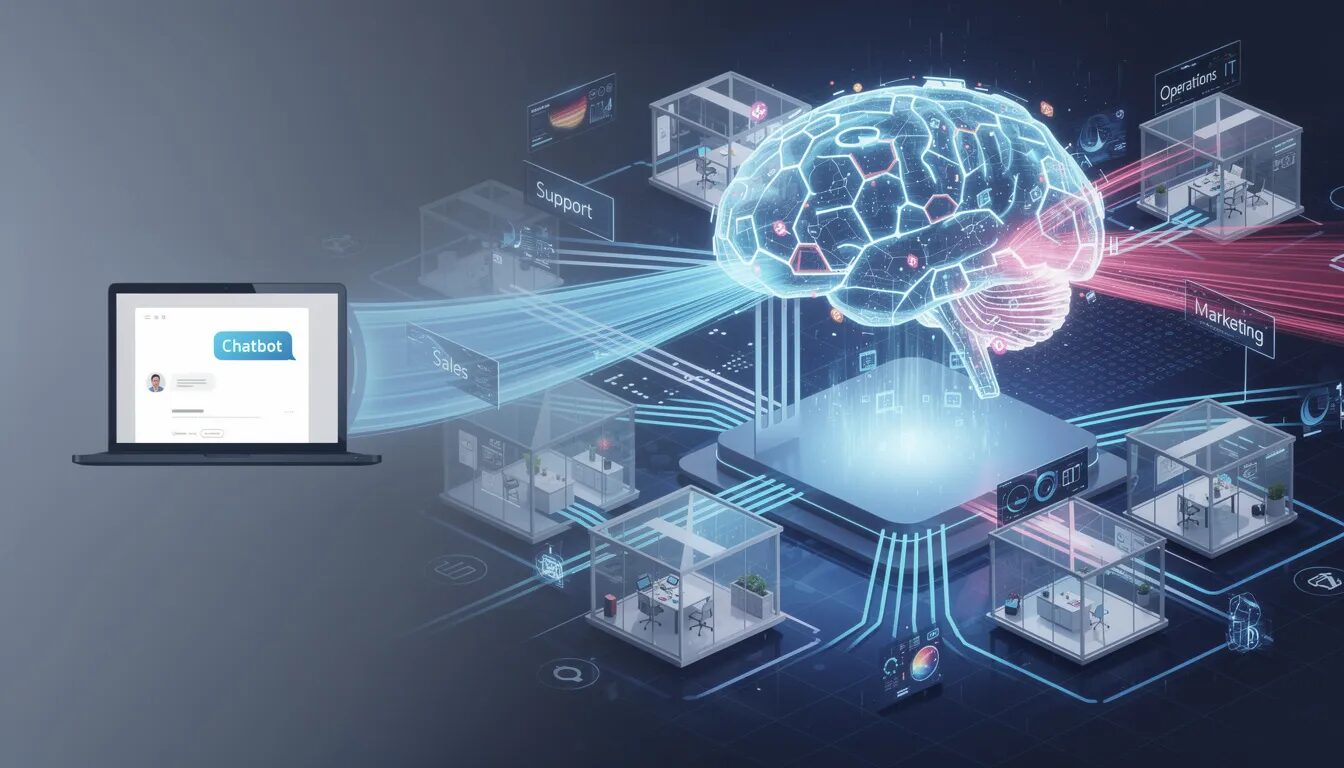
The evolution from experimental AI tools to mission-critical customer service infrastructure reflects broader technological maturity and changing customer expectations. As we examine how AI is changing customer support in 2025, we’ll explore the technologies driving this transformation, measure the concrete business impact, and provide actionable insights for organizations looking to harness AI’s full potential in their customer service strategies. However, the implementation of AI in customer service requires significant investment in technology infrastructure and training, making it essential for organizations to plan carefully to maximize returns. AI is no longer just a tool, but a real-time partner that enhances both customer and agent experiences.
The Current State of AI in Customer Support

AI in customer service has transitioned from an emerging trend to a foundational necessity in 2025. The numbers tell a compelling story: 79% of support teams have invested in AI technologies. Contact centers are leveraging AI to streamline customer interactions, reduce wait times, and provide real-time assistance to agents, resulting in more efficient and personalized support experiences. This figure represents not just early adopters but mainstream businesses across every industry sector. This widespread adoption reflects a fundamental shift in how organizations view customer service operations—from reactive cost centers to proactive value generators powered by intelligent automation.
The global AI customer service market has reached unprecedented heights, with projections indicating the sector will hit $1.34 billion by the end of 2025. This explosive growth is driven by measurable results rather than speculative potential. Organizations with mature AI capabilities consistently outperform their competitors, achieving 17% higher customer satisfaction scores compared to companies still relying on traditional support methods.
Cost optimization represents another critical driver of AI adoption. Companies implementing conversational AI systems report an average 23.5% reduction in cost per contact while simultaneously increasing annual revenue by 4%. This dual benefit—reduced expenses paired with revenue growth—creates a compelling business case that has accelerated adoption across organizations of all sizes.
The sophistication of AI deployment has evolved significantly from simple chatbot implementations. Modern ai powered customer service systems integrate seamlessly with existing CRM platforms, enabling personalized support interactions that leverage comprehensive customer data. These systems don’t just respond to customer queries; they analyze customer sentiment in real-time, predict potential issues before they escalate, and proactively offer tailored solutions that enhance the overall customer experience.
Customer acceptance has reached a tipping point, with 67% of consumers expressing willingness to use AI assistants for customer service queries. However, this acceptance comes with elevated expectations: customers demand AI interactions that demonstrate creativity, empathy, and friendliness. AI is also enhancing customer engagement by enabling more personalized and meaningful interactions, which help deepen relationships and improve overall customer experience and loyalty. The success of AI implementation now depends not just on functional capability but on emotional intelligence and conversational sophistication.
AI’s ability to instantly access relevant information, suggest appropriate responses, and automate routine tasks means that repetitive tasks such as note-taking, triage, and troubleshooting can be handled efficiently, freeing up agents to focus on more complex customer needs.
Key AI Technologies Transforming Support in 2025
The technological foundation driving customer service transformation rests on several interconnected AI capabilities that work in concert to deliver unprecedented support experiences. Natural language processing has evolved beyond basic keyword recognition to sophisticated intent understanding, enabling systems to interpret customer needs with remarkable accuracy even when expressed in casual or complex language.
Machine learning algorithms continuously refine their performance through every customer interaction, creating support systems that become more effective over time. These algorithms analyze patterns in customer behavior, predict likely issues, and suggest proactive interventions that prevent problems before customers experience frustration. Predictive analytics identify churn risk indicators, triggering personalized retention campaigns that maintain customer loyalty through strategic support interventions.
Generative AI represents perhaps the most transformative technology, enabling customer service interactions that rival human conversation quality. These systems generate contextually appropriate responses that consider customer history, current emotional state, and specific situational factors. By leveraging real time data, generative AI tailors customer conversations and maintains brand consistency, ensuring each interaction is both timely and aligned with the company’s voice. Unlike template-based responses, generative AI crafts unique communications that feel personal and relevant to each customer’s specific circumstances.
Real-time sentiment analysis adds emotional intelligence to customer service interactions, allowing AI systems to detect frustration, satisfaction, or confusion in customer communications. This capability enables dynamic response adaptation—adjusting tone, offering escalation paths, or providing additional support resources based on detected emotional states. The result is more empathetic customer interactions that address both functional needs and emotional concerns, highlighting the importance of customer conversations in delivering consistent and personalized experiences.
Agentic AI: The Game Changer
Agentic AI systems represent the most advanced form of artificial intelligence in customer service, capable of autonomous decision-making and complex problem resolution without human intervention. These systems are specifically designed to handle complex tasks that previously required multiple agent interactions, streamlining intricate, multi-step customer service workflows.
Consider a billing inquiry scenario: traditional chatbots might provide account balance information, but agentic AI systems can analyze billing discrepancies, identify system errors, process refunds, update customer records, and send confirmation notifications—all within a single conversation thread. Agentic AI can also autonomously process customer reports, triggering workflows that resolve issues efficiently and improve customer satisfaction. This level of automation handles complex customer issues that previously required multiple agent interactions and extended resolution timeframes.
The integration capabilities of agentic AI systems enable seamless interaction with CRM databases, payment processing platforms, inventory management systems, and communication tools. These ai agents can execute actions like processing returns, scheduling appointments, updating shipping addresses, and applying promotional credits while maintaining conversation flow with customers. This comprehensive integration transforms customer service from an information-providing function to a complete problem-solving service.
Real-time learning capabilities allow agentic AI systems to improve their decision-making accuracy with each interaction. Unlike static rule-based systems, these AI agents adapt their approaches based on successful resolution patterns, customer feedback, and outcome analysis. This continuous improvement ensures that customer service quality enhances over time rather than remaining static.
Conversational AI Evolution
The evolution of conversational AI has reached sophisticated levels that blur the lines between human and artificial interactions. GPT-4 powered chatbots deliver context-aware responses that consider not just immediate customer queries but entire conversation histories, previous support interactions, and comprehensive customer profiles. This contextual awareness enables more meaningful dialogues that feel natural and relevant.
Voice AI systems have achieved human-like natural speech patterns that handle phone support interactions with remarkable fluency. These systems understand accents, colloquialisms, and speech patterns while responding with appropriate tone and pacing. The technology has advanced to the point where many customers complete entire support calls without realizing they’re interacting with artificial intelligence.
Multilingual support capabilities have expanded to serve global customer bases across 50+ languages, with AI systems automatically detecting customer language preferences and switching between languages within single conversations. This capability eliminates language barriers that traditionally created friction in international customer support operations.
Emotional intelligence features represent the cutting edge of conversational AI development. These systems detect subtle emotional cues in customer communications—frustration in voice tone, urgency in text messages, satisfaction in feedback responses—and adapt their approach accordingly. When frustration is detected, ai systems can automatically adjust their tone, offer escalation options, or provide additional empathy in their responses. AI ensures that high value interactions are seamlessly transitioned to human agents, allowing for more personalized and strategic support. The continued importance of human interaction remains clear, as it is essential for delivering empathetic and effective customer service when automation reaches its limits.
Measurable Impact on Customer Support Operations and Customer Satisfaction
The transformation of customer support through AI delivers quantifiable results that validate investment decisions and drive continued adoption. Real-world case studies demonstrate the substantial operational improvements organizations achieve through strategic AI implementation, with metrics showing dramatic enhancements in efficiency, customer satisfaction, and cost management. By 2025, AI is expected to facilitate around 95% of customer interactions, highlighting its growing importance in customer service and its role in reshaping the industry.
Unity’s implementation of AI automations resulted in an 83% improvement in first response time, transforming their customer service from a potential bottleneck into a competitive advantage. This improvement directly impacted customer satisfaction scores and reduced the volume of escalated issues requiring human intervention. The speed enhancement also enabled Unity to handle increased customer volume without proportionally expanding their support team.
Esusu achieved remarkable efficiency gains through AI copilot systems, reducing first reply time by 64% and overall resolution time by 34%. These improvements stemmed from AI’s ability to instantly access relevant information, suggest appropriate responses, and automate routine tasks that previously consumed agent time. AI systems also assist human agents by providing real-time insights and support during complex or emotionally sensitive situations. The time savings allowed human agents to focus on complex issues requiring emotional intelligence and creative problem-solving.
Compass reached exceptional customer satisfaction levels with 98% customer satisfaction ratings while maintaining 65% one-touch resolution rates. This combination of high satisfaction and efficient resolution demonstrates AI’s capability to deliver quality outcomes without sacrificing speed or accuracy, while also enabling personalized service that meets individual customer needs and expectations. The high one-touch resolution rate indicates that AI systems successfully address customer needs in initial interactions, reducing the frustration associated with multiple contact requirements.
McKinsey’s comprehensive analysis across AI-enabled support teams reveals consistent patterns of improvement: 40% efficiency boosts and 30% cost reductions represent typical outcomes for organizations implementing comprehensive AI strategies. These efficiency gains result from automating routine tasks, improving agent productivity through AI assistance, and reducing the average time required to resolve customer issues.
The financial impact extends beyond cost reduction to revenue generation. Organizations report that improved customer satisfaction through AI implementation leads to increased customer retention rates, higher lifetime value, and positive word-of-mouth marketing that drives new customer acquisition. The combination of reduced costs and increased revenue creates compound value that justifies continued AI investment.
The Human-AI Partnership Model
The most successful AI implementations in customer support emphasize collaboration rather than replacement, creating hybrid models where artificial intelligence amplifies human capabilities rather than substituting for them. AI will automate routine tasks, boost customer satisfaction, and help reduce employee burnout in customer service. This partnership approach recognizes that while AI excels at information processing, pattern recognition, and routine task automation, human agents provide emotional intelligence, creative problem-solving, and complex judgment that customers value.
AI copilot systems serve as real-time assistants that provide customer service agents with instant access to knowledge bases, suggest appropriate responses based on customer context, and automate administrative tasks. These systems analyze incoming customer communications and present agents with relevant information, potential solutions, and recommended next steps. This support enables agents to respond more quickly and accurately while maintaining the human touch that complex situations require.
Automated ticket summarization represents a significant productivity enhancement, with AI systems analyzing customer interaction history and providing concise summaries of previous issues, resolutions attempted, and customer preferences. This process involves analyzing past interactions to better understand the customer’s situation and provide more accurate support. This automation eliminates the time agents traditionally spend reviewing case histories, allowing them to focus immediately on current customer needs. Studies show this capability boosts agent productivity by 15% while improving response accuracy. Additionally, generative AI will assist in creating and updating self-service content, such as help center articles, ensuring that customers have access to accurate and up-to-date information.
Skills-based routing powered by AI ensures that customer inquiries reach the most appropriate human agents for complex cases while directing routine questions to automated systems. AI algorithms analyze customer inquiry complexity, emotional tone, and required expertise level to make intelligent routing decisions. This optimization ensures that frustrated customers reach empathetic human agents while straightforward requests receive immediate automated resolution.
Continuous training programs help customer service teams develop technical skills necessary for effective human-AI collaboration. These programs address the reality that 66% of service leaders report skill gaps requiring upskilling initiatives. Training focuses on understanding AI capabilities, interpreting AI recommendations, and knowing when to override automated suggestions based on human judgment.
The collaboration model also includes feedback loops where human agents provide input that improves AI performance. Agents can flag inappropriate AI suggestions, validate successful automated resolutions, and provide context that helps AI systems learn from edge cases. This partnership ensures that AI capabilities continuously evolve based on real-world customer service experience.

Proactive Support Revolution
The shift from reactive to proactive customer support represents one of the most significant transformations in how organizations approach customer relationships. AI systems monitor customer behavior patterns, usage data, and interaction history to identify potential issues before customers experience problems, enabling intervention that prevents frustration and maintains satisfaction levels.
Predictive models analyze multiple data sources—purchase history, product usage patterns, support ticket trends, and engagement metrics—to forecast when customers might encounter difficulties. These models can predict everything from billing confusion before statement delivery to product failures before devices malfunction. Early intervention through proactive communication demonstrates attentiveness that strengthens customer relationships while reducing support volume. AI enables businesses to implement proactive solutions by anticipating customer needs and addressing potential issues before they escalate, shifting support from reactive to proactive.
Automated notifications about shipping delays, service outages, and account irregularities prevent customers from contacting support to inquire about issues they haven’t yet discovered. These communications often include immediate solutions or alternative options, transforming potentially negative experiences into demonstrations of proactive service excellence. For instance, AI can flag a delayed package or unusual account activity and notify the customer with a resolution before they even realize there’s a problem. Studies show that proactive support reduces customer churn by 25% while improving retention rates significantly.
Real-time sentiment analysis across multiple customers enables support teams to identify emerging issues that might affect broader customer segments. AI systems can detect patterns in customer complaints, product mentions on social media, or support ticket keywords that indicate systemic problems requiring immediate attention. This early warning system allows organizations to address widespread issues before they escalate into major customer satisfaction problems.
The 70% of customer service managers using AI for real-time sentiment analysis demonstrates the widespread adoption of predictive support strategies. These managers report improved ability to allocate resources, prepare agents for difficult conversations, and maintain service quality during high-volume periods. The predictive insights enable better staffing decisions and resource allocation that maintains service levels during peak demand.
Behavioral analytics identify customers at risk of churn based on decreased engagement, support ticket frequency, or usage pattern changes. AI systems can trigger personalized retention campaigns, special offers, or proactive support outreach designed to re-engage customers before they consider alternatives. This predictive approach to customer retention proves more cost-effective than reactive retention efforts after customers have already decided to leave. Furthermore, AI can analyze unstructured data, like customer sentiment, to identify who is at high churn risk and give them immediate attention, enhancing retention strategies.
Hyper-Personalization at Scale
The ability to deliver personalized customer experiences at enterprise scale represents a key advantage of AI implementation in customer support. AI systems analyze vast amounts of customer data—browsing behavior, purchase history, communication preferences, and interaction patterns—to create tailored support experiences that feel individually crafted despite serving thousands of customers simultaneously.
Dynamic content adaptation adjusts messaging tone, product recommendations, and solution suggestions based on real-time customer context. A customer browsing premium products might receive different support responses than someone focused on budget options, even for identical technical questions. This contextual personalization makes interactions feel more relevant and valuable to customers.
Customer journey mapping powered by AI identifies optimal touchpoints for personalized outreach, determining when customers might benefit from proactive assistance, educational content, or product recommendations. Generative AI will craft customized messages and customer journeys based on real-time insights and preferences. These interventions occur at moments when customers are most receptive, improving engagement rates while avoiding the perception of intrusive marketing.
The statistic that 71% of customers expect personalized experiences creates both opportunity and necessity for AI-powered personalization. Organizations meeting these expectations gain competitive advantages through improved customer satisfaction and loyalty, while those failing to personalize risk customer defection to more responsive competitors.
Privacy-first approaches to personalization use first-party customer data while maintaining transparency about data usage and respecting privacy preferences. AI systems can deliver personalized experiences without compromising customer trust by clearly communicating data practices and providing customers control over their information. This approach builds the foundation for long-term customer relationships based on mutual respect and value exchange.
The scalability of AI-powered personalization enables small businesses to deliver enterprise-level customization without massive infrastructure investments. Cloud-based AI services provide sophisticated personalization capabilities that automatically scale with business growth, democratizing advanced customer service capabilities that were previously available only to large corporations.
24/7 Support Transformation
The promise of round-the-clock customer support has been fully realized through AI implementation, with intelligent systems providing continuous coverage that maintains consistent service quality regardless of time zones or staffing constraints. AI chatbots will provide 24/7 instant support, handling most routine queries instantly. Additionally, AI can help businesses scale their operations by handling an unlimited number of queries simultaneously, something human agents cannot achieve. This transformation particularly benefits global businesses serving customers across multiple geographic regions with varying cultural expectations and communication preferences. However, maintaining consistent service quality across various channels remains a challenge for businesses implementing AI in customer support, requiring robust systems and strategies to ensure seamless customer experiences.
AI-powered systems deliver continuous support coverage without the human resource constraints that traditionally limited after-hours service quality. These systems maintain full functionality during nights, weekends, and holidays, ensuring that urgent customer issues receive immediate attention regardless of timing. The consistency of AI responses means that customer service quality doesn’t degrade during off-hours when human staffing might be reduced.
Intelligent escalation systems recognize when human intervention becomes necessary and route customers appropriately, even during periods when human agents aren’t immediately available. These systems can prioritize urgent cases, schedule callbacks for complex issues, and provide estimated wait times that help manage customer expectations. The escalation logic considers factors like customer value, issue complexity, and emotional state to make appropriate triage decisions.
Self-service options powered by AI resolve 80% of routine inquiries without any agent involvement, dramatically expanding the effective capacity of customer service operations. These self-service capabilities include account management, order tracking, billing inquiries, and basic troubleshooting that customers can complete independently. AI can automate routine tasks such as resetting passwords, tracking orders, or updating account information, allowing human agents to focus on more complex issues. The high resolution rate for self-service interactions demonstrates AI’s ability to understand customer needs and provide accurate solutions.
Real-time language translation enables support in customers’ preferred languages without requiring multilingual human agents. AI systems can conduct entire support conversations in dozens of languages while maintaining context and cultural sensitivity. This capability removes language barriers that traditionally limited global customer service effectiveness.
The global service capabilities enabled by AI create competitive advantages for businesses expanding into international markets. Organizations can provide high-quality customer support in new geographic regions without establishing local offices or hiring multilingual staff, reducing the barriers to international expansion while maintaining service standards.

Implementation Challenges and Solutions
Despite the clear benefits of AI in customer service, organizations face several implementation challenges that require careful planning and strategic approaches. Understanding these challenges and their solutions helps organizations avoid common pitfalls while maximizing the value of their AI investments.
Data privacy concerns represent a primary challenge, particularly with regulations like GDPR and CCPA requiring strict compliance frameworks. Organizations must implement robust security measures that protect sensitive customer data while enabling AI systems to function effectively. This includes encryption, access controls, audit trails, and clear data retention policies that maintain customer trust while meeting regulatory requirements.
Integration complexity with existing CRM and support platforms requires careful planning and testing to avoid service disruptions during implementation. Many organizations underestimate the technical challenges of connecting AI systems with legacy software, resulting in delayed deployments or reduced functionality. Successful implementations involve thorough system audits, phased rollouts, and comprehensive testing procedures that ensure seamless integration.
Staff resistance to AI adoption often stems from concerns about job displacement and technology complexity. Transparent communication about AI’s role as an enhancement tool rather than replacement technology helps address these concerns. Training programs that demonstrate how AI improves job satisfaction by eliminating tedious tasks while enabling focus on meaningful customer interactions typically reduce resistance and increase adoption rates.
Initial investment costs can seem substantial, particularly for smaller organizations with limited technology budgets. However, careful ROI analysis typically reveals that operational savings and efficiency gains justify AI investments within 12-18 months. Organizations can manage costs by starting with specific use cases that demonstrate clear value before expanding to comprehensive AI implementations.
Quality control measures ensure AI accuracy and prevent inappropriate responses that could damage customer relationships. This includes human oversight of AI recommendations, regular algorithm testing, confidence thresholds that trigger human review, and feedback mechanisms that continuously improve AI performance. Implementing proper quality controls prevents the embarrassing failures that can undermine customer trust in automated systems.
Change management strategies help organizations navigate the cultural and operational adjustments required for successful AI adoption. This includes executive sponsorship, clear communication about implementation goals, training programs that build confidence with AI tools, and metrics that demonstrate improvement over time. Organizations with strong change management typically achieve better adoption rates and faster realization of AI benefits.
Looking Ahead: Customer Support in Late 2025
The trajectory of AI development in customer service points toward even more sophisticated capabilities emerging in late 2025. Advanced AI agents will handle increasingly complex multi-step processes, including product returns that require coordination between multiple systems, technical troubleshooting that involves diagnostic testing, and account management tasks that previously required specialized human expertise. These advancements will enable AI to effectively resolve complex customer inquiries that demand sophisticated understanding and problem-solving.
Emotional AI represents the next frontier in creating empathetic customer interactions that rival human emotional intelligence. These systems will recognize subtle emotional cues, respond with appropriate empathy, and adjust their communication style to match customer emotional states. The development of emotional AI addresses one of the final barriers to customer acceptance of automated support—the perception that machines cannot provide emotional support during stressful situations.
Seamless omnichannel integration will maintain conversation context as customers move between phone, chat, email, and social media interactions. AI systems will recognize customers across channels and maintain comprehensive interaction histories that enable consistent service experiences regardless of communication method. This capability eliminates the frustration customers currently experience when repeating information across different support channels.
Predictive customer success programs will evolve to prevent issues and optimize customer lifetime value through proactive interventions. AI systems will identify opportunities to enhance customer experiences before customers recognize needs themselves, creating surprise-and-delight moments that strengthen relationships and increase loyalty. These predictive capabilities will transform customer support from a reactive service to a proactive value generator.
Voice AI technology will reach levels where phone interactions become indistinguishable from human agents. Advanced natural language processing, emotional recognition, and conversational flow will create voice experiences that feel completely natural. This development will eliminate the last remaining customer preference for human agents in routine support interactions.
The convergence of these technologies suggests that customer support in late 2025 will be characterized by seamless, intelligent, and emotionally aware interactions that anticipate customer needs while providing immediate, accurate solutions. Organizations that prepare for this future by building AI capabilities today will gain significant competitive advantages in customer satisfaction and operational efficiency.

Conclusion
The transformation of customer support through artificial intelligence in 2025 represents more than technological advancement—it signifies a fundamental shift in how organizations create customer value. The evidence overwhelmingly demonstrates that ai in customer service has moved from experimental technology to essential infrastructure, with mature adopters achieving 17% higher customer satisfaction while reducing costs by 23.5%.
The technologies driving this transformation—from agentic AI systems that autonomously resolve complex issues to emotional intelligence capabilities that provide empathetic interactions—create customer experiences that often exceed what traditional human-only support could deliver. The partnership between artificial intelligence and human agents amplifies the strengths of both, creating support operations that are more efficient, more effective, and more emotionally intelligent than either could achieve alone.
Organizations still evaluating AI adoption face an increasingly critical decision point. The competitive advantages gained through ai powered customer service continue expanding as technologies mature and customer expectations evolve. Companies that delay implementation risk falling behind competitors who are already realizing the operational efficiencies and customer satisfaction improvements that drive business growth.
The future of customer service lies in the thoughtful integration of artificial intelligence technologies that enhance human capabilities while maintaining the empathy and creativity that customers value. Success in this transformation requires strategic planning, change management, and commitment to continuous improvement as AI capabilities evolve.
For organizations ready to begin their AI journey, the path forward involves assessing current customer service operations, identifying opportunities for automation and enhancement, and implementing AI solutions that align with business objectives and customer expectations. The question is no longer whether to adopt AI in customer service, but how quickly and effectively organizations can integrate these transformative technologies into their customer experience strategies.
Understanding Customer Expectations in the AI Era
In 2025, customer expectations have reached new heights, shaped by the rapid evolution of AI in customer service. Today’s customers demand not only faster responses but also highly personalized and efficient service experiences. AI-powered customer service solutions are at the forefront of meeting these rising expectations, leveraging advanced analytics to interpret customer data, sentiment, and behavior in real time.
By analyzing vast amounts of customer data, AI tools enable customer service agents to anticipate customer needs and deliver tailored solutions before issues escalate. This proactive support approach not only resolves problems swiftly but also demonstrates a deep understanding of individual customer preferences, building trust and fostering long-term loyalty.
Customer service agents now work hand-in-hand with AI, using intelligent recommendations and predictive insights to provide efficient service that feels both personal and responsive. As a result, businesses that prioritize customer satisfaction through AI-powered customer service gain a significant competitive advantage. They are able to exceed customer expectations, strengthen relationships, and differentiate themselves in crowded markets.
Ultimately, understanding and adapting to evolving customer expectations in the AI era is essential. By leveraging AI-driven customer service solutions, organizations can deliver proactive, personalized, and efficient support that keeps customers satisfied and loyal.
The Importance of Customer Data in AI-Driven Support
Customer data is the foundation of effective AI-driven support, powering the transformation of customer service from reactive problem-solving to proactive engagement. Every customer interaction—whether it’s a chat, email, or phone call—generates valuable data that, when analyzed, reveals patterns in customer behavior, preferences, and sentiment.
AI-powered customer service solutions rely on this rich customer data to drive predictive analytics, natural language processing, and sentiment analysis. By understanding the nuances of customer interactions, AI systems can identify emerging trends, anticipate customer needs, and recommend tailored solutions that enhance customer satisfaction.
Efficient management and utilization of customer data are critical for transforming customer service operations. High-quality data enables AI systems to deliver accurate, context-aware responses, streamline support processes, and reduce operational costs. For example, predictive analytics can forecast common issues, allowing support teams to address them proactively, while sentiment analysis helps identify and resolve customer concerns before they impact loyalty.
In short, customer data is the engine that powers AI-driven support. Organizations that invest in robust data management and leverage AI to analyze customer data are better positioned to deliver efficient service, improve customer satisfaction, and gain a competitive edge in the evolving landscape of customer service.
AI-Powered Self-Service Options
AI-powered self-service options are revolutionizing customer service by empowering customers to resolve their own issues quickly and conveniently. Intelligent chatbots and virtual assistants can handle a wide range of routine inquiries—such as order tracking, account updates, and basic troubleshooting—without the need for human intervention. This not only enhances the customer experience by providing instant support but also frees human agents to focus on complex issues that require emotional intelligence and nuanced problem-solving.
By automating routine tasks, businesses can significantly improve operational efficiency and reduce operational costs. AI-powered self-service solutions are available 24/7, ensuring that customers receive support whenever they need it, regardless of time zone or business hours. This scalability allows organizations to handle higher volumes of customer requests without increasing headcount or compromising service quality.
Moreover, AI-powered self-service options contribute to a more satisfying customer experience by offering personalized responses based on customer data and past interactions. When more complex or sensitive issues arise, these systems can seamlessly escalate cases to human agents, ensuring that customers always receive the right level of support.
In summary, AI-powered self-service is a key driver in revolutionizing customer service, delivering operational efficiency, reducing costs, and enabling human agents to focus on high-value, emotionally complex interactions.
Customer Journey Mapping with AI
Customer journey mapping with AI is transforming how businesses understand and optimize the customer experience. By analyzing customer interactions, behavior, and sentiment across every touchpoint, AI-powered customer service solutions provide a comprehensive view of the customer journey. This enables organizations to identify pain points, anticipate customer needs, and deliver proactive support that reduces frustration and builds loyalty.
AI-driven insights help businesses streamline support processes by highlighting where customers encounter obstacles or delays. For example, if AI detects a pattern of customer frustration at a particular stage, support teams can intervene with tailored solutions or additional resources. This proactive approach not only improves customer satisfaction but also strengthens customer loyalty by demonstrating attentiveness and care.
Human agents benefit from AI-assisted journey mapping as well. With access to real-time insights into customer emotions and preferences, agents can provide more empathetic and effective support, addressing both the practical and emotional aspects of customer concerns. AI can also suggest the most relevant next steps or solutions, ensuring that each interaction is as personalized and efficient as possible.
Ultimately, AI-powered customer journey mapping empowers organizations to deliver seamless, tailored experiences that drive customer satisfaction, reduce churn, and foster long-term loyalty. By continuously analyzing and optimizing the customer journey, businesses can stay ahead of evolving customer needs and set new standards for great customer service.