
Sixty percent of AI projects fail not because of technical limitations, but because they ignore human needs and contexts. This staggering statistic reveals a fundamental disconnect in how we approach artificial intelligence development. While we’ve achieved remarkable breakthroughs in machine learning and ai algorithms, we’ve often forgotten the most important element: the humans these systems are meant to serve.
When human centered design meets artificial intelligence, something transformative happens. Instead of forcing people to adapt to rigid technological constraints, we create ai systems that naturally integrate into human workflows, respect human values, and enhance human capabilities. This intersection represents more than just a design philosophy—it’s a fundamental shift toward building technology that truly serves humanity.
The convergence of these disciplines marks a decisive move from “AI-first” thinking to “human-first AI.” Rather than starting with available data and computational methods, we begin with understanding people’s actual needs, contexts, and challenges. The result is ai technologies that don’t just work technically, but work for real people in real situations.
The Convergence of Human-Centered Design and AI
Human centered design meets artificial intelligence at the intersection of two mature disciplines that have historically developed in isolation. Human-centered design emerged from cognitive psychology and human-computer interaction, emphasizing empathy, iterative prototyping, and user research. Meanwhile, traditional AI development focused primarily on algorithmic performance, data optimization, and computational efficiency. Natural language processing (NLP) is advancing rapidly, enhancing communication between humans and AI systems. Human-centered AI integrates psychology, sociology, and design for a holistic understanding of human-AI interaction, ensuring that systems are developed with a comprehensive view of human needs and behaviors. The design thinking process is enhanced by AI, as it integrates empathy, ideation, and prototyping phases with AI-driven analysis and rapid iteration, making each stage more effective and user-centered.
This convergence creates what researchers call human centered ai—an approach that explicitly prioritizes human needs, values, and well-being in AI system development. Unlike traditional AI that measures success through accuracy metrics and computational performance, human centered artificial intelligence evaluates systems based on user satisfaction, task success, trust building, and positive societal impact. Real-time adaptive personalization in AI technologies makes experiences more supportive and engaging for users. AI powered tools make user experiences more efficient and personalized by automating tasks and tailoring content to individual preferences. Human-centered design (HCD) ensures that AI fits seamlessly into users’ lives by aligning with real-world needs, making technology more intuitive and impactful.
The key difference lies in the starting point. Traditional AI development often begins with asking “What can we predict with this data?” or “How can we automate this process?” Human-centered AI starts with “What problems do people actually face?” and “How can ai tools enhance human decision making without removing agency?” In user research and understanding user needs, AI enables designers to access a broader range of user perspectives and experiences, leading to more inclusive and effective solutions.
Consider Netflix’s recommendation system, which exemplifies this human-first approach. Rather than simply optimizing for engagement metrics, Netflix’s algorithm considers viewing context, time of day, device type, and even how long users scroll before making a choice. The system analyzes complex data to personalize recommendations, augmenting human creativity in content discovery while maintaining user control over their entertainment experience.
Similarly, Tesla’s Autopilot system demonstrates human-AI collaboration in action. The technology handles routine driving tasks while keeping humans actively engaged through steering wheel sensors and visual monitoring. When the system encounters uncertain scenarios, it immediately returns control to the human driver, maintaining what researchers call “meaningful human control.” Wearable tech such as fitness trackers uses AI/ML for actionable health data, designed to be comfortable and user-friendly, showcasing how AI can integrate seamlessly into daily life. As users interact with AI systems, their behaviors and feedback shape design considerations, ensuring interfaces remain intuitive and responsive.
Overall, human-centered AI provides valuable insights from vast datasets, informing better design decisions and driving more effective, user-focused innovation.
The Evolution of Human-Computer Interaction: From Desktop to AI Era
Understanding where we are requires knowing where we’ve been. The evolution of human-computer interaction has unfolded through four distinct waves, each expanding who can use technology and how naturally they can interact with it.
The first wave, spanning the 1940s through 1980s, treated computers as specialist tools accessible only to trained experts. During this era, interaction required learning complex command languages and understanding technical system operations. Human factors were considered, but primarily within the narrow context of expert users in controlled environments.
The second wave, from the 1980s through 2000s, brought personal computing and graphical user interfaces to mainstream users. This period established fundamental UX principles like visual metaphors, direct manipulation, and user-friendly design patterns. Companies like Apple and Microsoft made technology accessible to millions by prioritizing ease of use over technical complexity.
The third wave, spanning 2000s through 2020s, witnessed the rise of user experience design as a distinct discipline. Design thinking methodologies became standard practice, emphasizing empathy, ideation, and iteration. Mobile interfaces, social platforms, and web applications were designed around human behavior patterns rather than technical constraints.
The fourth wave, beginning in the 2020s, represents the emergence of human centered ai. This phase was catalyzed by breakthrough moments like AlphaGo’s 2016 victory over world champion Lee Sedol, which demonstrated AI’s potential to augment human intelligence rather than simply replace it. Today’s AI systems increasingly require sophisticated understanding of human contexts, emotions, and decision-making processes, drawing inspiration from the human brain. While AI can simulate certain brain-like processes, it does not replicate the full complexity of human cognition and decision-making. In the healthcare industry, human-centered AI is revolutionizing patient care by enabling more accurate diagnoses and personalized treatments, transforming how medical professionals approach complex challenges. Wearable tech and smart devices are now integrating AI into everyday systems, embedding intelligence into the infrastructure and routines that drive productivity and societal change.
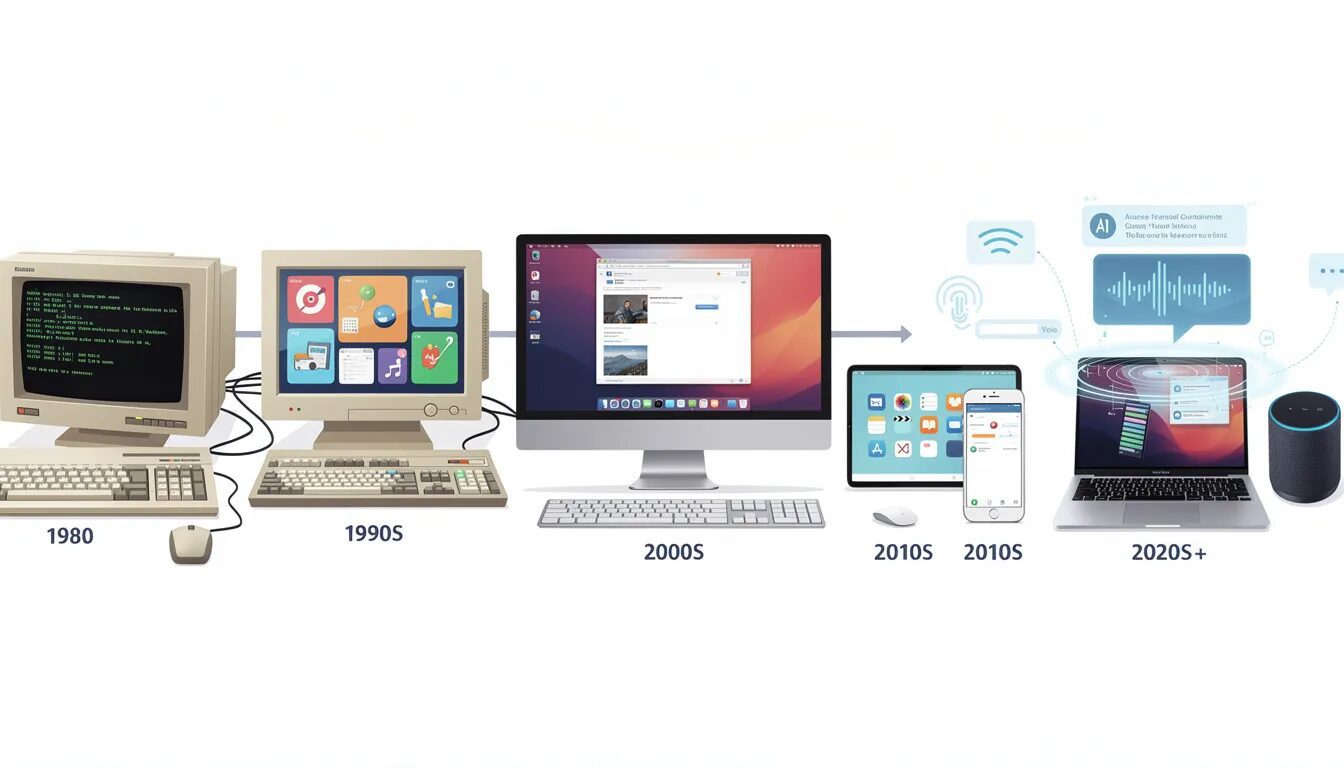
Each wave built upon the previous one while expanding the scope of human-technology interaction. We now face the challenge of making artificial intelligence as intuitive and human-centered as the desktop metaphors that revolutionized personal computing decades ago. AI continues to evolve, expanding its influence across sectors and shaping the future of human-computer interaction.
Core Principles of Human-Centered AI Design
Successful human centered artificial intelligence rests on several fundamental principles that guide development decisions from conception through deployment. These principles ensure ai systems remain aligned with human needs while delivering meaningful value. AI tools can significantly enhance the design process by automating data collection and analysis, making it more efficient and insightful. Additionally, ai driven design tools are transforming the design process by making it more efficient and collaborative, enabling teams to work together seamlessly and leverage advanced technologies.
When automating data collection and analysis, ai generated ideas and prototypes can accelerate the design process, allowing for rapid iteration and testing of concepts.
Throughout the design process, AI can suggest innovative design elements by analyzing successful projects, helping teams optimize their choices and expedite prototype creation.
In human-AI collaboration, human intuition remains essential in guiding AI-assisted design decisions, ensuring that creativity and empathy are not lost. It is also crucial to integrate ai seamlessly into design workflows to maximize the benefits of both human and artificial intelligence.
Collaboration is further enhanced by leveraging ai’s capabilities to boost creativity and improve decision-making, making the process more dynamic and effective.
When focusing on user empathy and understanding, AI can provide actionable insights that inform the early phases of the design thinking process, helping teams identify unmet user needs and define user problems more accurately.
User Empathy and Understanding
True user empathy in AI development goes far beyond traditional user research. It requires understanding the emotional, cognitive, and social contexts where AI will operate. Teams must conduct deep ethnographic research to uncover not just what users do, but why they do it, what fears they harbor, and what values guide their decisions. AI tools can significantly enhance the empathy phase of design thinking by automating data collection and analysis. By leveraging AI to process large volumes of qualitative and quantitative data, teams can generate actionable insights that help identify unmet user needs and inform the early phases of the innovation process.
IBM Watson for Oncology exemplifies this principle in practice. Rather than simply analyzing medical data, the system was designed around oncologists’ actual decision-making processes. Researchers spent months observing cancer treatment meetings, understanding how doctors weigh different factors, communicate uncertainty, and build patient trust. The resulting system presents recommendations in formats that align with medical reasoning patterns while supporting the doctor-patient relationship.
Effective user research for AI projects must also account for diverse needs and contexts. What works for tech-savvy urban professionals may fail completely for elderly users or people with limited digital literacy. AI systems serving diverse populations require intentional inclusive design from the earliest stages.
Transparency and Explainability
Users need to understand how ai systems make decisions that affect their lives. This goes beyond technical documentation to providing explanations that match users’ mental models and reasoning patterns. Transparency builds trust, enables informed decision making, and supports accountability when things go wrong.
Financial advisory systems demonstrate this principle effectively. Instead of simply recommending investment strategies, advanced platforms explain their reasoning: “Based on your risk tolerance and retirement timeline, we’re suggesting bonds over stocks because market volatility could impact your goals.” Users receive not just recommendations, but the logic behind them.
Explainability requirements vary by context and consequence. A music recommendation system may need minimal explanation—users can simply skip songs they dislike. Medical diagnosis support systems require comprehensive explanations that help doctors understand, validate, and communicate AI insights to patients.
Ethical AI and Bias Mitigation
Creating ethical AI requires proactive identification and mitigation of biases that could systematically disadvantage certain groups. Ethical use of AI means applying these technologies responsibly, balancing innovation with privacy, fairness, and accountability to minimize negative societal impacts. This involves examining training data for representational gaps, testing systems across diverse populations, and implementing continuous monitoring for discriminatory outcomes.
Amazon’s experience with biased recruitment AI offers valuable lessons. The company’s automated resume screening system learned to discriminate against women by picking up on historical hiring patterns present in training data. The project was ultimately scrapped, but it highlighted the critical importance of diverse datasets, inclusive design teams, and ongoing bias testing.
Effective bias mitigation goes beyond technical solutions to address structural inequalities. Teams must include diverse perspectives throughout development, not just in testing phases. Regular bias audits, fairness metrics, and community feedback mechanisms help ensure systems serve all users equitably.
Human-AI Collaboration Balance
The most effective ai systems enhance human capabilities rather than replacing human judgment entirely. This requires carefully designed interfaces that support seamless collaboration while maintaining clear boundaries between human and machine responsibilities.
Grammarly exemplifies effective human-ai collaboration. The writing assistant suggests improvements while leaving creative decisions to users. Importantly, human intuition plays a key role in making final decisions and maintaining creative control, ensuring that users’ judgment, creativity, and empathy guide the outcome. It highlights potential issues without automatically making changes, respecting user agency over their communication style and voice. Users can accept, modify, or ignore suggestions based on their context and intentions.
Successful collaboration requires designing for different levels of automation. Sometimes users want detailed suggestions; other times they prefer minimal interference. Adaptive interfaces that learn user preferences while maintaining override capabilities create the most effective partnerships.

Trust Through Reliability and Safety
Building user trust requires demonstrating that ai systems behave predictably and safely across various scenarios. Users need confidence that systems will perform consistently and fail gracefully when encountering unexpected situations.
This principle manifests in robust error handling, clear communication of system limitations, and fail-safes that prevent harmful outcomes. Advanced AI systems include uncertainty quantification—explicitly communicating when confidence is low and human oversight is particularly important.
Trust also requires ongoing system monitoring and improvement. Users notice when AI performance degrades or when systems begin exhibiting unexpected behaviors. Continuous learning from user feedback and real-world performance helps maintain trust over time.
Privacy and Data Protection
Respecting user privacy means treating people behind the data with dignity and implementing strong data protection practices. This involves collecting only necessary data, securing information appropriately, and being transparent about data usage.
Modern privacy-conscious AI design implements principles like data minimization, purpose limitation, and user consent. Advanced techniques like federated learning enable AI training without centralizing sensitive data, while differential privacy adds mathematical guarantees about individual privacy protection.
Accessibility and Inclusion
ai systems must work for users across the full spectrum of abilities, languages, cultures, and technological contexts. This requires intentional design for accessibility from the beginning, not retrofitted solutions. Microsoft’s Inclusive Design applies HCD principles to create accessible features like the Xbox Adaptive Controller.
Voice interfaces demonstrate both the promise and challenge of accessible AI. While these systems can greatly benefit users with visual impairments, they may exclude users with speech differences or those speaking accented English. Truly inclusive AI provides multiple interaction modalities and adapts to diverse communication patterns.
Continuous Learning and Adaptation
Human needs and contexts evolve, so ai systems must adapt accordingly. This requires building feedback loops, monitoring real-world usage patterns, and implementing mechanisms for continuous improvement.
Effective continuous learning involves both automated adaptation and human oversight. Systems learn from usage patterns while humans monitor for drift, unintended consequences, or changing user needs. Regular user research ensures that systems continue meeting actual needs rather than optimizing for outdated assumptions. The integration of AI into design processes can lead to faster iteration cycles and more data-informed decision making.
Real-World Applications and Success Stories
The principles of human centered design meet artificial intelligence most powerfully in real-world implementations that solve genuine human problems. By leveraging AI to solve complex problems, organizations can address challenges in healthcare, creativity, and daily life with solutions that are both innovative and user-focused. These success stories demonstrate how thoughtful design can create ai systems that users actually want to use.
Spotify’s Discover Weekly represents a masterclass in human-centered AI design. The feature combines sophisticated machine learning with deep understanding of human music consumption patterns. Rather than simply analyzing acoustic features or popularity metrics, the algorithm considers listening context, mood patterns, and social influence. Users consistently report feeling like the system “understands” their musical taste better than they understand it themselves.
The success stems from recognizing that music recommendation isn’t just a matching problem—it’s about human emotions, social connections, and personal identity. Spotify’s team conducted extensive user research to understand how people actually discover and relate to music, then designed algorithms that support these natural behaviors.
Grammarly transformed writing assistance by understanding the nuanced relationship between human creativity and technical correctness. Traditional spell checkers focused on error detection, but Grammarly’s human centered approach considers communication context, audience, and intent. The system suggests improvements while respecting user voice and style preferences.
What makes Grammarly effective is its collaborative rather than prescriptive approach. The AI highlights potential issues and offers suggestions, but users maintain complete control over their writing. This preserves human creativity while providing valuable assistance, demonstrating how ai tools can enhance rather than constrain human expression.
In healthcare, PathAI’s cancer diagnosis support system exemplifies human-AI collaboration in high-stakes environments. Rather than replacing pathologists, the system augments their capabilities by highlighting areas of concern in tissue samples and providing supporting evidence for diagnostic decisions. The interface presents information in ways that align with medical training and reasoning patterns.
The system maintains clear accountability—doctors remain responsible for diagnoses while the AI acts as a sophisticated second opinion. This design preserves the physician-patient relationship while leveraging AI’s pattern recognition capabilities to improve diagnostic accuracy and consistency.

Autodesk’s generative design software demonstrates human-AI collaboration in creative fields. Engineers and architects input design requirements and constraints, then the AI generates hundreds of ai generated design alternatives that human professionals can evaluate, modify, and combine. As one of the leading ai driven design tools, Autodesk’s software helps professionals explore a wider range of design elements, optimizing choices and expediting the prototyping process. This partnership leverages AI’s computational power while preserving human judgment about aesthetics, feasibility, and user needs.
The software succeeds because it treats design as a fundamentally human activity enhanced by computational capabilities. Users remain in control of design goals and final decisions while benefiting from AI’s ability to explore vast design spaces and optimize for multiple constraints simultaneously.
Tesla’s approach to autonomous driving illustrates the complexities of human-AI collaboration in safety-critical applications. The Autopilot system handles routine driving tasks while maintaining human oversight through continuous monitoring. When the system encounters uncertain scenarios, it immediately alerts drivers and transfers control.
This design acknowledges the current limitations of AI while providing meaningful assistance. Regular over-the-air updates incorporate learnings from millions of miles of real-world driving, continuously improving system capabilities while maintaining human responsibility for safe operation.
Industry Transformations Through Human-Centered AI
Different industries are discovering unique applications for human centered artificial intelligence, each requiring specialized approaches that respect sector-specific needs, regulations, and human factors. By leveraging AI’s capabilities, organizations can solve problems more effectively and contribute to a better world, ensuring that technology serves people and drives positive societal change.
Healthcare
Healthcare AI exemplifies the critical importance of human-centered design in high-stakes environments. Medical AI systems must integrate seamlessly into clinical workflows while supporting the doctor-patient relationship and maintaining clear accountability for decisions.
AI-powered diagnostic tools are transforming radiology by highlighting potential abnormalities and providing supporting evidence for radiologist review. These tools deliver actionable insights that support clinical decision-making, helping doctors identify subtle patterns that might be overlooked in routine screening. The interface design presents findings in formats aligned with medical training, making AI insights actionable within existing workflows.
Personalized treatment planning represents another frontier where human intelligence and AI capabilities combine effectively. Systems analyze vast amounts of patient data, research literature, and treatment outcomes to suggest personalized therapy options. However, treatment decisions remain firmly in the hands of medical professionals who understand individual patient contexts, preferences, and values.
Privacy protection takes on special significance in healthcare AI. Advanced techniques like federated learning enable AI training across multiple medical institutions without sharing sensitive patient data. Patients maintain control over their health information while contributing to medical research that could benefit future patients.
Education
Educational AI is revolutionizing personalized learning while preserving the essential human elements of teaching and mentorship. Adaptive learning platforms adjust difficulty levels, pacing, and content presentation based on individual student needs and learning patterns. AI-powered tools further enhance these platforms by personalizing learning experiences, automating routine tasks, and enabling more tailored educational pathways.
AI tutoring systems like Khan Academy’s demonstrate effective human-AI collaboration in education. The AI provides personalized practice problems, immediate feedback, and learning analytics while human teachers focus on conceptual understanding, motivation, and social-emotional support. Learning analytics powered by AI deliver valuable insights to educators and students, helping them identify strengths, weaknesses, and opportunities for improvement. This division allows both humans and AI to contribute their unique strengths.
Ensuring equitable access becomes crucial in educational AI. Systems must work effectively for students with different backgrounds, learning styles, and technological access. This requires careful attention to cultural sensitivity, language diversity, and varying levels of digital literacy.
Business and Customer Service
Customer service AI is evolving beyond simple chatbots toward empathetic, context-aware assistants that enhance rather than replace human customer support. Modern systems can handle routine inquiries while seamlessly escalating complex issues to human agents with full context and conversation history. AI-powered tools further enhance efficiency and personalization by automating repetitive tasks and tailoring responses to individual customer needs.
Successful customer service AI recognizes that support interactions often involve emotional contexts—frustration, confusion, or concern. AI systems trained on emotional intelligence can detect these contexts and adjust their responses accordingly, while ensuring smooth handoffs to human agents when empathy and complex problem-solving are required.
Personalized marketing represents another area where human centered ai creates value while respecting user autonomy. Advanced systems can identify relevant products and services while giving users control over their data and marketing preferences. Transparency about how recommendations are generated builds trust and enables more effective personalization. Human-centered AI in business is driving innovations that prioritize customer satisfaction and ethical decision-making, ensuring that technology aligns with both user expectations and organizational values.
Decision support systems in business environments augment human judgment with data analysis and pattern recognition. By analyzing vast datasets, AI provides valuable insights that help business leaders make informed decisions. Financial risk assessment tools, supply chain optimization platforms, and strategic planning software provide insights and recommendations while leaving strategic decisions to human leaders who understand organizational context and values.
Challenges and Ethical Considerations
Implementing human centered artificial intelligence faces significant obstacles that require careful navigation and ongoing attention. Understanding these challenges helps organizations prepare for the complexities of responsible AI development. The ethical use of AI is crucial in addressing these challenges, ensuring that innovation is balanced with privacy, fairness, and accountability.
Privacy and data protection challenges intensify when AI systems require extensive personal information to function effectively. The tension between personalization and privacy requires sophisticated technical solutions and transparent user controls. Users want AI systems that understand their needs without feeling surveilled or manipulated.
Organizations must implement privacy-by-design principles, collecting only necessary data and providing granular controls over data usage. Advanced techniques like differential privacy and homomorphic encryption can enable ai capabilities while providing mathematical guarantees about individual privacy protection.
Overcoming resistance to change represents another significant challenge in ai adoption. Employees may fear job displacement, users may distrust automated decisions, and organizations may struggle with cultural shifts required for effective human-AI collaboration.
Successful change management requires transparent communication about AI capabilities and limitations, comprehensive training programs, and demonstration of AI’s value in augmenting rather than replacing human capabilities. Early wins with low-risk applications help build confidence and acceptance.
Balancing automation efficiency with human employment concerns requires thoughtful consideration of AI’s societal impact. While automation can improve productivity and reduce costs, it can also displace workers and exacerbate inequality if not implemented thoughtfully.
Human-centered approaches to AI implementation focus on augmenting human capabilities and creating new types of valuable work rather than simply automating existing jobs away. This requires retraining programs, careful transition planning, and consideration of broader economic impacts.
Ensuring accessibility and inclusivity across diverse user groups challenges designers to consider needs beyond mainstream users. AI systems trained primarily on data from privileged populations may not work effectively for users with disabilities, different languages, or limited technological access.
Inclusive design requires diverse development teams, comprehensive user research across different populations, and ongoing testing with underrepresented groups. Accessibility considerations must be built in from the beginning rather than added as an afterthought.

Managing the “black box” nature of complex AI algorithms poses ongoing challenges for transparency and accountability. As AI continues to evolve, new challenges emerge in maintaining transparency and ensuring accountability in decision-making processes. Deep learning models may achieve high accuracy while remaining largely unexplainable, creating tension between performance and interpretability.
Emerging explainable AI techniques offer partial solutions, but the challenge requires ongoing research and development. Interpreting the complex data processed by advanced AI systems adds another layer of difficulty to achieving true explainability. Different applications may require different levels of explainability, from simple confidence scores to detailed reasoning traces.
Regulatory compliance adds another layer of complexity as governments worldwide develop AI governance frameworks. Organizations must navigate evolving requirements around algorithmic transparency, bias testing, and human oversight while maintaining system effectiveness.
The European Union’s AI Act, GDPR requirements, and similar regulations worldwide are creating a complex compliance landscape. Human-centered design principles align well with many regulatory requirements, but implementation requires careful attention to legal details and ongoing monitoring.
Future Trends and Emerging Technologies
Looking toward 2025 and beyond, several technological developments will reshape how human centered design meets artificial intelligence, creating new opportunities for human-AI collaboration while introducing fresh challenges. As AI continues to advance, it is shaping future trends in design, user experience, and ethical considerations.
Advances in natural language processing are enabling more natural and contextual human-AI communication. Large language models like GPT-4 and Claude demonstrate unprecedented ability to understand context, nuance, and intent in human communication. These systems are increasingly able to process and generate human language, making interactions more intuitive and empathetic. However, these capabilities also introduce new challenges around hallucination, bias, and over-reliance.
Future natural language processing nlp systems will likely incorporate better uncertainty quantification, helping users understand when AI responses are speculative versus confident. Multi-modal interfaces combining text, voice, and visual interaction will create more natural communication patterns.
Emotional AI and affective computing represent emerging frontiers for creating more empathetic human-AI interactions. Systems that can recognize and respond appropriately to human emotions could dramatically improve user experiences, particularly in healthcare, education, and customer service applications.
However, emotional AI raises significant privacy and manipulation concerns. Users must maintain control over emotional data collection and usage, while systems must be designed to support rather than exploit human emotional states.
Collaborative AI platforms are emerging that enable creative partnerships between humans and artificial intelligence. Tools like Runway ML, Midjourney, and GitHub Copilot demonstrate how AI can enhance human creativity rather than replacing it. The emergence of AI powered tools is enhancing creativity and productivity by automating routine tasks and providing intelligent suggestions. These platforms treat AI as a creative collaborator that can generate ideas, suggest improvements, and handle routine tasks while humans maintain creative control.
Future creative AI will likely become even more sophisticated while preserving human agency and creative ownership. AI generated content will play a key role in accelerating innovation, ideation, and prototyping processes. The challenge will be maintaining the human element in creative expression while leveraging ai’s capabilities for inspiration and assistance. The expanding scope of ai’s capabilities will continue to influence how designers approach problem-solving and user experience.
Global adoption of ethical AI frameworks and regulations will standardize many human-centered design principles across different markets and applications. Organizations will need to navigate increasingly complex compliance requirements while maintaining innovation and competitiveness.
This regulatory evolution will likely drive convergence toward common standards for AI transparency, fairness, and human oversight. Companies that invest early in human-centered approaches will be better positioned for this regulated future.
Interdisciplinary collaboration between technologists, designers, psychologists, and ethicists will become increasingly important as AI systems become more sophisticated and pervasive. Complex AI challenges require diverse perspectives and expertise beyond traditional technical skills. There is a growing need to integrate ai into diverse teams and workflows to maximize its benefits. By leveraging ai’s capabilities, organizations can address complex challenges more effectively and create more impactful solutions.
Future AI development teams will likely include philosophers, anthropologists, sociologists, and domain experts who can help identify potential impacts and design appropriate safeguards. This interdisciplinary approach aligns with human-centered design’s emphasis on understanding users in their full complexity. As future AI systems become incredibly smart, they will act as tireless assistants, analyzing data, recognizing patterns, and continuously improving to support human goals. Finally, it is important to recognize that sci fi movies have significantly shaped public perceptions and expectations of AI, often influencing both excitement and apprehension about its role in society.
Implementing Human-Centered AI: Best Practices
Successfully implementing human centered ai requires systematic approaches that integrate human-centered design principles throughout the development lifecycle. These practices help organizations build AI systems that truly serve human needs.
Conducting inclusive user research throughout AI development cycles ensures that diverse perspectives inform system design from conception through deployment. This research must go beyond traditional usability testing to understand the emotional, social, and cultural contexts where AI will operate.
Effective ai user research employs ethnographic methods, contextual inquiry, and participatory design workshops. Teams observe users in their natural environments, understand their workflows and pain points, and involve them in co-creating AI solutions. This research must include diverse populations to avoid designing systems that only work for privileged users.
Regular user research checkpoints throughout development help teams identify when technical decisions impact user experience. As AI capabilities evolve during development, user needs and expectations may shift, requiring adaptive design approaches.
Establishing clear ethical guidelines and accountability measures provides frameworks for making difficult decisions throughout AI development. These guidelines should address bias prevention, privacy protection, transparency requirements, and human oversight mechanisms.
Effective ethical frameworks include concrete evaluation criteria, regular ethics reviews, and clear escalation procedures for ethical concerns. Teams need practical tools for identifying potential harms, not just abstract principles about responsible AI.
Documentation practices should include model cards, dataset sheets, and user-facing explanations that communicate AI capabilities and limitations clearly. This transparency supports informed user decision-making and enables accountability when issues arise.
Creating diverse development teams helps reduce bias and blind spots in AI system design. Diverse teams bring different perspectives on user needs, potential harms, and cultural contexts that can significantly impact AI effectiveness and fairness. Using ai driven design tools can further enhance collaboration among interdisciplinary teams, making it easier to share insights and co-create solutions.
Diversity should include not just demographic characteristics but also disciplinary backgrounds, lived experiences, and domain expertise. Teams developing healthcare AI need medical professionals; educational AI teams need teachers and learning scientists; financial AI teams need experts in economic justice.
Regular team training on both AI technologies and human-centered design principles ensures all team members understand the intersection of technical and human considerations. This cross-functional literacy enables more effective collaboration and decision-making.

Implementing continuous feedback loops enables iterative improvement based on real-world usage patterns and user experiences. AI systems deployed without feedback mechanisms often drift from user needs or develop unexpected behaviors. AI can enhance the testing and iteration phases of design by providing real-time feedback and performance metrics. Additionally, ai powered tools can automate performance monitoring and user feedback collection, streamlining the process and enabling faster responses to user needs.
Effective feedback systems include both automated monitoring of system performance and structured user feedback collection. Users need easy ways to report errors, suggest improvements, and indicate satisfaction with AI assistance.
A/B testing and controlled experiments help teams evaluate changes while minimizing risk to users. Gradual rollouts enable teams to identify issues before they affect large user populations.
Balancing technical capabilities with user needs and business objectives requires ongoing negotiation and compromise. The most sophisticated AI isn’t always the most useful AI—systems must solve real problems for real people within realistic constraints. It is essential to integrate ai thoughtfully into product roadmaps to ensure that new features enhance user value and align with organizational goals.
Product roadmaps should prioritize user value over technical novelty. Features that sound impressive in technical papers may not translate to meaningful user benefits. Regular user validation helps teams stay focused on valuable capabilities.
Business metrics should include user satisfaction, trust, and long-term adoption alongside traditional performance measures. Systems that optimize for engagement without considering user well-being may achieve short-term business goals while undermining long-term success.
Training teams on both ai technologies and human centered design principles creates the cross-functional literacy needed for effective human-AI system development. Technical teams need to understand user experience design, while design teams need basic AI literacy. Leveraging ai’s capabilities can improve both technical and design education, helping teams stay ahead in a rapidly evolving field.
This training should include hands-on workshops, case study analysis, and collaborative projects that integrate technical and design considerations. Teams should practice identifying potential biases, designing for accessibility, and balancing automation with human control.
Ongoing education helps teams stay current with evolving best practices, new research findings, and emerging regulatory requirements. The field of human-centered AI is rapidly evolving, requiring continuous learning and adaptation.
The Path Forward: Building AI That Serves Humanity
The convergence of human centered design and artificial intelligence represents both an unprecedented opportunity and a profound responsibility. As AI systems become more capable and pervasive, the choices we make today about how to design and deploy these technologies will shape the future of human-technology interaction.
The evidence is clear that organizations prioritizing human needs in ai development achieve significantly higher success rates than those focusing solely on technical capabilities. The 60% failure rate of AI projects that neglect human factors isn’t just a statistic—it’s a call to action for more thoughtful, human-centered approaches to AI development.
As designers, developers, and business leaders, we have the opportunity to create ai systems that enhance human dignity, creativity, and well-being rather than diminishing them. This requires moving beyond the false choice between human control and AI capability toward designs that achieve both high automation and high human agency.
The future of artificial intelligence isn’t predetermined. We can choose to build AI that augments human intelligence rather than replacing it, that respects human values rather than optimizing purely for efficiency, and that serves all of humanity rather than privileging the few. This choice requires intentional commitment to human centered approaches throughout the AI development lifecycle.
The path forward demands continuous learning and adaptation as both AI technologies and human needs evolve. What works today may not work tomorrow, requiring ongoing research, experimentation, and refinement of our approaches to human-AI collaboration.
Most importantly, we must recognize that building AI that serves humanity is not a destination but an ongoing commitment. Every design decision, every algorithm choice, and every deployment strategy is an opportunity to affirm our commitment to human flourishing in an AI-augmented world.
The convergence of human centered design and artificial intelligence offers us the chance to create technology that truly serves human needs. By prioritizing empathy, transparency, fairness, and human agency, we can build AI systems that amplify the best of human capabilities while addressing our greatest challenges. Human centered AI is important because it aligns technology with human values, fosters trust, and ensures that AI is used to solve problems that matter most to people. By embracing this approach, we can work toward a better world where AI and human collaboration drive innovative solutions to global challenges. The future of AI is not something that happens to us—it’s something we actively create through our choices today.
Human-Centered AI Development: From Concept to Deployment
Human-centered AI development is a holistic, multidisciplinary process that places human needs, values, and capabilities at the heart of every stage of AI system creation. Unlike traditional approaches that focus primarily on technical performance, human-centered design ensures that AI technologies are developed to complement human intelligence, foster human creativity, and promote overall human well-being.
The journey begins with a deep understanding of the people who will interact with the AI system. Through user research, empathy mapping, and contextual inquiry, development teams identify real-world challenges, user expectations, and the broader human contexts in which AI will operate. This foundational work ensures that the design process is grounded in authentic human needs rather than abstract technical possibilities.
As the project moves from concept to design, human-centered AI teams prioritize collaboration between designers, engineers, domain experts, and end users. By integrating human insights with the advanced capabilities of AI technologies, teams can create AI systems that are not only powerful but also intuitive and user friendly. Prototyping and iterative testing allow for continuous refinement, with user feedback guiding improvements to both functionality and user experience.
Throughout development, the focus remains on leveraging AI’s strengths—such as analyzing vast amounts of data or automating repetitive tasks—while preserving the unique qualities of human intelligence, like intuition, empathy, and creative problem-solving. This balanced approach enables the creation of AI tools that enhance, rather than replace, human capacity.
Deployment is not the end of the process. Human-centered AI development includes ongoing monitoring, real-time feedback collection, and adaptation to evolving user needs. This commitment to continuous improvement ensures that AI systems remain relevant, effective, and aligned with human values over time.
By embracing a human centered approach from concept to deployment, organizations can create AI solutions that are more effective, efficient, and supportive of human well-being. This approach not only results in better technology but also builds trust, encourages adoption, and ultimately leads to AI systems that truly serve humanity.